You might be reading this because your current job feels steady but flat. You want work that matters. You want to help people, solve problems, and build a career that has structure, purpose, and room to grow.
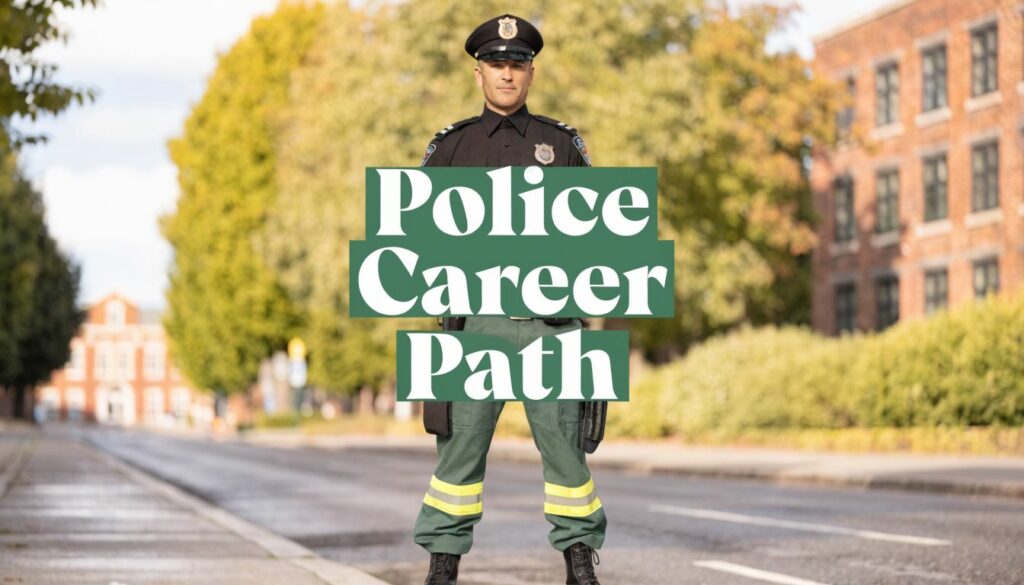
That’s exactly why so many adult learners look at the career path of police officer roles. Policing can offer meaningful public service, clear progression, and a wide range of specialist options. It can also be demanding, emotionally heavy, and highly competitive. Both sides matter.
If you're considering this route in the UK, the biggest challenge is often not motivation. It's clarity. People get stuck on practical questions. How do you enter now? Do you need a degree? What training happens on the job? How do promotions work? And if frontline policing doesn't end up being your best fit, are there related law enforcement careers that still use the same strengths?
Is a Police Officer Career Right for You
A police career suits people who want responsibility, variety, and direct public impact. No two shifts are the same, and that attracts many career changers. You might help someone in crisis in the morning, gather evidence in the afternoon, and spend the evening dealing with a fast-moving incident that needs calm judgement.
That said, this isn't a career to choose only because it looks stable. You need to be comfortable with pressure, paperwork, teamwork, conflict, and public scrutiny. Good intentions matter, but they aren't enough on their own. You also need resilience, self-control, and the ability to make fair decisions when emotions are high.

Signs the role may suit you
You want practical public service rather than office work with little visible impact.
You communicate well under pressure and can stay respectful even when others don't.
You like structure but don't want a repetitive day.
You're open to learning because policing now places strong value on evidence, judgement, and professional standards.
Policing isn't only about catching offenders. A large part of the job is listening well, writing clearly, and making sound decisions in difficult moments.
Many adult learners worry they're too late to start. In reality, maturity can be an advantage. Life experience often strengthens judgement, empathy, and professionalism. If you've worked in care, security, customer service, education, admin, the military, or community support, you may already have useful transferable skills.
Choosing Your Entry Route into UK Policing
You might be comparing police entry routes after work, with a notebook open on the kitchen table, and wondering why something that sounds straightforward feels so technical. That reaction is common. Police recruitment in the UK has changed, and the route you choose now shapes how you study, how you earn, and how ready you feel when the application process begins.
The key term you will see is the Police Education Qualifications Framework, or PEQF. PEQF places police entry within a clearer education structure. In practical terms, forces now expect new officers to come in through routes linked to higher-level study, usually at Level 5 or Level 6.
That can sound intimidating at first.
A useful way to read it is this. Forces are looking for more than motivation and common sense. They also want evidence that you can study, reflect, make ethical decisions, and apply learning to real situations. For adult learners, that matters because preparation counts. A qualification such as an Access to HE Diploma can strengthen your academic confidence before you apply, especially if you have been out of education for a while.
What PEQF means for applicants
PEQF does not mean everyone must arrive with the same background. It means there are several recognised routes into policing, and each one suits a different starting point.
Some applicants are ready to join as employees and complete their learning alongside the job. Others already have a degree and want a route that builds on it. Some prefer to prepare first, especially if they want time to improve study skills, meet entry requirements, or show they can cope with higher-level learning.
That last group is often overlooked in simple career guides. Yet for many adult learners, it is the smartest place to start. If your GCSEs are older, your confidence in academic writing is low, or you need a stepping-stone before degree-level study, a distance learning qualification can give you time to build momentum rather than rushing into recruitment unprepared.
UK Police Entry Routes Compared
| Route | Entry Requirements | Duration | Outcome |
|---|---|---|---|
| Police Constable Degree Apprenticeship PCDA | Usually suitable for applicants who meet force entry requirements and are ready to learn while employed | 3 years | Work-based training leading to a degree in professional policing practice |
| Graduate Entry route | For applicants who already hold a degree or equivalent graduate-level entry profile accepted by the force | Typically structured around existing graduate status | Structured pathway aligned to PEQF expectations |
| Pre-join Degree in Professional Policing | For people who want to complete relevant study before applying to a force | Varies by provider | Degree-level preparation before police recruitment |
How to choose the right route
Start with your current position, not with the route that sounds most impressive.
If earning from day one matters, the PCDA is often a strong fit. You are employed while training, which can make the move into policing more realistic if you have rent, bills, or family responsibilities. The trade-off is workload. You need to cope with operational demands and academic study at the same time.
If you already hold a degree, the graduate entry route may suit you better. It recognises the study you have already completed and can make sense if you are changing career after university or after time in another profession.
If you are not quite ready to apply, preparation first can be the wiser decision. A pre-join degree is one option. Another is building your qualifications in stages, for example through an Access to HE Diploma completed by distance learning. That approach can work well for adults who need flexibility and want to prove to themselves, and to admissions teams, that they can handle structured study.
A better question to guide your choice is which route fits your finances, study confidence, timetable, and current responsibilities.
Common confusion points
Applicants often mix up entry route with future role. Your route is merely the doorway into policing. It does not decide your whole career. An officer who joins through an apprenticeship can still move into detective work, neighbourhood policing, roads policing, intelligence, or other specialist areas later.
Qualification level also causes confusion. Each police force sets its own recruitment details, so always check the force you want to join. Still, the wider pattern is clear. Educational readiness now carries more weight than many applicants expect, and adult learners who prepare for that early often give themselves a stronger start.
If you are returning to study after a long break, treat the process like training before a fitness test. You do not wait until the day itself to find out what shape you are in. You build the foundation first. For many future police officers, that foundation is not only ambition. It is the right qualification, completed in a way that fits real adult life.
Gaining the Right Training and Qualifications
You have chosen a route into policing. The next question is whether you are ready for the training that follows.
Police training now works like a mix of workplace practice and higher-level study. New recruits learn procedures, officer safety, and incident handling, but they also need to assess evidence carefully, justify decisions, and produce clear written records. For an adult learner, that matters because the role asks for more than motivation. It asks for proof that you can study, process information, and stay accurate under pressure.
Why qualifications carry real weight
As noted earlier, many entry routes now sit alongside Level 5 or Level 6 expectations. That has changed what a strong application looks like. Forces still value judgement, integrity, and communication, yet academic readiness now plays a bigger part than many applicants first assume.
This becomes even more relevant later in your career. Specialist pathways such as investigations, intelligence, and safeguarding often involve detailed casework, legislation, structured decision-making, and careful analysis. A qualification cannot promise progression into those roles. It does, however, strengthen your profile when selectors are comparing candidates with similar operational experience.
A good way to understand this is to compare it with fitness. Natural ability helps, but preparation shows. Qualifications show that you can complete sustained study, meet deadlines, and deal with complex material before the pressure of police training begins.
What training tends to demand from new recruits
Police learning programmes differ by force and entry route, but several themes come up again and again:
Clear written communication so statements, reports, and case notes are accurate and professional.
Analytical thinking so you can weigh evidence instead of reacting too quickly.
Ethical decision-making because policing choices affect public trust as well as individual lives.
Information handling so you can read patterns, follow processes, and work with detail.
Emotional steadiness because training and frontline work both involve pressure, uncertainty, and scrutiny.
If that list feels more academic than expected, that is exactly why preparation matters.
How preparatory study helps adult learners
Many adults return to education with one concern at the front of their mind. "Can I still do this?" Preparatory study answers that question before you submit an application.
It can rebuild your study habits, refresh your writing, and get you used to deadlines again. It can also give admissions teams or recruiters clearer evidence of your readiness. Just as important, it shows sustained commitment to policing and related public service work through action, not only interest.
An Access to HE Diploma in Criminology can be a practical step for adults who need a flexible route back into study. Distance learning suits learners who are balancing work, parenting, or other responsibilities, and the course content can build useful background knowledge in crime, justice, research, and social issues. For some applicants, psychology-related study also adds value because police work involves behaviour, trauma, conflict, communication, and decision-making in difficult situations.
Here is the practical test. If you would benefit from stronger writing, more study confidence, or a clearer qualification profile, extra preparation is likely to improve your starting position before police training begins.
The Police Officer Rank Structure and Progression
People often picture policing as one job title for life. In reality, it has a ladder. You start in an operational role, build credibility, and then move into supervision, management, or leadership if that suits your strengths.
Some officers want to lead teams. Others prefer to deepen technical expertise in specialist units. Rank progression is only one form of growth, but it's a useful way to understand the long-term shape of the profession.

A simple view of the hierarchy
A typical progression looks like this:
Constable
Your frontline foundation. You learn response work, public contact, incident handling, and core policing standards.Sergeant
First-line supervisor. Sergeants guide officers, review work, and keep a team functioning well under pressure.Inspector
A broader operational leadership role. Inspectors often oversee teams, shifts, or operational areas.Chief Inspector and above
These ranks move further into command, planning, strategy, and senior leadership responsibilities.
What progression really depends on
Promotion isn't automatic. Time in service helps, but it isn't the whole story. Forces look for performance, judgement, conduct, leadership potential, and the ability to manage increasing responsibility.
Adult learners sometimes assume they must wait a very long time before they can progress. A better way to think about it is this. Your early years are about building a strong professional reputation. If you show reliability, good decision-making, and consistent standards, you're in a stronger position for future promotion processes and specialist opportunities.
A realistic mindset
The career path of police officer roles isn't a race. It's more like stages of readiness. You don't need to know now whether you want to become a sergeant or move towards senior leadership. You only need to recognise that the structure exists and that your habits at entry level shape later options.
Exploring Specialist Roles Beyond the Beat
Many people begin policing with one image in mind: patrol work, public calls, visible presence in the community. That work matters, but it isn't the whole picture. Once you've built a solid foundation, there are many ways to shape your career around your strengths.

One officer may discover they love interviews, statements, and detailed case building. Another may be at their best in public order situations. Someone else may prefer intelligence work that depends on patience, pattern recognition, and evidence handling.
Specialist paths you may encounter
Detective work
This usually appeals to people who like investigations, interviewing, case files, and seeing a problem through over time.Dog handling
A more visible specialism that combines operational work with close partnership and specialist training.Armed response and tactical roles
These demand composure, discipline, and ongoing assessment.Cybercrime or digital investigation
A strong option for people who enjoy technology, analysis, and complex problem-solving.Financial investigation
Better suited to methodical thinkers who can follow records, transactions, and hidden links.
How specialisms change your day-to-day work
Specialist roles often feel very different from general patrol. A detective may spend long periods reviewing evidence, interviewing witnesses, and preparing cases. A cyber investigator may focus on digital material, systems, and forensic processes. A dog handler's day may combine training, deployments, and practical support in searches or tracking.
That variety is one reason policing can remain engaging over the long term. Your first role doesn't have to define your whole career.
Choosing a specialism wisely
The best specialist move is usually the one that matches both your skills and your temperament. Don't choose only by status. Choose by the kind of work you can sustain well.
If you enjoy detailed analysis, a desk-based investigative role may suit you better than a highly physical one. If you thrive on fast operational work, the reverse may be true. That's why early experience matters. It helps you discover not just what sounds interesting, but what fits you in practice.
Essential Skills Salary Expectations and Your Future
Before changing career, most adults want a realistic view. That's wise. Policing asks a lot from people, and you need to look at the human demands as carefully as the job title.
Skills that matter every day
The strongest police officers aren't always the loudest or most forceful. They tend to be the people who combine calm communication with good judgement.
Key strengths include:
Communication that works with victims, colleagues, suspects, and the public.
Empathy because people often meet police on difficult days of their lives.
Problem-solving when incidents are messy and facts are incomplete.
Integrity because public trust depends on consistent standards.
Attention to detail especially in reports, statements, and evidence handling.
The part many career guides miss
Mental resilience deserves much more attention than it usually gets. While many career guides focus on promotion, the psychological side is critical. International research shows police officers face one of the highest risks of career burnout, which is why mental health awareness and resilience matter for long-term career sustainability.
For adult learners, this is not a side issue. It affects whether the career remains healthy and sustainable over time. If you're considering policing, ask yourself how you currently manage stress, difficult conversations, trauma exposure, and disrupted routines.
Strong applicants prepare for the emotional reality of the role, not just the recruitment stages.
Salary expectations
Salary is one of the most-searched aspects of a policing career. While pay is standardised across many regions, the exact starting salary and progression can vary depending on which UK force you join and the specific entry route you choose (such as a degree apprenticeship or a graduate program).
As of the 2024/25 pay award, which saw a 4.75% increase for officers across the UK, here is what you can expect:
England and Wales: Most new police constables start at approximately £29,907. This base salary typically increases with each year of service, reaching roughly £46,044 after seven years (Source: Greater Manchester Police).
The Metropolitan Police (London): Due to the high cost of living in the capital, Met officers receive additional allowances. A starting salary in London can be significantly higher, beginning around £42,210 (including allowances), rising to over £47,000 upon successful completion of initial training (Source: Met Careers).
Northern Ireland (PSNI): Student officers in the PSNI start on a salary of approximately £31,163. In addition to base pay, officers receive the Northern Ireland Transitional Allowance (NITA), currently valued at roughly £4,283 per year (Source: Join PSNI).
Scotland: Following the 2024/25 pay deal, Police Scotland offers competitive starting rates that align with a structured 4.75% uplift across all ranks, ensuring consistent growth as you gain experience (Source: Scottish Police Authority).
Additional Benefits
Beyond the base salary, police careers offer a comprehensive benefits package, including:
Pensions: Access to one of the most competitive public sector pension schemes.
Allowances: Extra pay for unsocial hours, dog handling, or working in high-cost areas like the Southeast.
Leave and Progression: Typically 22 days of paid annual leave (rising with service), plus structured frameworks for promotion to Sergeant, Inspector, and beyond.
For the most accurate and current figures, always check the recruitment pages of the specific force you are applying to, as regional allowances and specific entry-route salaries can vary.
Alternative Law Enforcement Careers and Your Next Steps
Some people read a guide like this and realise they want the wider field of law enforcement, but not necessarily the traditional constable route. That's a useful insight, not a failure. Public protection work is broader than many people think.
Many guides focus on standard progression within police forces, but there are also lateral options. According to this guide to law enforcement career paths, roles in the National Crime Agency, regional cybercrime units, and specialist civilian investigator positions can offer alternative entry points for people with qualifications in subjects such as criminology or computing, often without requiring years of frontline service.
Good alternatives for adult learners
If you already have relevant experience, these routes may be worth serious consideration:
Civilian investigator roles if you have strong casework, interviewing, or administrative precision.
Digital or cyber-focused roles if your background includes computing, systems, or data handling.
Protective services and intelligence support if you prefer analytical work over uniformed response.
Four next steps you can take now
Check local force requirements carefully
Entry rules vary. Start with the force or organisation you want to join, not a generic summary online.Assess your current qualification level
If you've been out of study for years, identify whether you need a stepping-stone qualification before applying.Match your strengths to the right pathway
Frontline policing, detective work, cyber roles, and civilian investigation all need different mixes of skills.Build evidence of commitment
Relevant study, volunteer experience, and a clear understanding of the role all strengthen your position.
A practical plan beats vague interest. If you're serious, start gathering entry information, reviewing your education profile, and choosing whether a direct police route or a related law enforcement path fits you best.
Your Questions Answered About Becoming a Police Officer
Can you become a police officer later in life?
Often, yes. Adult applicants are common, and many bring strengths that employers value, such as maturity, work ethic, and people skills. The important question isn't your age on its own. It's whether you meet the force's requirements and can handle the demands of training and the role.
Do you need a degree before you apply?
Not always in the same way, but modern policing does involve formal educational routes. Some applicants enter through work-based degree pathways, while others apply as graduates or after pre-join study. Check the route used by your chosen force.
What if you've been out of education for a long time?
That doesn't rule you out. It may mean you need a preparatory step first, especially if you want to rebuild study skills and confidence. Many adult learners take this route successfully because it helps them apply with stronger evidence of readiness.
Will tattoos or previous issues automatically stop you?
Not necessarily, but recruitment standards are strict and assessed carefully. Policies vary by force, especially around visible tattoos, previous offences, financial history, and vetting outcomes. The safest approach is full honesty and direct checking with the recruiting force.
Is there a fitness test?
Police recruitment usually includes a fitness requirement, but the exact test and standard can vary. The right preparation is practical and steady. Build cardiovascular fitness, general strength, and consistency before you apply rather than trying to cram at the last minute.
What if you want law enforcement work but not frontline policing?
You still have options. Civilian investigation, cybercrime support, intelligence roles, and related public protection careers may suit you better. For many adults, that's the route that best matches their background and long-term goals.
If you're ready to turn interest into action, Stonebridge Associated Colleges offers flexible online learning designed for adult learners who need to study around work and life. Whether you're considering an Access to Higher Education Diploma in Criminology, Computing, or Psychology, exploring the right course could be your first solid step towards policing or a related law enforcement career.