If you're studying computing and wondering where to focus first, start with the skill that sits behind almost every app, website, dashboard, and business system you use every day. That skill is database development and design.
When people begin a computing course, they often expect to spend most of their time on coding alone. Coding matters, of course, but code is only part of the story. If a system can't store, organise, retrieve, and protect information properly, the whole product becomes harder to build and even harder to trust.
Why Database Skills Are Your Ticket into Computing
Think about the services you already know. Online shopping sites track orders. Colleges manage enrolments. GP practices record appointments. Employers need people who can make that information usable, accurate, and well organised.
That is why database skills matter so much when you're preparing for the computing field. In the UK, demand for structured database skills has surged, with database engineers and data architects ranking among the top 10 most in-demand tech roles.
Practical rule: If you understand how data is structured, you're not just learning one topic. You're learning the foundation behind software, reporting, automation, and AI systems.
For a new learner, that's good news. You don't need to know everything at once. You do need a solid base, and databases give you one.
Understanding Database Development and Design
A simple way to think about it is this. Database design is the plan. Database development is the build.
If you were creating a digital library, the design stage would decide what information to keep for each book, such as title, author, subject, and borrowing status. It would also decide how those pieces of information relate to each other. The development stage is where you create that system in a real database tool and make it work for users.

A simple way to separate the two
Design means deciding what data belongs in the system and how it should connect
Development means building tables, forms, queries, and outputs in a database system
Good practice means testing whether people can use the final result
Readers often get stuck on one point here. They assume a database is just a large spreadsheet. It isn't. A spreadsheet stores information in a flat way. A database is built to manage connected information properly, so you can search it, update it, and report on it without creating confusion.
A strong database doesn't just hold data. It helps people find the right data at the right time.
The Professional Process for Building a Database
In professional work, people don't usually jump straight into creating tables. They follow a process. In the UK Higher Computing Science curriculum, that process has five phases: Analysis, Design, Implementation, Testing, and Evaluation. Studies of vocational projects also show that skipping the initial Analysis phase leads to a 52% increase in post-implementation revisions, as noted in the SQA-aligned database design notes.

What each phase looks like
Analysis
Analysis involves determining what the database must do. Who will use it. What information must it store. What reports or searches will matter.Design
Here, you turn those needs into a structure. You decide on tables, fields, keys, and relationships.Implementation
This is the build stage. You create the database using a real system and start entering or importing data.Testing
You check whether searches work, forms make sense, and outputs are accurate.Evaluation
You review the finished system. Did it solve the original problem. What should improve next time.
Why learners should care about the process
A beginner sometimes wants to rush into software tools. That's understandable. But employers value people who can think clearly before they build. If you can analyse a problem first, your technical work becomes stronger and more reliable.
Skipping planning usually doesn't save time. It moves the problem to later, when fixing it is harder.
Essential Skills and Tools You Will Need
The good news is that the core toolkit is manageable. You don't need dozens of tools to get started. You need a few important ones, and you need to understand how they fit together.

The essentials
| Skill or tool | What it does | Why it matters |
|---|---|---|
| SQL | Lets you query and manage data | It's the language many databases use |
| ER diagrams | Show entities and relationships visually | They help you plan before building |
| Forms and user interfaces | Let people enter data clearly | A database must work for real users |
| Testing and review | Check for errors and weak points | This protects data quality |
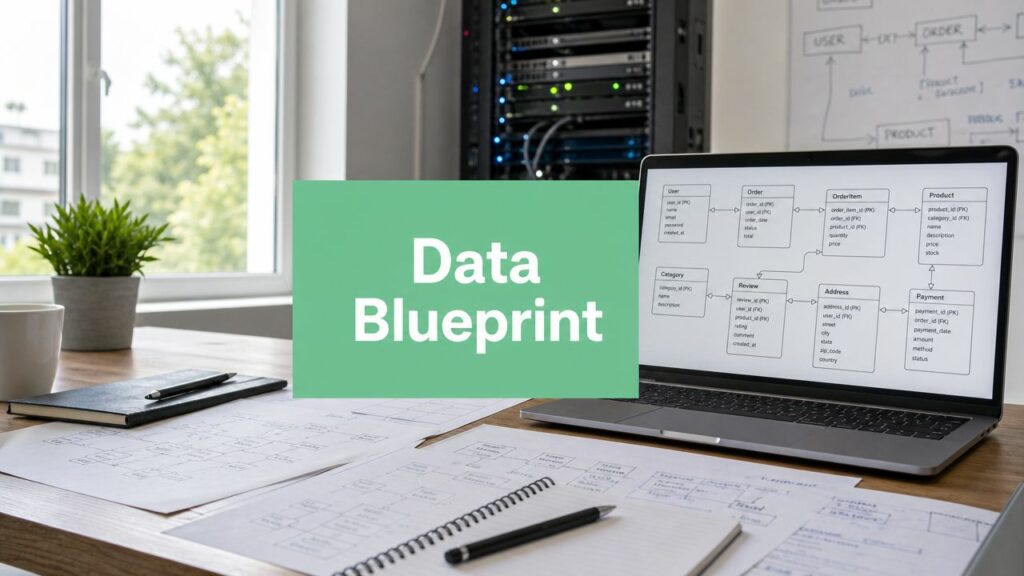
SQL often sounds intimidating at first, but it gives you a way to ask the database questions. An ER diagram is less scary than it sounds too. It's just a visual map of the data and its links.
If you'd like a simple visual introduction, this short video is a helpful starting point.
Your Learning Path with the Stonebridge Computing Diploma
For many adult learners, the challenge isn't understanding why database development and design matters. It's finding a course that teaches it in a clear, structured, flexible way.

The Access to Higher Education Diploma (Computing) includes a dedicated Database Development module. That matters because it gives you focused study in an area employers value, while keeping the learning practical.
What the module helps you build
This module is designed so you can:
Understand terminology and design factors so you can speak confidently about how databases are planned
Use a database system to structure and organise data instead of treating information like a loose collection of files
Manipulate and present information so the database becomes useful, not just technically complete
Create appropriate user interfaces that help real users enter and retrieve information
Test and review the database so you develop good habits from the start
That combination is valuable because it mirrors how database work happens in practice. You need the language, the structure, the build, the interface, and the review process.
Why the study model suits adult learners
Stonebridge Associated Colleges offers a flexible subscription-based courses across a wide range of vocational and academic subjects. With over twenty years of experience, the college delivers career-focused programmes including Access to Higher Education Diplomas, health and social care, nursing and midwifery, business management, education, and veterinary science.
Learners study 100% online, receive personalised support from qualified tutors, and can pause or cancel their subscription on their course of choice at any time without long-term credit agreements. The modular structure and affordable monthly fee make it easier to fit learning around work and home life. Stonebridge is also accredited by the UK Register of Learning Providers and regulated by the Financial Conduct Authority.
If you need a route into computing that feels achievable, that flexibility can make the difference between putting your plans off and getting started.
Start Your Computing Journey Today
Database development and design isn't a side topic in computing. It's one of the skills that helps everything else make sense. When you understand how data is organised, you become better prepared for software, systems, reporting, and many other digital roles.
You also won't be studying in isolation. Research highlighted by the House of Lords Library, drawing on Learning and Work Institute findings found that 52% of UK adults participated in some form of learning within the last three years. If you're ready to build practical computing skills in a flexible way, this is a smart place to begin.
If you're ready to turn interest into action, explore the Stonebridge Associated Colleges Access to Higher Education Diploma in Computing. Its dedicated database module, flexible subscription model, online study format, and tutor support can help you build confidence step by step and move closer to a real career in computing.