Could an access course in midwifery get you into university without qualifying you to practise as a Midwife? Yes, and understanding that distinction helps you plan properly. If you're returning to education or changing careers, this route can help you prepare for degree-level study without a conventional A-Level background.
What the Access to HE Diploma (Midwifery) covers
The Access to Higher Education Diploma (Midwifery) is a Level 3 qualification that prepares you for university-level midwifery study. The National Careers Service describes it as equivalent to three A-Levels and intended for adults without the usual higher-education qualifications, including those returning to study after a substantial break.
Access to HE Diploma (Midwifery) at a glance
| Feature | What it means |
|---|---|
| Qualification level | Level 3 |
| Equivalent size | Three A-Levels |
| Who it suits | Adults without standard entry qualifications or returning to learning |
| What it leads to | Application to an approved university midwifery degree |
| What it does not do | Register you as a Midwife or guarantee a degree place |
| Study mode | 100% online with Stonebridge |
The diploma provides structured academic preparation for learners taking a less traditional route into higher education. It is a bridge to professional education, rather than a qualification that registers you to practise as a Midwife. After completing it, you can apply for a midwifery degree, but university admission is not guaranteed. The degree and the required steps towards professional registration come later.
Entry requirements you need to meet
Yes, an Access qualification can support your university application. The National Careers Service's Midwife profile identifies a Level 3 diploma or Access qualification in health, science or nursing, alongside a typical requirement for five GCSEs at grades 9 to 4, including English, maths and science.
Entry requirements for midwifery degree study
| Requirement | What universities typically ask for | When it applies |
|---|---|---|
| Access route | Diploma or Access qualification in health, science or nursing | At application |
| GCSEs | Five at grades 9 to 4, including English, maths and science | At application |
| University conditions | Each university's grades and subject requirements | At application |
| Health and character checks | Required before NMC registration | After the degree |
Course enrolment requirements and university admission requirements aren't interchangeable. Check both before committing.
Compare course pages: Record required grades and named science units.
Ask admissions directly: Which English and maths qualifications are accepted? Is a particular Access subject mix required?
Address gaps early: If your GCSEs fall short, ask what alternatives the university accepts rather than assuming experience replaces them.
Our tutors can support your study planning, but universities make admission decisions.
What you study and how you are assessed
Check the course page's Syllabus and Assessment tabs for exact units and assignment requirements. Look at how the health, science and academic-writing content matches your chosen degree's entry conditions.
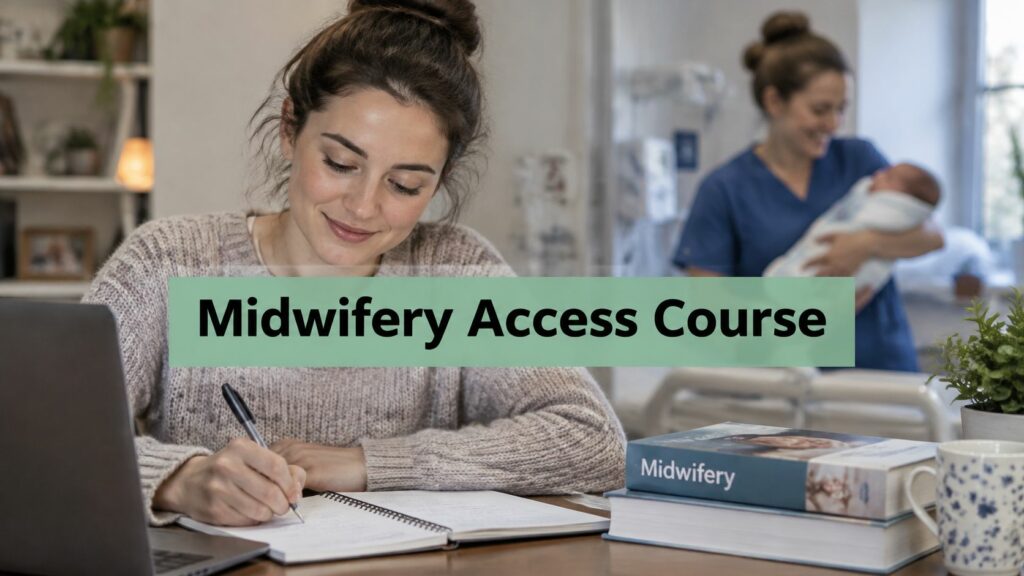
Your study space can be simple and practical.

Say you're beginning alongside shift work. You log in, open your immediately available materials and use your individual learning plan to schedule assignments around your rota.
Our self-paced platform includes tutor support. Continual assessment lets your assessor monitor progress and offer assistance throughout, with a five-day marking turnaround.
Read how Access to Higher Education Diplomas are graded before tackling assessed work.
Start by reading the first assignment and reserving a realistic weekly study slot. Don't wait until submission time to identify anything you don't understand.
Check the current subscription price and completion window before enrolling.
Is this course right for you
You might be a parent returning to learning, a Healthcare Support Worker considering progression, or someone changing direction entirely. Your starting point matters less than having a workable study routine.
Use these questions to judge your readiness:
Time: Can you protect regular study sessions around work or childcare?
Study confidence: Are you comfortable reading online materials and producing written assignments?
Preparation: Do your qualifications meet entry conditions, or have you planned how to close gaps?
Motivation: Are you interested in maternity care beyond your own personal experiences?
Self-paced doesn't mean effortless. Written assessments need concentration, and refreshing English or maths may help.
Our qualified tutors provide personalised support. Explore studying Access to Higher Education courses online, then compare your available weekly time with the workload.
From diploma to midwifery registration
The Access diploma is a bridge to university study, not a qualification that registers you as a midwife. Plan for the full route, including university learning and clinical placements, before you commit.
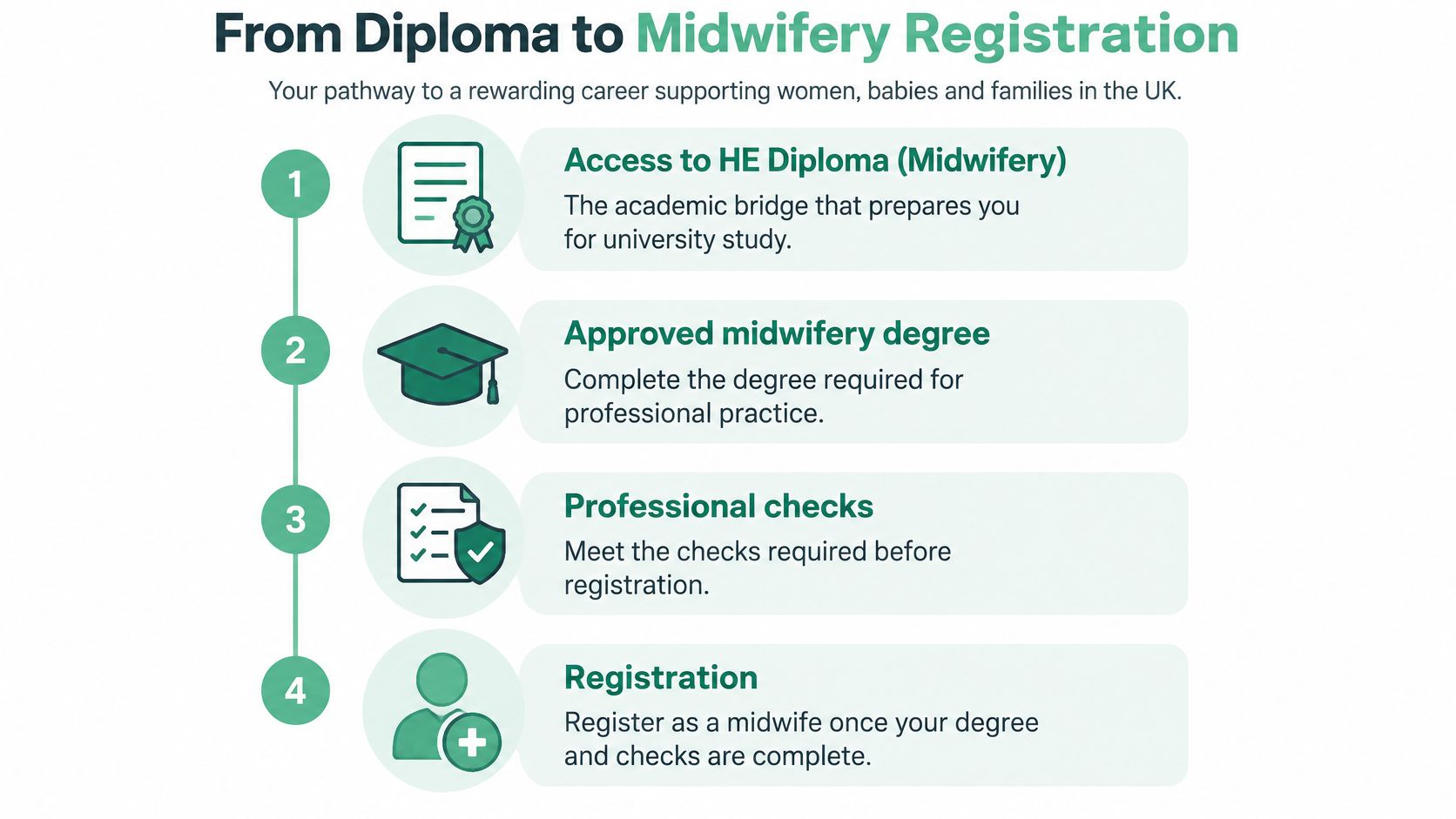
From Access diploma to NMC registration
| Stage | What happens | Typical length |
|---|---|---|
| Access diploma | Academic study and assessment | Set by your provider; confirm before enrolling |
| University application | Apply through UCAS and meet university conditions | Application cycle before entry |
| Approved midwifery degree | NMC-approved education with clinical practice | At least three years |
| NMC registration | Meet health and character requirements and register | After the degree |
The government qualification record identifies the Access qualification. To qualify as a midwife, you must complete an NMC-approved programme, normally at least three years, with at least half in clinical practice, then meet the health and character requirements for registration.
According to NHS England's pay-review evidence, midwifery applications in England fell from 10,170 in 2021 to 7,290 in 2024, while 1,842 full-time-equivalent vacancies remained in June 2024. Workforce need does not guarantee a job. Ask universities about placement locations and schedules, and check local recruitment.
For a fuller outline of the route, read what you need to become a Midwife in the UK. Watch the accompanying video as you consider your next steps.
Start your Access to HE Diploma (Midwifery) with Stonebridge
Before enrolling, read each of the course page tabs. Then consider where study can fit into your routine.

The monthly subscription can be paused or cancelled without a long-term credit agreement. You'll need an active subscription to submit assignments for marking, and tutor support is available as you study.
Stonebridge Associated Colleges offers online Access diplomas to help prepare you for university. Visit Stonebridge Associated Colleges, review the Access to Higher Education Diploma (Midwifery), and check the entry requirements before planning your first study session.