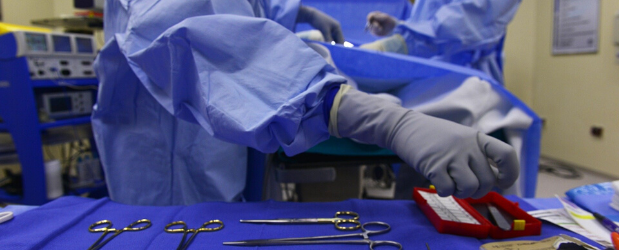
Nurses are an integral part of our healthcare system, providing care, advice, emotional support and more.
Nurses are trained to support their local communities in a wide range of ways. They support individuals to manage health conditions, overcome challenges, recover from illness and maintain their wellbeing. In hospitals and community settings, nurses provide essential care, support clinical procedures and work alongside other healthcare professionals to improve patient outcomes.
Choosing to become a nurse represents a huge personal and professional commitment.
Changing career to one, where every day and every decision really matters, is a big step. Moreover, it requires a significant amount of training in order to qualify.
To become a registered nurse in the UK, you will need to complete an approved nursing degree and register with the Nursing and Midwifery Council (NMC).
To become a nurse, you will require a degree in nursing which will mean applying to a relevant university.
If you lack the qualifications you need to apply don’t panic, you have options.
Fortunately, not having A Levels does not mean your ambition of becoming a nurse has to end. Many adult learners progress towards nursing degrees through alternative Level 3 qualifications, such as Access to Higher Education Diplomas.
There are a few different routes you can take into nursing intended to suit different circumstances and backgrounds.
Minimum requirements
First, it’s important to manage your expectations. Although specific entry requirements vary from one university to another, there is a minimum they are willing to accept. Nursing degree entry requirements are set by individual universities, so it is important to check the requirements of your chosen course before applying.
Generally, universities look for evidence of literacy and numeracy skills, alongside a recognised Level 3 qualification or equivalent.
In order to be accepted onto a nursing degree course you will need the following:
- Demonstrate evidence of literacy and numeracy
- Complete any required health screening and disclose relevant support requirements so that reasonable adjustments can be considered where appropriate
- Declare any past criminal convictions
- Allow the university to check whether you have a police record. You will not automatically be barred if you have a criminal conviction or caution. The university will consider the circumstances and will treat any information in the strictest of confidence.
Depending on the university, applicants may also need to complete additional checks or assessments before starting their nursing degree, including a Disclosure and Barring Service (DBS) check.
Required qualifications in England, Northern Ireland and Wales include:
– A Level 3 qualification or equivalent, such as A Levels or an Access to Higher Education Diploma
– GCSEs or equivalent qualifications, including English and maths (requirements vary by university)
In Scotland, one of the following is required:
3-5 SQA Highers plus 2 standard grades/National 5’s – this should include English and maths
Completion of a relevant HNC/HND including English plus maths at Standard Grade/National 5 level
Completion of an appropriate Scottish Wider Access Programme (SWAP). Access to Nursing and SWAP programmes have been specifically developed for adults who have no or few qualifications and have been out of education for some time.
Entry requirements differ across the UK, so if you know where you would like to study, contact the university directly to confirm which qualifications they accept. This will help you choose the right pathway into nursing.

Choosing the right pathway
As stated above, in order to be accepted on to a nursing degree course, you will need A Levels or equivalent qualifications. A Levels have been the accepted school leaver qualification since the 1950s so it’s something that’s widely recognised.
However, A Levels are not the only route into nursing. For many adults returning to education or changing careers, an Access to Higher Education Diploma can provide a more focused pathway towards a nursing degree.
Although this is an advantage, it isn’t necessarily the best qualification to obtain ahead of a nursing degree…
Access to HE Diploma in Nursing
The Access to Higher Education Diploma was developed specifically for anyone aged 19 or over who wants to go to university.
It is a Level 3 qualification designed to help adult learners gain the subject knowledge, academic skills and confidence needed to progress to higher education.
The courses are tailored to give you a firm foundation in your chosen subject and introduce you to university level study.
For anyone who knows the specific subject or career they want to move into, Access to HE Diplomas are ideal.
Access to HE Diplomas are developed in partnership with universities, so the content is up to date and reflects the material covered at degree level. This gives you the best possible place to start.
The Access to Higher Education Diploma (Nursing) is designed specifically for learners who want to progress towards a nursing degree, helping them develop knowledge across key healthcare topics before beginning university study.
Despite this, the diploma isn’t recognised by all universities. Most, but not all. So again, it’s important to check if your chosen university will accept your application based on obtaining the qualification.
Universities set their own entry requirements, so you should always confirm that your chosen nursing degree accepts your Access to HE Diploma before enrolling.
The Access to Higher Education Diploma in nursing covers essentially everything you need to know in a highly focussed way.
During the course, you will explore a wide range of topics linked to nursing and healthcare, including human biology, health conditions, professional practice and the skills needed to work effectively within healthcare environments.
You will develop an understanding of healthcare communication, confidentiality, record keeping and the importance of effective teamwork within multidisciplinary healthcare teams.
The course also covers professional behaviours in nursing, including patient-centred care, ethics, professional standards and approaches to managing risk and solving problems in healthcare settings.
You will explore equality, diversity and inclusion within healthcare, including relevant legislation and the importance of providing respectful, inclusive care for people from all backgrounds.
Your studies will also cover key biological and health-related topics, including cell structure and function, the endocrine system, the musculoskeletal system, the nervous system, infection and immunity, and the impact of health conditions such as dementia.
Alongside this, you will learn about mental health and coping strategies, health promotion, poverty and the wider factors that can influence health and wellbeing.
The diploma also helps you build essential academic skills, including academic writing, reading, research and note-making, helping you prepare for the demands of university-level study.

You will also explore approaches to health, growth and development.
By completing the Access to Higher Education Diploma (Nursing), you will have developed the knowledge, confidence and study skills needed to take the next step towards a nursing degree.
Alternative Routes into Nursing
There are other ways to become a nurse if you don’t have the right qualifications, although the route can differ in terms of length and demand.
While an Access to Higher Education Diploma is a popular route for adults without traditional qualifications, there are other pathways available depending on your previous education, experience and career goals.
Post-Graduate Diploma
If you already have a degree in a related subject, then you may be eligible for a post-graduate diploma. The related subject could be a BSc or a BA. Again, check with the university to determine what counts as a related subject.
Some universities offer postgraduate nursing programmes for graduates who want to qualify as a registered nurse. Entry requirements vary, so it is important to check with individual universities before applying.
The diploma takes 2 years but at the end of the course you will be a qualified, registered nurse.
These programmes can provide an accelerated route into nursing for eligible graduates, although the exact length and structure will depend on the course provider.
Returning to Practice
Any nurses wishing to return to practice may do so, but they are required to take refresher course. Depending on how long it has been since you last practiced, it could take between 3 and 12 months.
Nurses who have previously been registered and want to return to practice must complete an approved return-to-practice programme before re-registering with the NMC. The length of the programme depends on individual circumstances and previous experience.
Nursing Degree Apprenticeships
Nursing Degree Apprenticeships offer a flexible route into nursing. The course takes 4 years and requires you to complete a nursing degree while learning on the job.
You will still need at least a level 3 qualification as you will be studying a degree level. If you lack A Level qualifications (or equivalent) then an Access to Higher Education Diploma is your best bet.
Nursing degree apprenticeships combine academic study with practical workplace experience. Applicants still need to meet the entry requirements set by both the employer and university offering the apprenticeship.
The only real challenge is finding somewhere willing to take you on as an apprentice.
Availability can vary depending on local employers and healthcare organisations offering apprenticeship places.
Whether you are looking to progress directly towards university or return to education after a break, Stonebridge College can help you take the next step towards your nursing career.
The Access to Higher Education Diploma (Nursing) is available through flexible 100% online study, allowing you to work towards your qualification around your existing commitments.
With a subscription-based learning model, tutor support and the freedom to study at your own pace, Stonebridge College helps adult learners build the knowledge and confidence needed for their future.
You will have access to qualified tutor support throughout your studies, helping you complete assignments and develop the academic skills required for higher education.
Start your journey towards nursing today by exploring the Access to Higher Education Diploma (Nursing) at Stonebridge College.




Leave a Reply