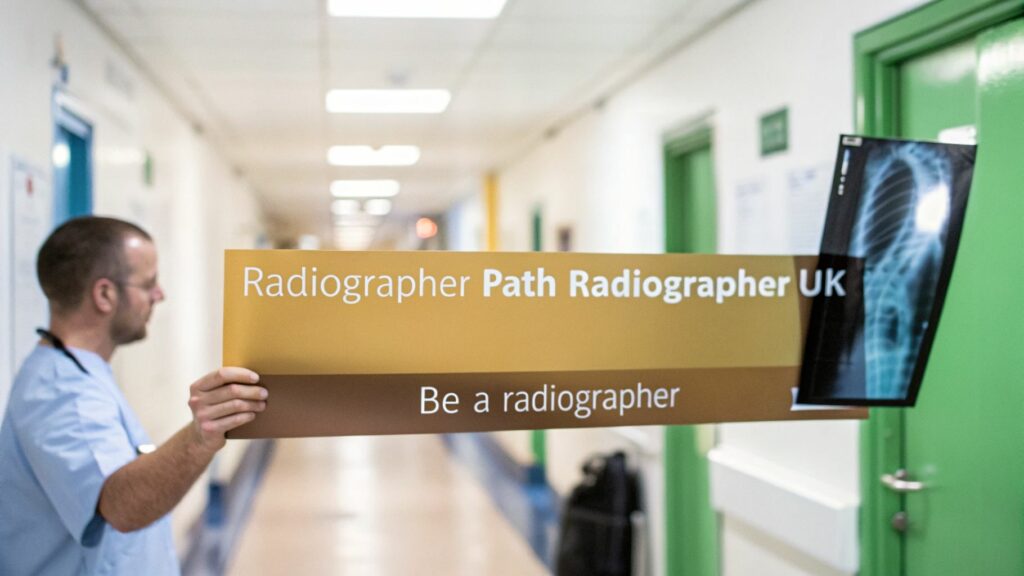
Ever wondered what it's like to be on the front line of modern medicine, blending advanced technology with compassionate patient care? If you’re considering a career in radiography, you’re likely curious about what the job really involves. What does a typical day look like? How can you get the qualifications you need without putting your life on hold?
This guide offers a realistic look into the life of a therapeutic radiographer—a role that is as challenging as it is rewarding. We'll also explore how you can start your journey from home, making a career change more achievable than you might think.
A Day in the Life of a Therapeutic Radiographer
Imagine a job where your technical skill and your capacity for kindness are equally vital. That’s the world of a therapeutic radiographer. Unlike their diagnostic colleagues who take images to find diseases, therapeutic radiographers are cancer treatment specialists. Their job is to plan and deliver targeted radiation therapy to fight cancer cells.
A typical day is a structured blend of science and human connection.
-
Morning Huddle and Prep (8:00 AM): The day begins with a team meeting. You’ll review the treatment schedules, discuss complex cases with oncologists and physicists, and ensure the sophisticated linear accelerator machines are calibrated with millimetre precision. This meticulous preparation is crucial—there's no room for error.
-
First Patient (9:00 AM): Your first patient arrives. You greet them warmly, help them get into the correct position on the treatment couch, and explain what will happen. For many, this is a daily or weekly appointment over a long period. You become a familiar, reassuring face during one of the most frightening times of their lives. Building that trust is a huge part of your role.
-
The Treatment (Throughout the Day): From the control room, you operate the machinery, delivering the precise dose of radiation according to the carefully calculated plan. You monitor the patient constantly via cameras and intercoms, offering words of encouragement. Each session is relatively short, but the emotional and technical focus required from you is intense.
-
Patient Support and Planning (Between Sessions): The day isn't just about administering treatment. You'll spend time talking to patients about side effects, offering advice, and liaising with other healthcare professionals to ensure their care is seamless. You might also be involved in creating new treatment plans, using complex software to map out the exact target for the radiation beams.
It’s a demanding role. The emotional weight of supporting people through cancer treatment can be heavy, and the technical responsibility is immense. But the reward? It's seeing the direct impact you have. It’s being part of a team that gives patients hope and a fighting chance. It’s a career with profound purpose.
Building Your Educational Foundation
So, how do you get there? Before you can step into a hospital, you need the right academic building blocks. The standard route is a university degree, which typically requires A-Levels in science subjects.
But what if you don't have those? What if your school days are behind you and you're looking for a career change? This is where an alternative, flexible pathway becomes your greatest asset.

The Access to Higher Education Diploma: Your Direct Route to University
For aspiring radiographers without the traditional qualifications, the Access to Higher Education (HE) Diploma is the most effective and widely recognised alternative. It's a Level 3 qualification, equivalent to A-Levels, and specifically designed for adults returning to education.
This diploma gives you the UCAS points and scientific knowledge that university admissions tutors are looking for. It’s not just a qualification; it’s a prep course that sharpens your academic skills and builds your confidence, making the leap to a demanding degree feel much less intimidating.
The Access to HE Diploma proves to universities that you’re committed, capable, and ready for the challenge of a radiography degree.
Flexible Online Learning with Stonebridge College
The biggest hurdle for many adult learners is juggling study with work, family, and life's other commitments. This is where online learning changes the game.
Stonebridge College’s Access to Higher Education Diploma (Radiography) allows you to work towards the degree stage of your training entirely from home. This flexibility means you can fit your studies around your life, not the other way around.
This approach offers some huge benefits:
-
Study at Your Own Pace: You control the schedule, moving through modules as quickly or slowly as you need to.
-
No Commuting: Save time and money by studying from anywhere with an internet connection.
-
Manage Existing Commitments: Keep your job and earn while you study, removing much of the financial pressure.
Stonebridge makes this even more accessible with a unique subscription-based model. Instead of a large upfront cost or a restrictive loan, you pay a simple monthly fee. You can pause or cancel your subscription at any time, giving you complete financial control and peace of mind. This low-risk model, combined with personalised support from qualified tutors, provides a practical and supportive path to your new career.
Diagnostic vs Therapeutic Radiography: Which Path Is Yours?
Before you apply for a degree, you’ll need to choose a specialism. While we've focused on the therapeutic side, it's vital to understand the other main branch: diagnostic radiography.
The Medical Detective: Diagnostic Radiography
Think of a diagnostic radiographer as a medical detective. Your primary role is to create high-quality images (X-rays, CT scans, MRIs) that help doctors diagnose illnesses and injuries. The work is fast-paced and varied, and you'll interact with many different patients each day in a variety of situations.
- Choose Diagnostic if: You love variety, work well under pressure, and have a passion for technology and anatomy.
The Cancer Treatment Specialist: Therapeutic Radiography
As we've explored, a therapeutic radiographer plans and delivers radiation treatment, primarily for cancer patients. This role involves building strong, long-term relationships with patients and being a core part of their treatment journey.
- Choose Therapeutic if: You want to build lasting relationships with your patients and be directly involved in their treatment and recovery.
Whichever path you choose, job security looks strong. The UK radiography workforce is growing, and demand is high. You can discover more insights about the growing demand for radiographers and what it means for your future career.
How Flexible Online Learning Sets You Up for Success
For many adults, the dream of a new career can feel out of reach. Juggling a job, family, and finances makes traditional college seem impossible. Modern online learning breaks down these barriers, putting you back in control of your career journey.
Take Control with a Self-Paced Course
The Stonebridge Access to Higher Education Diploma (Radiography) is 100% online, giving you the freedom to work at a speed that suits you. Your education adapts to your life, not the other way around.
A Financially Flexible Way to Study
Stonebridge's unique subscription model gives you real financial breathing room. Instead of a large upfront cost, you pay a manageable monthly fee.
-
No Long-Term Debt: You aren’t tied into a restrictive credit agreement.
-
Pause or Cancel Anytime: If your situation changes, you can simply pause your studies and your subscription.
-
Budget-Friendly Learning: Affordable monthly payments make it easier to manage your finances while you study.
This approach significantly lowers the financial risk, making the decision to invest in your future feel safer and more achievable.
Building Confidence with Personalised Support
Studying online doesn’t mean you’re on your own. With Stonebridge, you get personalised guidance from dedicated tutors. This one-to-one support is vital for building the academic skills and confidence you'll need to thrive when you start your BSc in Radiography.
An online Access to HE Diploma offers a practical and empowering route for anyone determined to start their journey towards a career in radiography in the UK.
Becoming a Registered Professional and Growing Your Career
Graduating with your radiography degree is a huge achievement, but it's the official start of your professional journey. From here, your potential for growth is enormous.

The Key to Practice: HCPC Registration
Before you can legally work as a radiographer in the UK, you must register with the Health and Care Professions Council (HCPC). This is your licence to practise, assuring employers and the public that you meet the national standards for training and professional skills.
Your Starting Salary and Career Advancement
Most newly qualified radiographers in the UK start in the NHS at Band 5, with a solid starting salary and a clear framework for pay rises. Financial prospects are strong, with significant growth as you gain experience and specialise. You can explore a full breakdown of salary expectations for UK radiographers on Remitly.
A Band 5 role is just the beginning. Radiography offers a rich and varied career path with plenty of opportunities to grow into specialist areas like MRI or sonography, or move into management, research, or advanced practitioner roles.
Got Questions About a Career in Radiography?
Deciding on a new career path is a big deal. Here are some straightforward answers to common questions about becoming a radiographer in the UK.
Is Radiography a Difficult Career to Get Into?
It’s competitive, but absolutely achievable with the right preparation. Universities want to see a solid academic base—which is why an Access to Higher Education Diploma is such a great route for adult learners—but they also want to see your passion for the role.
How Long Does It Take to Qualify?
A BSc (Hons) in Radiography is typically a three-year, full-time course. If you’re starting with an Access to HE Diploma, you'll need to factor in about a year for that preparatory study first. So, for many career-changers, it's a four-year journey from start to finish.
What Is the Job Market Like for Radiographers?
In a word: excellent. The UK is facing a significant workforce shortage in this area, which means skilled professionals are in very high demand. This translates into fantastic job security and plenty of opportunities for newly qualified radiographers. You can read the full analysis on the UK's radiography workforce crisis on AuntMinnie Europe to get a deeper insight.
Your path to a rewarding new career is clearer than you might think. Here at Stonebridge Associated Colleges, we specialise in flexible, supportive online courses designed to fit around your life and help you succeed.
Ready to take the next step? Take a look at our Access to Higher Education Diploma (Radiography) and discover how our subscription-based learning can work for you.