Changing direction into zookeeping can feel exciting and uncertain at the same time. At Stonebridge, we speak to adult learners who are working full time, raising families, or returning to study after a long break, and who want to know whether a love of animals can become a realistic career. The answer is yes, but employers look for more than enthusiasm. They want evidence of knowledge, reliability, safe working, and practical animal care skills.
In this guide, we explain zookeeper qualifications in the UK through the lens of the Stonebridge route. Our focus is on how the Level 3 Zookeeping Diploma can help you build the knowledge needed for this field, and how online study works best when it is paired with practical experience. You will also see where workplace training and hands-on animal care fit into the bigger picture, so you can decide whether this path is right for you.
Thinking about a career working with animals
If you are considering a move into zookeeping, you may be asking practical questions. Do you need a degree? Is it too late to start? Will online learning be taken seriously?
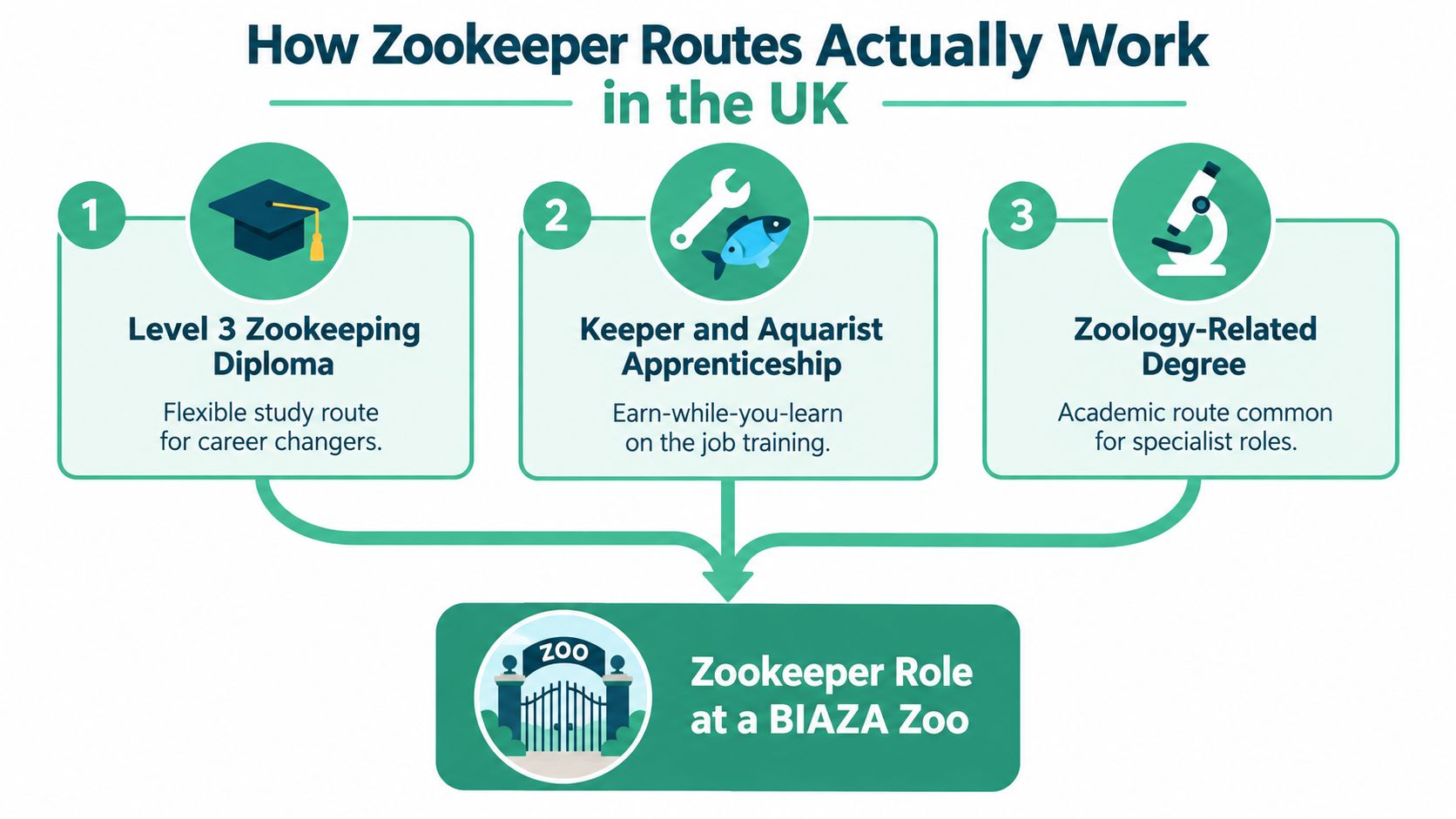
There is no single qualification required for every zookeeper role in the UK. The National Careers Service profile for Zookeepers outlines different ways people can move into this kind of work, depending on their background and the role they are aiming for.
At Stonebridge, we designed our Level 3 Zookeeping Diploma for learners who want a flexible way to begin building relevant knowledge while continuing with existing responsibilities. For many adult learners, that matters. Leaving work immediately or waiting for a suitable vacancy is not always realistic. A structured online qualification can help you make progress now, while you build practical experience alongside it.
Online learning is a valuable starting point, but we believe it should be seen clearly for what it is. It can teach the theory behind animal welfare, husbandry, behaviour, conservation, and legislation. It can help you understand why species need particular diets, habitats, or enrichment. What it cannot do is fully replace supervised, real-world practice. Skills such as cleaning habitats safely, preparing feeds in a working environment, observing behaviour in context, and following site-specific procedures are developed through hands-on experience.
That is why we encourage learners to treat study and practical work as partners. A Stonebridge qualification can give you the structure, confidence, and underpinning knowledge to move forward, while volunteering or entry-level animal care experience helps you apply that learning in a real setting.
Practical rule: Treat online study and practical experience as partners, not competing routes.
For many people, the most realistic plan starts with flexible study, followed by steady practical experience built around work and family life. This route is not instant, but it is achievable, and it allows you to develop both understanding and evidence of commitment over time.
How the Stonebridge route fits into zookeeping in the UK
A career change often starts at home, with research, reflection, and the decision to take a first step. In zookeeping, that first step is often about building knowledge in a structured way, then finding opportunities to develop practical experience.
At Stonebridge, our Level 3 Zookeeping Diploma is designed for learners who need flexibility while still wanting a route that connects theory with real zoo practice. The course is delivered online and typically takes 12 to 18 months to complete, giving learners the chance to build knowledge in areas such as husbandry, welfare, behaviour, conservation, and legislation around existing responsibilities.
One important point is that practical experience is not presented in just one way. The course includes an optional one-week practical placement at participating collections such as Blackpool Zoo, Colchester Zoo, Dartmoor Zoo, or Jimmy’s Farm and Wildlife Park, as outlined on the course page. That means learners can study the theory online and, if they choose, add a short structured zoo placement to help bring that learning to life.
We think that matters because online study can explain the principles behind animal welfare, husbandry, enrichment, and safe working, while practical exposure helps learners see how those principles are applied in a real zoo environment. The placement is a valuable option for learners who want direct insight into day-to-day zookeeping.
The broader UK sector includes other forms of training and development, but in this guide our focus is the Stonebridge route and how it may suit adult learners who need flexibility at the start of their journey.
What the Stonebridge Level 3 Zookeeping Diploma covers
A strong Level 3 course should do more than introduce interesting species. It should help you understand the responsibilities behind professional animal care and give you a clear foundation for further development.
Our Level 3 Zookeeping Diploma is designed to build understanding across a range of areas that matter in zoo and wildlife settings. Although your practical experience may involve local animals rather than exotic species, the theory you study can still support a broad understanding of responsible animal care.
Typical study areas include:
-
Animal health and welfare: recognising normal behaviour, identifying possible concerns, and understanding the five welfare needs.
-
Husbandry and nutrition: preparing appropriate diets, maintaining hygiene, and considering species-specific feeding strategies.
-
Behaviour and enrichment: observing animals carefully and using activities that support natural behaviours.
-
Habitat and enclosure management: considering space, shelter, substrate, climate, complexity, and visitor safety.
-
Breeding and conservation: understanding reproduction, population management, and the conservation role of responsible collections.
-
Legislation and ethics: working within animal welfare and zoo licensing requirements while considering the responsibilities involved in keeping wild animals.
Assessment may combine written work, short-answer questions, and practical evidence. If you are volunteering or working in animal care, a supervisor may be able to provide witness testimony, subject to course requirements. A reflective portfolio can then help connect what you are doing in practice with the knowledge you are developing through study.
A regulated RQF qualification is different from an informal short course. It sits within the UK qualifications framework and follows defined quality processes. That does not guarantee a job, and it does not replace supervised competence, but it can give employers clearer evidence of organised study and commitment.
Before enrolling on any course, it is important to understand the syllabus, assessment methods, and how theory links to practical development. At Stonebridge, we aim to make that fit clear for adult learners who are planning study around existing commitments.
A realistic week for a Stonebridge learner
Many of our learners need study to fit around real life. That often means balancing education with work, family responsibilities, and the challenge of finding suitable hands-on experience.
Sophie is a representative example. She is a teaching assistant in Yorkshire, has family responsibilities, and wants to move towards zookeeping without giving up her income immediately.
On Monday evening, she studies animal nutrition after dinner. She compares feeding principles across species, makes notes on food preparation, and watches a recorded session about enrichment. Because the course is flexible, she can pause and return to it around family life.
Wednesday brings a shorter study window. During her lunch break, Sophie reviews an animal behaviour unit and adds ideas to an assignment on enclosure design. She does not confuse theory with practical competence. Instead, she notes questions to raise with a tutor and to explore at a later date.
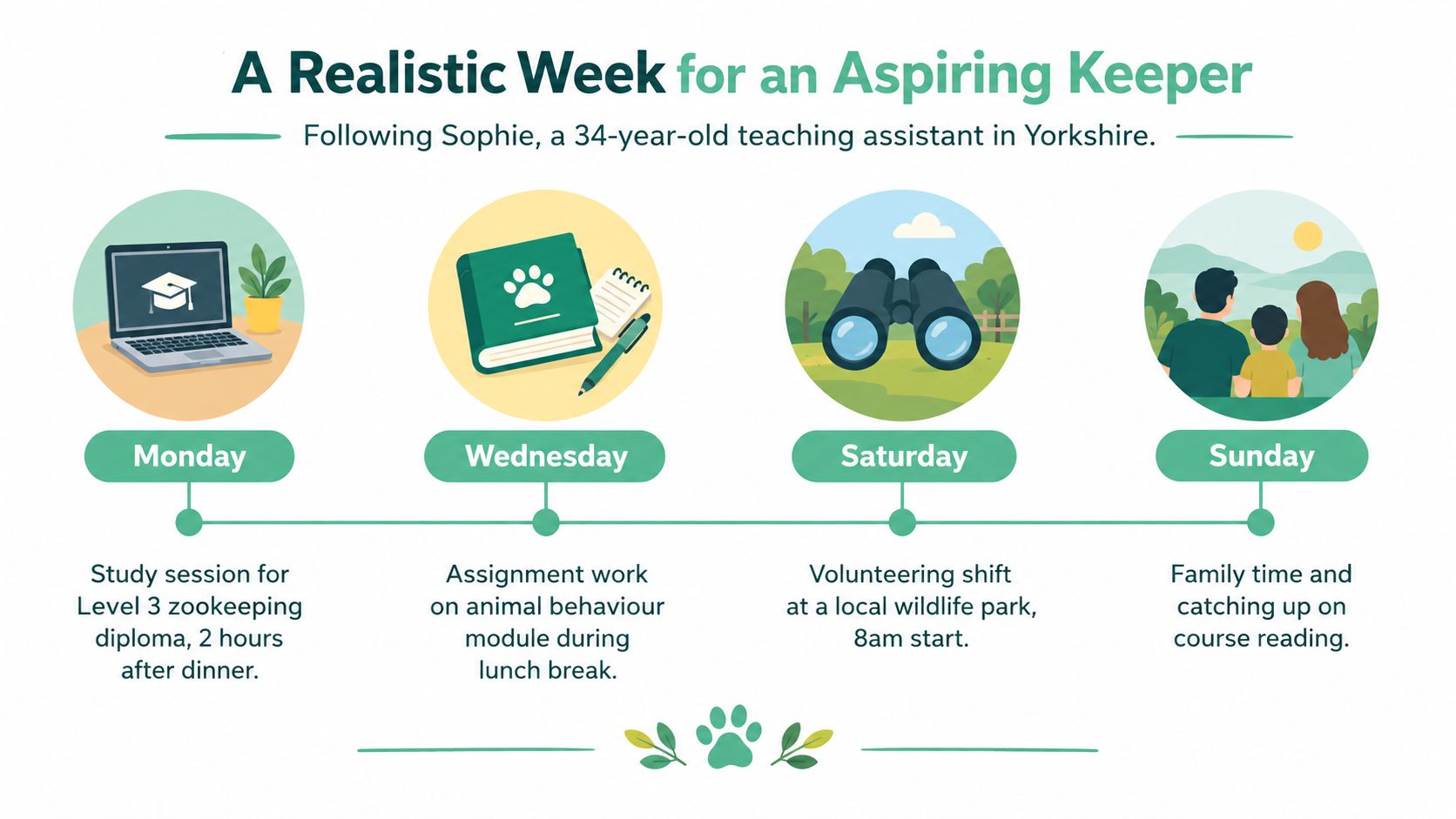
On Saturday, she starts early at a local wildlife park. She helps with supervised cleaning tasks, prepares food for primates, and observes how keepers check habitats before animals enter them. She logs what she did, what she noticed, and what she needs to learn next, then asks an appropriate supervisor to confirm relevant evidence.
On Sunday afternoon, she catches up on course reading and uses the learndirect: Community Hub app. Learners and alumni of the learndirect Digital Group can join discussion groups, ask questions, and exchange perspectives with people following different online learning paths.
This is not a promise that every learner will follow the same routine. It is a practical example of how small, regular study sessions can fit around everyday responsibilities while still supporting steady progress.
Why a flexible diploma appeals to adult learners
One of the main reasons learners choose Stonebridge is flexibility. If you are changing career, supporting a family, or trying to re-enter education after time away, a home-based qualification can make the process feel possible.
Our Level 3 Zookeeping Diploma does not automatically provide employment, and it does not claim to replace workplace learning. What it does offer is a structured, manageable way to begin building sector-relevant knowledge while keeping control of your current routine.
That matters because many aspiring keepers are not able to wait for the right vacancy, commute to a specialist site several days a week, or reorganise their whole lives before taking a first step. Studying online allows you to begin now, then build practical experience as opportunities become available.
English and maths also remain important. Keepers need to interpret diet sheets, complete records, communicate with colleagues and visitors, and follow welfare procedures accurately. Building confidence in study can therefore support wider professional development too. If you need to brush up on these skills, check out this course option.
Building real experience alongside your Stonebridge studies
Online learning becomes far more useful when you connect it to real observations and supervised tasks. If you decide to study with Stonebridge, one practical option is the course's optional one-week placement at a participating collection, which can help you see how welfare, husbandry, enrichment, and safe working are handled in a real zoo setting. Alongside that, or if you need broader experience over time, we recommend looking for suitable hands-on animal care opportunities where possible.
That might involve approaching UK zoos, wildlife parks, aquariums, city farms, or bird-of-prey centres. A large collection is not the only environment where you can develop useful animal care habits. Reliability, observation, hygiene, and safe working all matter.
Contact volunteer coordinators with a concise application. Explain your availability, relevant experience, and willingness to follow instructions. A collection may ask for an interview, references, a DBS check, or a trial shift, so allow time for the process.
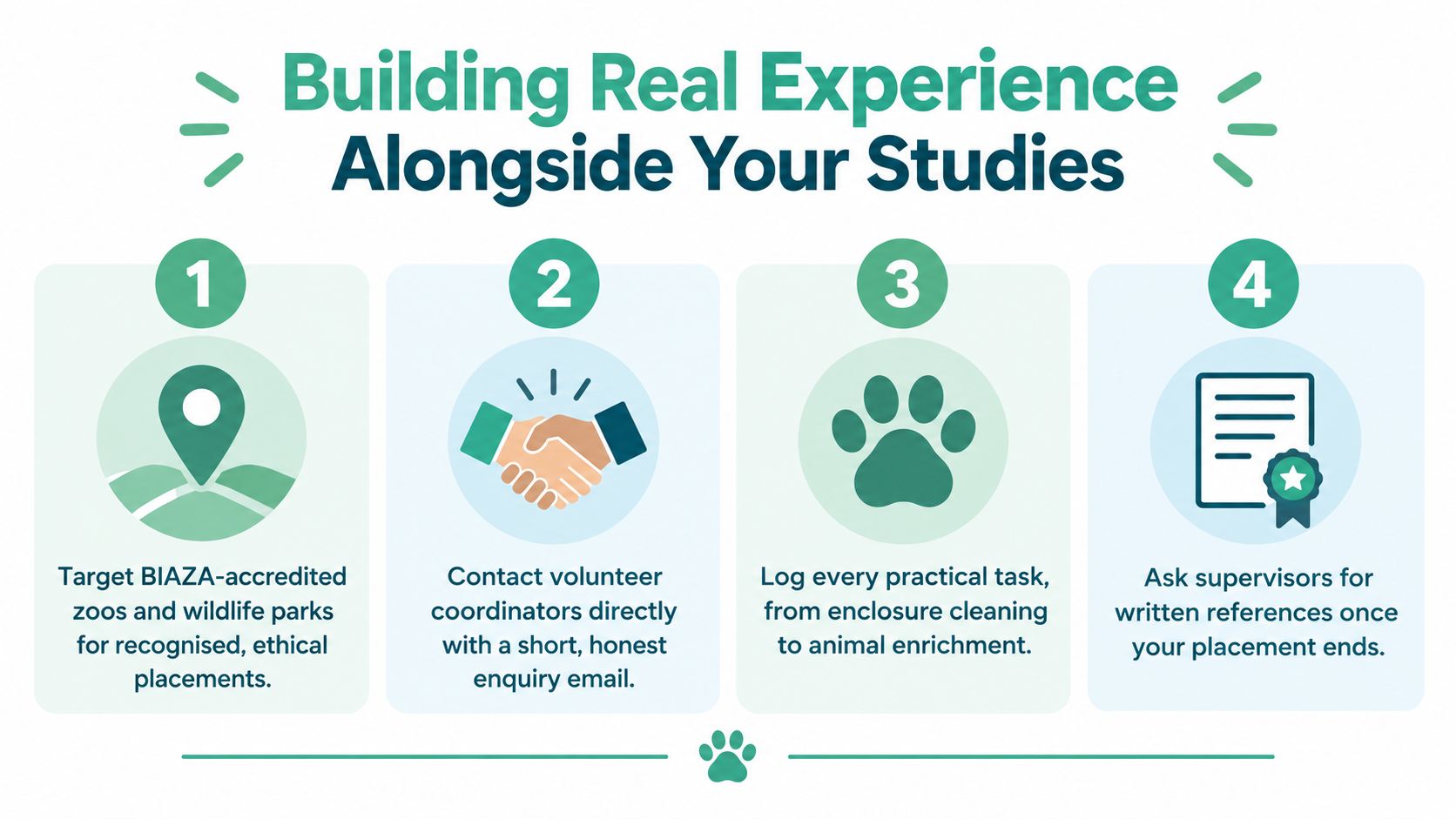
Keep a record from the first shift. Include:
-
The task: For example, habitat cleaning, food preparation, or enrichment setup.
-
The context: Note the species, relevant instructions, and safety measures.
-
The reflection: Record what you observed, what went well, and what you would improve.
-
The confirmation: Ask an appropriate supervisor whether they can verify the activity.
Unpaid experience needs careful planning. Travel costs, regular attendance, and physical demands can make placements difficult alongside work or caring responsibilities. This also applies if you are considering the optional placement, so it is worth checking timings, travel, and suitability before committing. Ask about expectations before agreeing, and never take on duties beyond your training or supervision.
Experience with domestic animals can still be useful. Stable work, dog walking, and marine conservation volunteering may demonstrate reliability, observation, and safe handling habits. These experiences can support your development, even if they do not prove competence with every exotic species.
UK zoo licensing guidance says staff caring for animals must be able to recognise normal behaviour and signs of pain, suffering, injury, disease, or abnormal behaviour. Staff must hold an appropriate Ofqual-regulated qualification or demonstrate relevant experience, and licensed collections need appropriate Level 3 expertise within their permanent team. Review the UK Government zoo-licensing requirements.
Study zookeeping with Stonebridge
Stonebridge offers the Level 3 Diploma in Zookeeping (RQF), studied online and designed to help learners build knowledge in areas such as animal welfare, ethics, conservation, and zoo animal management.
A key feature of the Stonebridge route is that it combines flexible online study with the option of a one-week practical zoo placement at participating collections including Blackpool Zoo, Colchester Zoo, Dartmoor Zoo, and Jimmy’s Farm and Wildlife Park, subject to availability and minimum group sizes, as explained on the course page. This gives learners a clearer way to connect theory with practical observation and supervised activity in a real zoo setting.
Assessment is completed through a portfolio of evidence after each unit, with work overseen by qualified experts.
Stonebridge Associated Colleges uses a subscription-based model across its vocational and academic courses. Learners study online, receive personalised tutor support, and can pause or cancel a subscription without a long-term credit agreement. The modular format can help you organise study around work, family, and the practical side of your development.
Learners and alumni of the learndirect Digital Group can also use the learndirect: Community Hub app. Its discussion groups, topic communities, and interactive forums offer a way to exchange questions and ideas during what can otherwise feel like an independent learning journey.
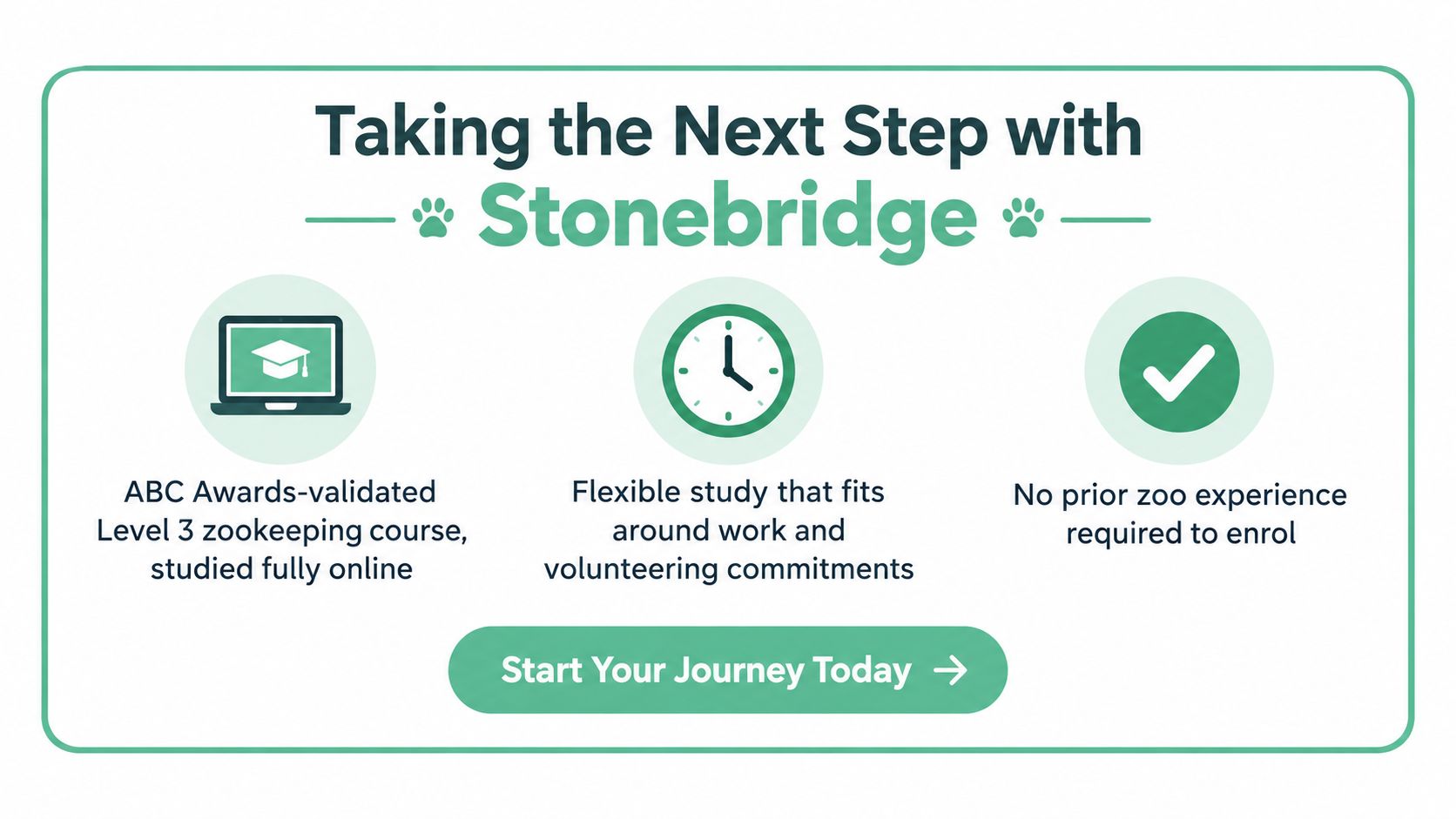
If zookeeping remains your goal, start with a practical plan. Review the Level 3 Zookeeping Diploma course details, consider whether the optional placement would suit your circumstances, and create a weekly study routine you can maintain.
At Stonebridge Associated Colleges, we offer flexible online learning with tutor support for learners who want to take a realistic first step towards zookeeping and animal care. Visit Stonebridge Associated Colleges to explore the course, request further information, and start planning your next step.