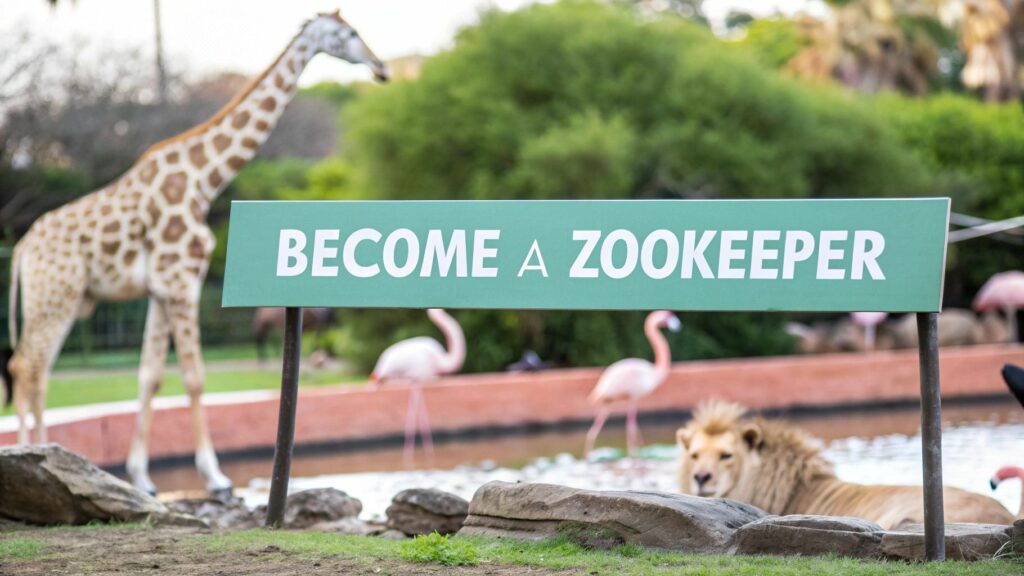
Ever wondered what separates a good zoo from a great one? It’s not just about the incredible animals; it’s about the worlds we create for them. A zookeeper's role goes far beyond daily feeding and cleaning. Today, it’s a career deeply rooted in science and creativity, where the ability to design and improve an animal's home is one of the most vital skills you can have.
It's about crafting dynamic, stimulating environments that promote natural behaviours, ensure safety, and prioritise animal wellbeing above all else. Understanding the art and science of enclosure design is what transforms a caretaker into a true animal welfare expert, and it's a skill that can make your zookeeping application stand out.
Starting Your Zookeeping Journey
Let's be honest: zookeeping is one of the most competitive fields in animal care. For every single job opening, you can expect dozens, sometimes even hundreds, of people to apply. This isn't a career you just stumble into; it's a calling that needs real dedication right from the start.
If you’re picturing relaxed days spent with exotic animals, you might need to adjust that image. The reality is tough physical work, complex problem-solving, and a deep, unwavering commitment to the animals, often in freezing cold or pouring rain. To really make it, you need more than just a love for wildlife. You need a certain set of personal skills to get you through the challenging days.
The Core Traits of a Successful Zookeeper
Before we even get to the qualifications, it’s vital to know if you've got the right stuff personally. This job is physically and emotionally draining, and zoos are looking for people who are practical and resilient.
You'll need to have:
-
Physical Stamina: A zookeeper's day involves lugging heavy bags of feed, scrubbing out huge enclosures, and being on your feet from morning till night. Being reasonably fit isn't a bonus; it's essential.
-
Patience and Sharp Observation: Animals can't just tell you when something is wrong. A good keeper is someone who spots the tiny shifts in behaviour, eating habits, or group dynamics that could be the first sign of a problem.
-
Emotional Resilience: You'll form incredibly strong bonds with the animals you care for. That means having to cope with illness, old age, and sometimes loss. It's a tough but unavoidable part of the job.
-
A Scientific Mind: Modern zookeeping is grounded in biology, ethics, and conservation science. You have to be hungry to learn and ready to apply scientific thinking to your daily work.
A zookeeper is a unique mix of caretaker, scientist, educator, and labourer. You need to be just as comfortable scrubbing a mucky enclosure as you are logging detailed behavioural notes or chatting to the public about conservation efforts.
Your Foundational Starting Point
Once you've ticked the personality boxes, it's time to build your foundation. There isn't a single, rigid path to follow in the UK, but a blend of education and practical experience is always the winning formula.
Your journey really begins with the basic academic building blocks. Most entry-level courses and apprenticeships will want to see a good set of GCSEs, especially in subjects that show you've got the right aptitude for this kind of work.
Here’s a quick look at the core personal skills and educational basics you'll need to get started in the UK zookeeping field.
Essential Zookeeper Attributes and Starting Qualifications
| Requirement Type | What This Looks Like in Practice |
|---|---|
| Personal Attributes | Showing a strong work ethic, physical fitness, patience, and a genuine passion for animal welfare and conservation. |
| Starting Qualifications | Typically, you'll need at least 4-5 GCSEs at grades 9 to 4 (A to C)*, including English, Maths, and a Science subject like Biology. |
Having these essentials in place is your first major step on the ladder towards a truly rewarding career.
Building Your Educational Foundation
Once you have the personal motivation, the next step is obtaining the right academic qualifications. While passion fuels you, a solid education is the engine that drives your journey to becoming a zookeeper. Think of it as laying a strong foundation—the stronger it is, the higher you can build your career.
In the UK, there are multiple pathways into zookeeping. Options range from college courses and apprenticeships to university degrees. The best choice depends on your current qualifications and long-term career goals.
Starting with College Courses and Diplomas
Many aspiring keepers start at college. Practical, vocational courses are well-regarded because they combine essential theory with hands-on skills you'll use in the field. These qualifications prepare you for the job's realities. Courses to consider include:
– BTEC Diplomas in Animal Management or Animal Care: These cover a wide range of topics, from animal health and welfare to biology and husbandry routines.
– T Levels in Animal Care and Management: This newer qualification includes substantial industry placement, offering invaluable on-the-job experience right from the start.
Taking these courses demonstrates to employers that you have the core knowledge needed for an entry-level position. It shows your commitment and gives you the terminology and understanding to start effectively.
The University Degree Path
Is a university degree necessary? Not always for entry-level roles, but it's important for senior positions. A degree can significantly help if you're aiming for roles like Head Keeper or Curator, or if you want to move into zoo-based research and conservation management.
Relevant degrees include:
– Zoology
– Animal Behaviour
– Conservation Biology
– Marine Biology
A degree shows a deeper understanding of scientific concepts and analytical skills, equipping you with knowledge of things like population genetics and advanced behavioural science, which are vital to a modern zoo's mission.
Before applying, it's wise to consider if you're ready for the role's demands. This decision tree can help outline the key qualities you'll need.
Success in this field depends on a mix of personal passion, physical readiness, and mental resilience. These form the foundation for your educational journey.
Apprenticeships: The Earn-While-You-Learn Route
Apprenticeships are a great way to start. They combine paid, full-time work at a zoo or wildlife park with structured study. This route suits those who prefer learning through doing, rather than sitting in a classroom. The competition for these roles is high, but securing one gives you direct access to experienced mentors and a strong start in your career. You'll learn the specific routines and standards of an established zoological institution from day one.
The Stonebridge Zookeeping Level 3 Diploma
For those needing flexibility, the Stonebridge Zookeeping Level 3 Diploma (RQF) is an excellent choice. This course offers a recognised qualification while allowing you to balance work or other commitments.
The theory-based portion is online, but it also includes vital hands-on experience. You'll spend a week at one of the UK’s leading zoos, such as Jimmy's Farm and Wildlife Park, Colchester Zoo, Dartmoor Zoo, or Blackpool Zoo.
During this time, you'll have direct contact with animals like penguins, giraffes, aardvarks, and sea lions. You'll learn about creating enriching environments, zoo management, and essential conservation and sustainability practices.
This practical training makes the diploma a valuable addition to your CV.
Gaining Essential Hands-On Experience
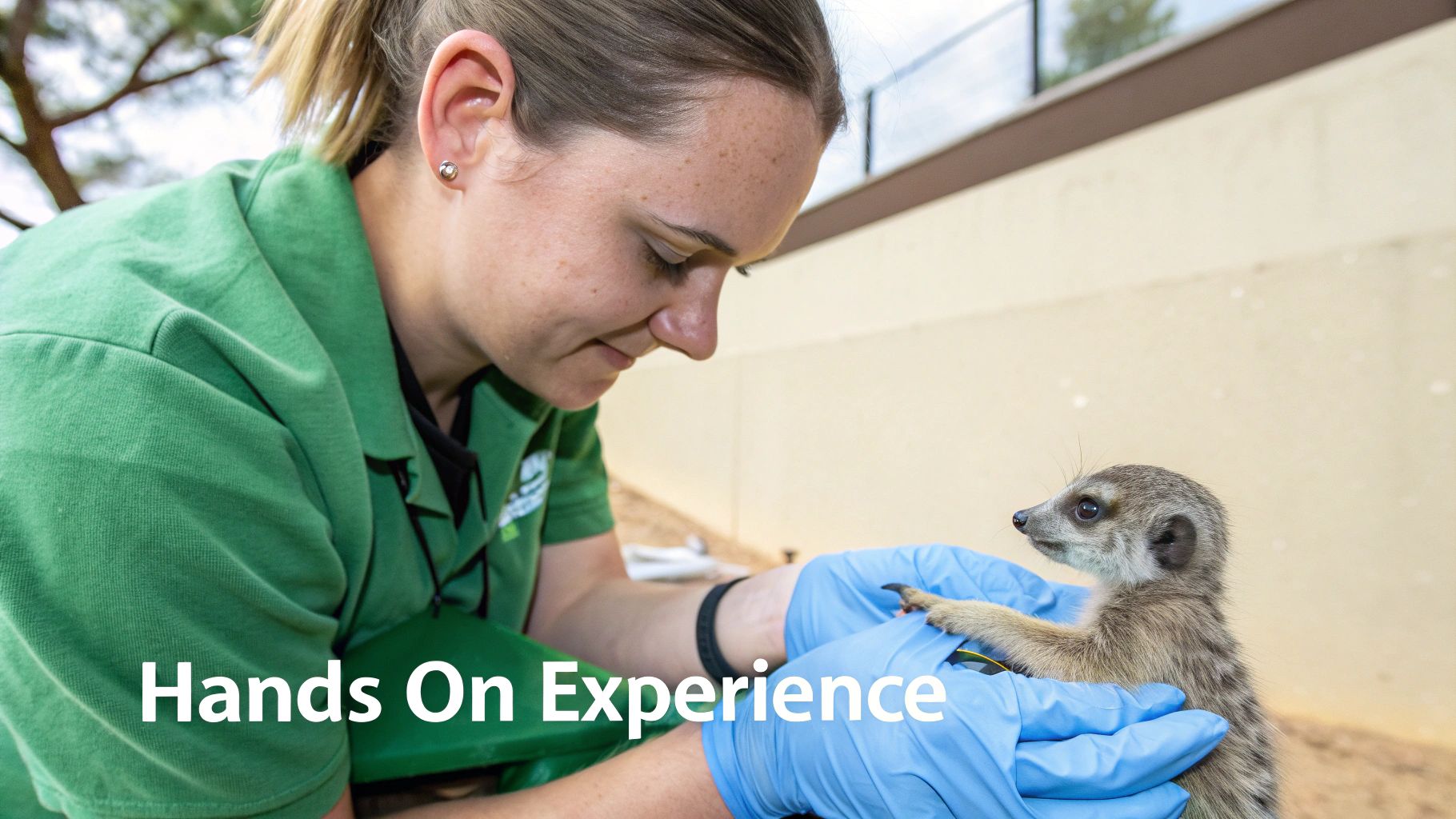
Your qualifications prove you've mastered the theory, but hands-on experience is crucial for getting the job. The field of zookeeping is competitive, and practical skills are essential.
This is where you learn the job aspects that a textbook can't teach. You'll notice subtle changes in animal behaviour, understand the physical effort of daily tasks, and see the teamwork needed to manage an animal section. It’s your opportunity to show you can handle the job's realities, not just the romanticised idea of it.
Where to Start Your Search for Experience
Finding that first opportunity can feel a bit daunting, but there are plenty of avenues to explore. Zoos and wildlife parks are the obvious first stop, but don’t limit yourself. Any role that involves animal husbandry gives you valuable, transferable skills that will make your application much stronger.
Think outside the box and consider these places:
-
Zoos and Wildlife Parks: Keep a close eye on the websites of your local zoos. They often advertise for volunteer programmes, internships, or seasonal keeper roles. These positions are highly sought-after, so get your application in early and make it professional.
-
Animal Sanctuaries and Rescue Centres: These facilities offer incredible opportunities to work with a huge variety of species, many with complex welfare needs. The experience here is gold dust.
-
Farms and Petting Zoos: Getting experience with livestock shows you understand the fundamentals of animal care routines, feeding schedules, and how to maintain clean environments.
-
Veterinary Clinics: Helping out in a vet clinic can give you a real insight into animal health, which is a critical part of being a zookeeper.
Even your local animal shelter is a fantastic place to start. The core skills – cleaning, feeding, monitoring health, and handling animals – are universal and highly valued everywhere.
Making Your Application Stand Out
When you apply for these roles, it’s all about showing your passion and reliability. Don't just write "I love animals"; explain why you are so committed to building a career around their care. Make sure to highlight any relevant coursework from your studies, even if you don't have direct experience just yet.
Be persistent but professional. A well-written email or a confident phone call can make all the difference. If you don’t hear back, don't be afraid to follow up – it shows you're genuinely interested. To really get a feel for the day-to-day, consider something like a Junior Keeper for the Day experience. These programmes offer a brilliant, unfiltered snapshot of the job.
The key is to demonstrate a proactive attitude. Zoos want to see that you are actively seeking out opportunities to learn and grow, no matter how small they might seem.
Maximising Every Opportunity
Once you've secured a position, the real work begins. This is your chance to learn, network, and build a reputation as a hard-working, reliable team member. Your goal is to turn this experience into a glowing reference and a CV packed with tangible skills.
Here’s how to make the most of every single day:
-
Be a Sponge: Ask questions constantly. The experienced keepers around you are a fountain of knowledge, so soak it all up.
-
Log Everything: Keep a detailed journal. Note down your hours, the species you worked with, and the specific tasks you did. Quantify it where you can (e.g., "Prepared daily diets for over 30 individuals across five different species").
-
Say Yes to Everything: The best way to learn is by doing. Volunteer for the less glamorous jobs like weeding enclosures or scrubbing floors. A positive, can-do attitude gets you noticed for all the right reasons.
-
Build Relationships: Be a great team player. Build professional, friendly relationships with your colleagues and supervisors. These are the people who will be writing your references for future jobs.
By getting stuck in and proving your dedication, you transform a volunteer role from a simple line on your CV into compelling proof that you’ve got what it takes to be a zookeeper.
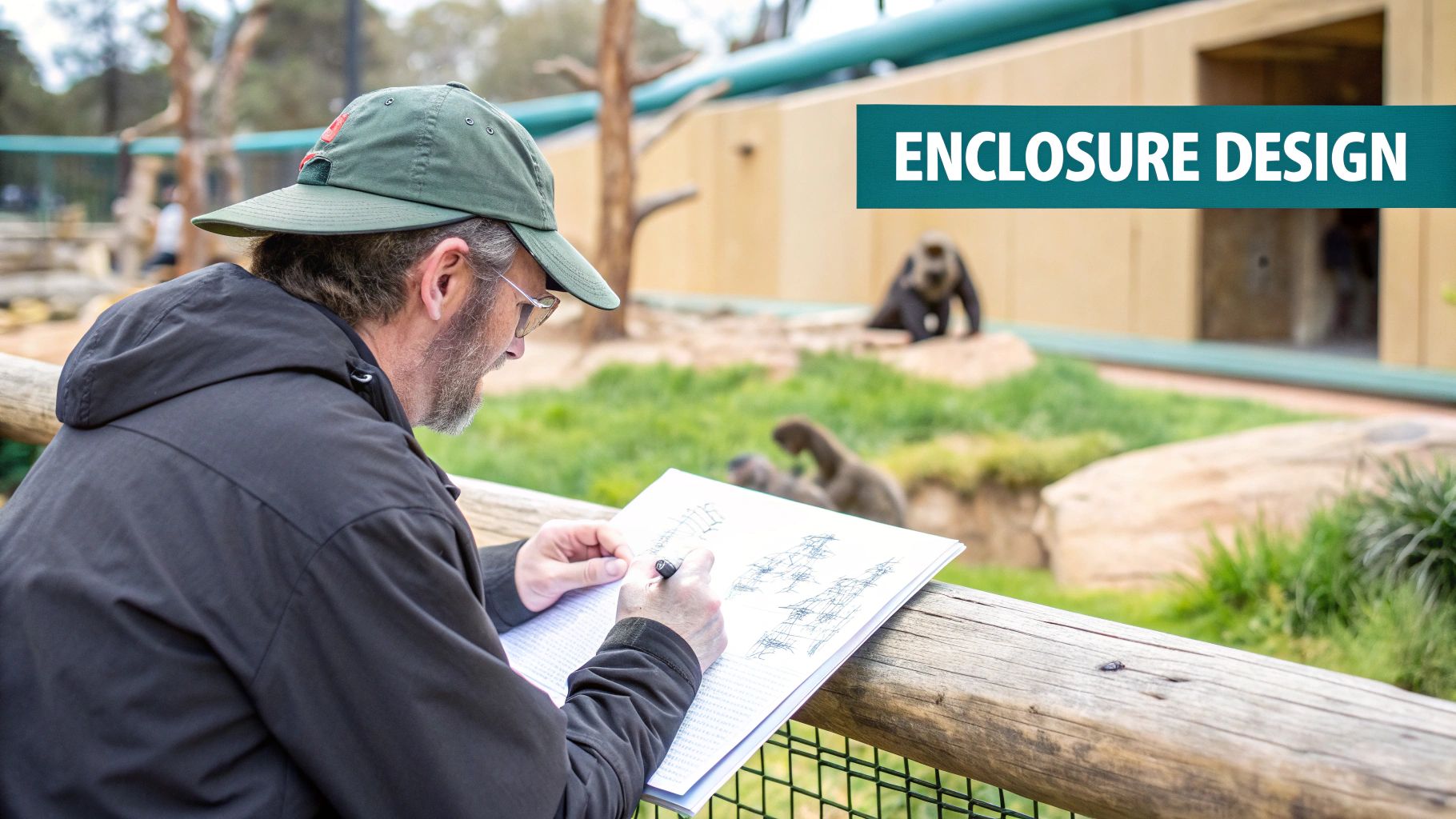
Developing Specialised Skills: The Art of Enclosure Design
The world of zookeeping has changed dramatically. Gone are the days when the job was just about feeding animals and cleaning enclosures. Today, it’s a career deeply rooted in animal welfare science, where your ability to create stimulating and safe environments is just as important as daily care. This is where building specialised skills in zoo enclosure design and improvement can make you stand out.
A well-designed enclosure isn't just a holding space; it's a dynamic environment that encourages natural behaviours, reduces stress, and boosts an animal’s physical and mental wellbeing. This creative and technical skill is so crucial that many leading qualifications now include dedicated modules to master it.
The Science Behind a Great Animal Habitat
Great enclosure design is a careful blend of art and science. It demands that you think like an animal behaviourist, a biologist, and even an engineer. Your primary goal is to create a space that meets the complex needs of a species while keeping animals, staff, and visitors safe.
This involves balancing several key factors:
-
Behavioural Enrichment: How can the space encourage natural activities? Think climbing structures for primates, deep pools for otters, or foraging puzzles for bears.
-
Health and Safety: What are the absolute must-haves to prevent escapes or injuries? This covers everything from the height of barriers to choosing non-toxic plants and secure locking mechanisms.
-
Welfare and Comfort: Does the habitat offer choice? This could mean access to sun and shade, private hideaways, and varied terrain underfoot.
When you study enclosure design, you learn to see habitats through a scientific lens. You’ll understand why a particular layout might be causing stress in a group of monkeys, or how adding a new waterfall could enrich the lives of penguins.
Gain Expertise with the Zookeeping Level 3 Diploma (RQF)
While you’ll pick up some of this on the job, a formal qualification gives you a huge head start. This is where courses like the Stonebridge Zookeeping Level 3 Diploma (RQF) prove their value. This diploma dedicates an entire module—Unit 3: Zoo Enclosure Design and Improvement—to giving you a structured, professional understanding of these principles.
Completing a unit like this gives you the kind of practical knowledge zoos are desperate for. You’ll learn to:
-
Know Health and Safety Requirements: You’ll get to grips with the legislation and best practices governing enclosure construction, ensuring every design is safe from the ground up.
-
Understand Enclosure Improvement: This is about learning how to assess an existing habitat and make meaningful, evidence-based changes to improve animal welfare.
-
Know About General Zoo Design: You'll gain a bigger-picture view of how individual enclosures fit into the zoo's overall layout, mission, and visitor experience.
An understanding of enclosure design shows a potential employer you're more than a caretaker. It shows you're a proactive professional committed to the highest standards of animal welfare.
Why Flexible Learning Works for You
The journey to becoming a zookeeper is often a busy one, packed with volunteer work and other commitments. That's why flexible learning makes all the difference. With Stonebridge Associated Colleges, you can study career-focused courses through a convenient and affordable subscription.
This model lets you enrol on the zookeeping diploma and pay a manageable monthly fee, so you can gain specialised knowledge without the stress of a big upfront cost or a rigid timetable. You have the freedom to learn at your own pace and can even pause or cancel your subscription if life gets in the way. It’s a modern, flexible way to add high-value, career-boosting skills to your CV.
If you'd like to find out more, you can read our article exploring how online zookeeper courses can enhance your chances of employment.
Nailing Your Application and Interview
You’ve put in the hard work, dedicating months, maybe even years, to building your qualifications and getting crucial hands-on experience. Now for the bit that really counts: turning all that effort into an application that actually gets you noticed.
A generic CV just won't fly in a field this competitive. You need to tell a compelling story that shows a hiring manager you’re the perfect person for the job. Your CV and cover letter are your first chance to make an impression, and they have to be spot on – professional, tailored, and full of proof that you’ve got the right stuff. This is where you connect your practical skills directly to the zoo’s unique mission and conservation goals.
Crafting a CV That Stands Out
Hiring managers want to see specific, measurable achievements. Instead of simply listing your duties, you need to show them the impact you made. This is what transforms a CV from a dull list of tasks into a powerful showcase of what you can really do.
Let's look at how to rephrase your experience to make it punchier:
-
The Weak Way: "Fed and cleaned animal enclosures."
-
The Strong Way: "Managed the daily husbandry, diet preparation, and enclosure maintenance for over 20 unique species within the primate section."
See the difference? The second example uses numbers and specific language to paint a vivid, professional picture. It’s also a good idea to mirror the language from the job description. If they’re asking for experience with "animal enrichment," make sure you use that exact phrase.
Think of your CV as a marketing document for yourself. Every single line should be geared towards proving you can solve the zoo's problems and be a positive force for their team and animal welfare goals.
Writing a Compelling Cover Letter
Your cover letter is where you can let your personality and passion really come through. Don’t just repeat what’s in your CV. This is your opportunity to connect the dots for the hiring manager and tell them why you’re the perfect fit for this specific zoo.
Pick out two or three of your proudest achievements and explain how they’ve prepared you for the role you're applying for. This shows you’ve done your homework. Mention a particular animal they work with or a conservation project they’re running that genuinely inspires you. It proves you have a real interest and aren’t just firing off applications to any zoo that’s hiring.
Preparing for the Interview
If your application makes the cut, the next stage is the interview. This can often be a multi-step process. It might even include a practical trial or a 'working interview' where you get to show off your skills on-site. Expect a mix of questions designed to test your competence, how you’d handle certain situations, and your technical knowledge.
Of course, they’ll ask about your direct experience, but they also want to see how you think on your feet. They need to know you can stay calm under pressure and always make sound decisions that put animal welfare and safety first.
Common Zookeeper Interview Questions
You can expect questions that probe your knowledge, your ethics, and your problem-solving skills. It’s a great idea to think about your answers beforehand. Using the STAR method (Situation, Task, Action, Result) can help you structure your responses with real-world examples that really stick in the interviewer's mind.
Get ready for questions like these:
-
Situational: "You notice a subtle change in an animal's behaviour. What are the first three things you do?"
-
Technical: "Can you describe your experience with husbandry training and positive reinforcement techniques?"
-
Ethical: "What is your personal view on the role of a modern zoo in global conservation?"
-
Teamwork: "Tell us about a time you had a disagreement with a colleague over an animal care issue. How did you resolve it?"
Your answers need to be confident, honest, and always focused on the best possible outcome for the animals. Letting your passion shine through is brilliant, but it’s backing it up with practical knowledge and a professional attitude that will leave a lasting impression and ultimately land you the job.
What Is Life as a Zookeeper Really Like?
So, you’ve put in the hard work with your education and experience, and you're ready to dive in. What can you actually expect from life as a zookeeper? It’s a career of incredible highs mixed with demanding routines, but for those with ambition, there's a clear ladder to climb.
Forget the typical 9-to-5. A zookeeper's day often kicks off before the first visitor arrives, with morning rounds to check on every single animal. This is quickly followed by the physically demanding jobs of mucking out enclosures and preparing specialised, often surprisingly complex, diets.
The rest of the day is a fascinating blend of science, public engagement, and good old-fashioned hard work. You'll be keeping detailed records, closely monitoring animal behaviour for any changes, providing enrichment to keep them stimulated, and sharing your passion with the public during keeper talks. If you want a more detailed peek behind the curtain, our guide on what a day in the life of a zookeeper involves breaks it all down.
UK Salary Expectations
Let's be honest: zookeeping is a career driven by passion, and salaries tend to reflect that. Your pay will vary depending on the zoo or wildlife park, its location, and of course, your level of experience.
Here's a rough idea of what you can expect in the UK:
-
Trainee or Apprentice Keeper: Starting out, you’ll likely be on or around the national minimum wage, typically between £17,000 and £20,000 a year.
-
Qualified Zookeeper: Once you've got some experience and qualifications under your belt, this can rise to a range of £20,000 to £25,000.
-
Senior/Head Keeper: In these leadership positions, salaries can increase to £25,000 to £35,000, with some head keeper roles at major zoos paying even more.
While you might not get rich, these figures show that you can absolutely build a stable and rewarding career.
Mapping Your Career Progression
Zookeeping is so much more than a single job title. It's a field with diverse pathways for advancement. With dedication and a commitment to learning, you can climb the ladder and shape your career around what truly interests you.
Your career doesn't have to stay within the enclosure walls. The skills you gain as a zookeeper are highly transferable to the wider world of conservation, research, and animal welfare advocacy.
A typical progression route often looks something like this:
-
Trainee/Apprentice Keeper: This is where you learn the fundamentals under the watchful eye of experienced colleagues.
-
Zookeeper: You'll become responsible for a specific section of animals, getting to know them inside and out.
-
Senior Zookeeper: This brings more responsibility, from training junior staff to contributing to important breeding programmes.
-
Head Keeper/Team Leader: You'll be managing an entire animal department, overseeing your team, and planning long-term husbandry strategies.
-
Curator: This is a senior management role that focuses on big-picture stuff like collection planning, conservation strategy, and research projects.
Beyond this path, you could specialise in working with specific animal groups like carnivores, primates, or marine mammals. Many experienced keepers also find their calling in vital roles in education, conservation outreach, or research, using their hands-on knowledge to make a global impact.
Got Questions About Becoming a Zookeeper?
It's natural to have a few questions buzzing around your head when you're thinking about a career as hands-on and competitive as zookeeping. Let's clear up some of the most common ones we get asked.
Do I Really Need to Go to University?
Honestly, not always. While a degree in something like Zoology is a fantastic advantage, particularly if you've got your eye on senior roles down the line, it's not the only way in. Plenty of brilliant keepers have built their careers on the back of solid vocational qualifications, like a Level 3 Diploma, and a mountain of practical experience.
Don't forget about apprenticeships, either. They're a brilliant, highly-respected route that lets you earn while you learn on the job.
Just How Physical is the Job?
Let's not sugar-coat it: it's incredibly demanding. This isn't a desk job. You'll be doing a lot of heavy lifting, mucking out enclosures in the pouring rain or blazing sun, and you'll be on your feet pretty much all day.
A good level of physical fitness isn't just a "nice-to-have" – it's essential for getting the job done safely and keeping up with the very active animals you're looking after.
Can I Just Work With One Type of Animal?
Yes, absolutely, but it's usually something you work towards. When you're just starting out, you'll likely be placed on a more varied section, maybe working with hoofstock or birds. It’s the best way to learn the ropes.
As you gain experience and prove your skills, doors will open to specialise in the areas you're most passionate about. Whether that's working with big cats, primates, or reptiles will depend on your skills and the zoo's own collection and needs at the time.
Feeling ready to take that next step towards your dream job? Here at Stonebridge Associated Colleges, we offer flexible online courses designed to fit around you, including the Zookeeping Level 3 Diploma (RQF).
Why not start your journey today? Have a look at what we offer at https://www.stonebridge.uk.com.