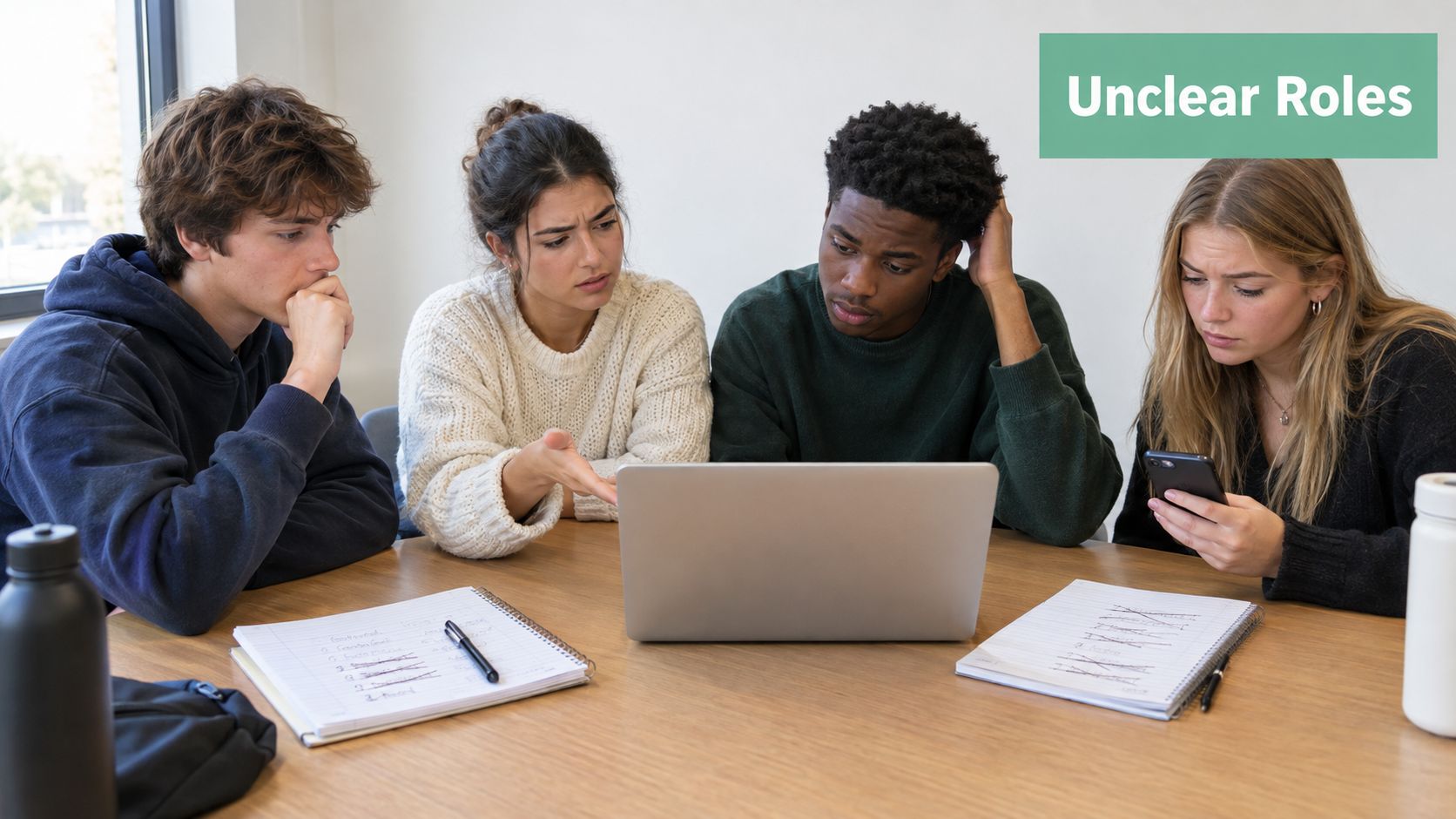
You've joined a university assignment group, but nobody knows who's doing what. One person starts researching, another waits for instructions, and a third disappears until the deadline is close. The project may be interesting, yet progress quickly stalls.
This situation is common because teamwork isn't a personality type. It's a set of behaviours you can practise. Learning how to develop teamwork skills before university can help you contribute with more confidence, organise group assignments fairly, and work well with people who have different schedules, experience and ideas.
Why teamwork skills matter before you start university
A university assignment can feel like several jobs joined together. Your group may need to agree on a question, divide research, compare evidence, make decisions and submit one coherent piece of work. Each person can produce strong work, yet the final assignment may still feel disjointed if nobody connects the parts.
Teamwork becomes easier to see when you focus on actions. You clarify the shared goal, report progress, invite other views and organise tasks around deadlines. The University of Manchester's guidance on assessing teamwork points to evidence such as shared goals, regular communication, encouraged contributions and deadline-focused coordination.
These behaviours also matter beyond assignments. Forty-five per cent of employers surveyed by Demos struggled to hire young people with sufficient teamwork skills, according to the guidance above. Building the habits before an Access to Higher Education course gives you practice for seminars, group presentations and assessed projects.
Teamwork is a trainable competence
Teamwork is a skill you can strengthen through role-based practice. Choose one behaviour, use it during a project and review what happened afterwards. This turns a vague aim, such as “be better in groups”, into a clear action you can repeat.
For example, a presentation group might assign one learner to summarise research, another to check references, another to plan slides and another to coordinate rehearsal. The roles are different, but they work towards one shared outcome. Online meetings, shared documents and agreed check-in times can support the same process when learners are not in one room.
The UK Skills Builder framework describes teamwork through observable behaviours, including effective collaboration. You can therefore improve by collecting evidence: a clearer update, a completed task or a useful question that brings a quieter member into the discussion.
How to assess your current teamwork strengths
A group presentation is due soon. One learner has finished the research, another is editing slides, and a third is waiting for instructions. Before you change your approach, review what you did in a recent group task, workplace project or shared responsibility. A baseline assessment is a record of your actions, not a judgement about your character.
The Skills Builder UK Essential Skills Tracker offers a way to examine teamwork through observable skills. Apply that idea on a smaller scale to prepare for Access to Higher Education seminars, presentations and assessed projects. You are checking behaviours you can practise, rather than trying to label yourself as “good” or “bad” at teamwork.
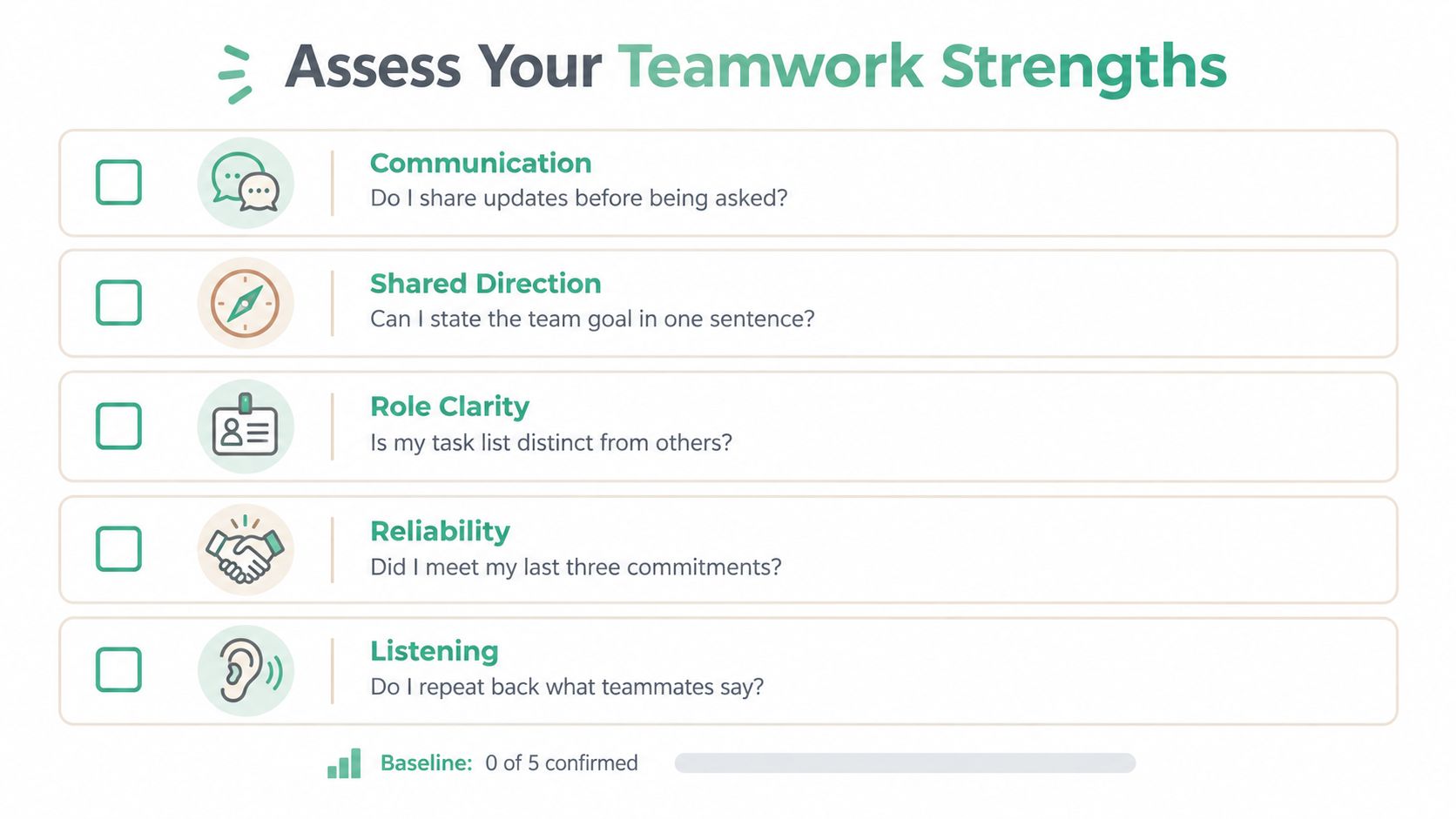
Use these questions to audit your last group activity:
-
Shared direction: Could you explain the group's intended result in one clear sentence?
-
Role clarity: Did each person know the task they were responsible for?
-
Communication: Did you send useful updates before anyone needed to chase you?
-
Listening: Did you check your understanding before replying or acting?
-
Reliability: Did you complete agreed work, or warn the group early when plans changed?
Look for patterns, not isolated mistakes
One missed message gives limited information. Repeated actions show where practice will help. You may speak frequently in meetings but fail to record decisions. You may finish your own work but forget to tell the next person when it is ready. In a hybrid group, also check whether your online updates are clear enough for someone who was not in the meeting.
Record one specific example for each behaviour. “I'm bad at communication” gives you no clear starting point. “I told the group my research was delayed the day before our meeting” identifies an action to change.
Choose one teamwork behaviour per project cycle. You might send a short progress update, confirm a handover or invite a quieter member to contribute. Review the next task afterwards and ask a teammate for direct feedback.
Practical rule: Measure the behaviour you can repeat, not the personality you think you need.
Small responsibilities provide useful practice. Coordinate one meeting, maintain a shared task list or check that agreed actions have been completed. These tasks create evidence of how you work with others and give you a manageable target before university group assignments become more demanding.
Core behaviours that make teamwork work
Teamwork becomes easier to practise when you can see its moving parts. A group doesn't need everyone to behave in the same way. It needs people to coordinate their different strengths around a clear outcome.
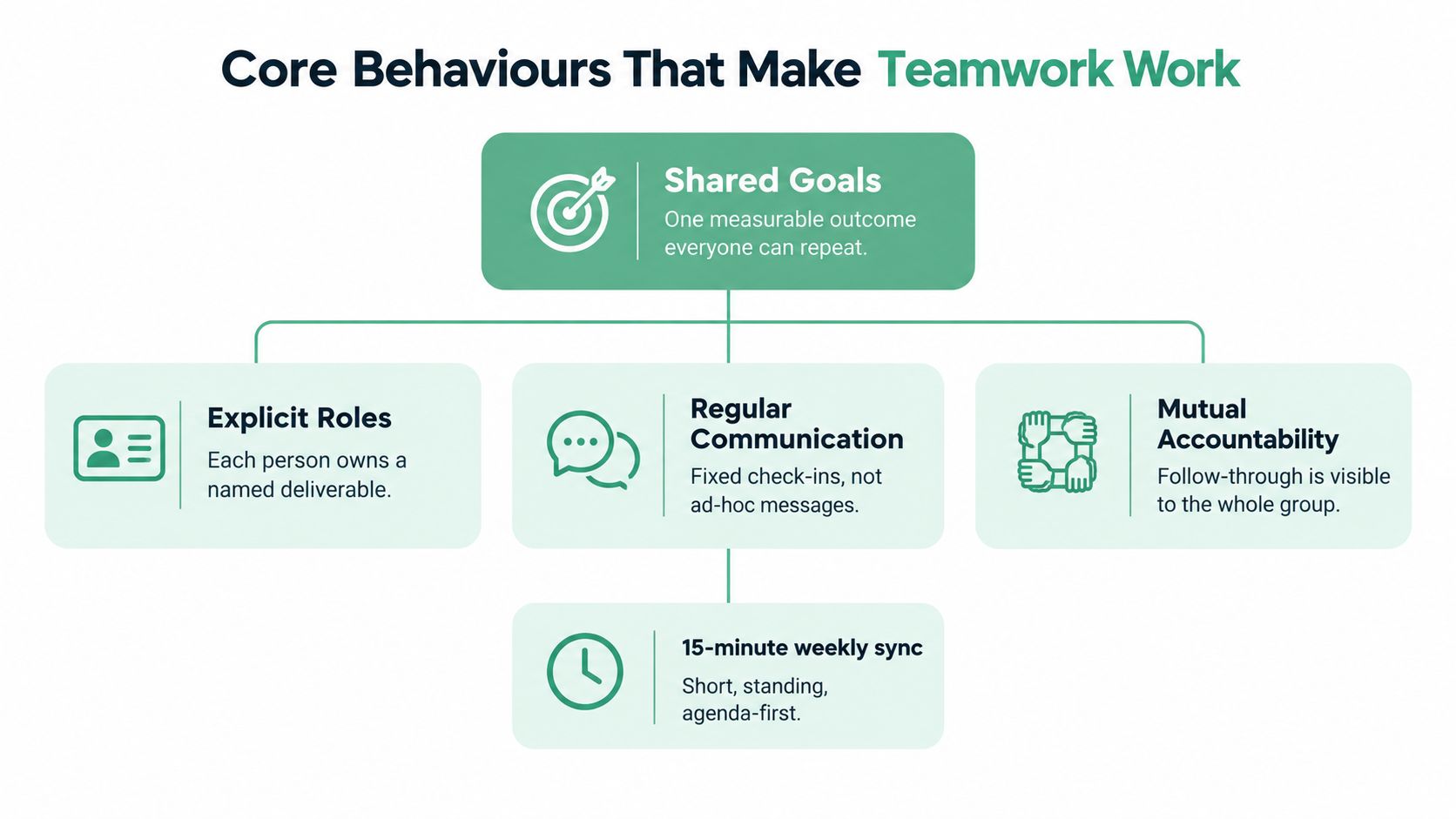
Start with a shared goal
State what the team must produce and what a finished result should contain. For a health assignment, the goal might be to create a referenced presentation that explains a particular issue and evaluates possible responses.
A shared goal prevents each person from working towards a different version of success. Ask every member to repeat the outcome in their own words before tasks are divided.
Give each person an explicit role
Assign named responsibilities rather than general requests. “Research the topic” is too broad. “Find and summarise evidence for the background section” gives the learner a defined deliverable.
Roles should connect. A researcher may provide notes to the writer, while the editor checks whether the final work answers the brief. The group should also agree who combines the sections and who checks the submission requirements.
Set communication checkpoints
Regular communication doesn't mean constant messaging. It means choosing a predictable point for updates, questions and decisions. A short online meeting, shared document or discussion thread can work.
Use a simple update format:
-
Completed: What has been finished?
-
Next: What will happen before the next checkpoint?
-
Blocked: What needs help or a decision?
Encourage contributions
A useful group makes room for different communication styles. Some learners think before speaking. Others explain ideas quickly in conversation. Share an agenda before a meeting and invite written suggestions through a shared document when that suits the task.
During a discussion, ask for views from people who haven't spoken. Don't force anyone to perform. Create more than one route for contribution.
Coordinate around deadlines
A deadline is a group dependency, not only an individual date. If one section arrives late, another learner may not have time to edit, reference or combine it.
Record handoff dates in a shared task list. When a delay appears, raise it early and discuss the effect on the rest of the work. Visible follow-through builds trust more reliably than enthusiastic promises.
These behaviours support one another. A shared goal guides roles, roles make communication useful, communication exposes risks and accountability keeps the final submission moving.
Practical exercises and activities to build teamwork skills
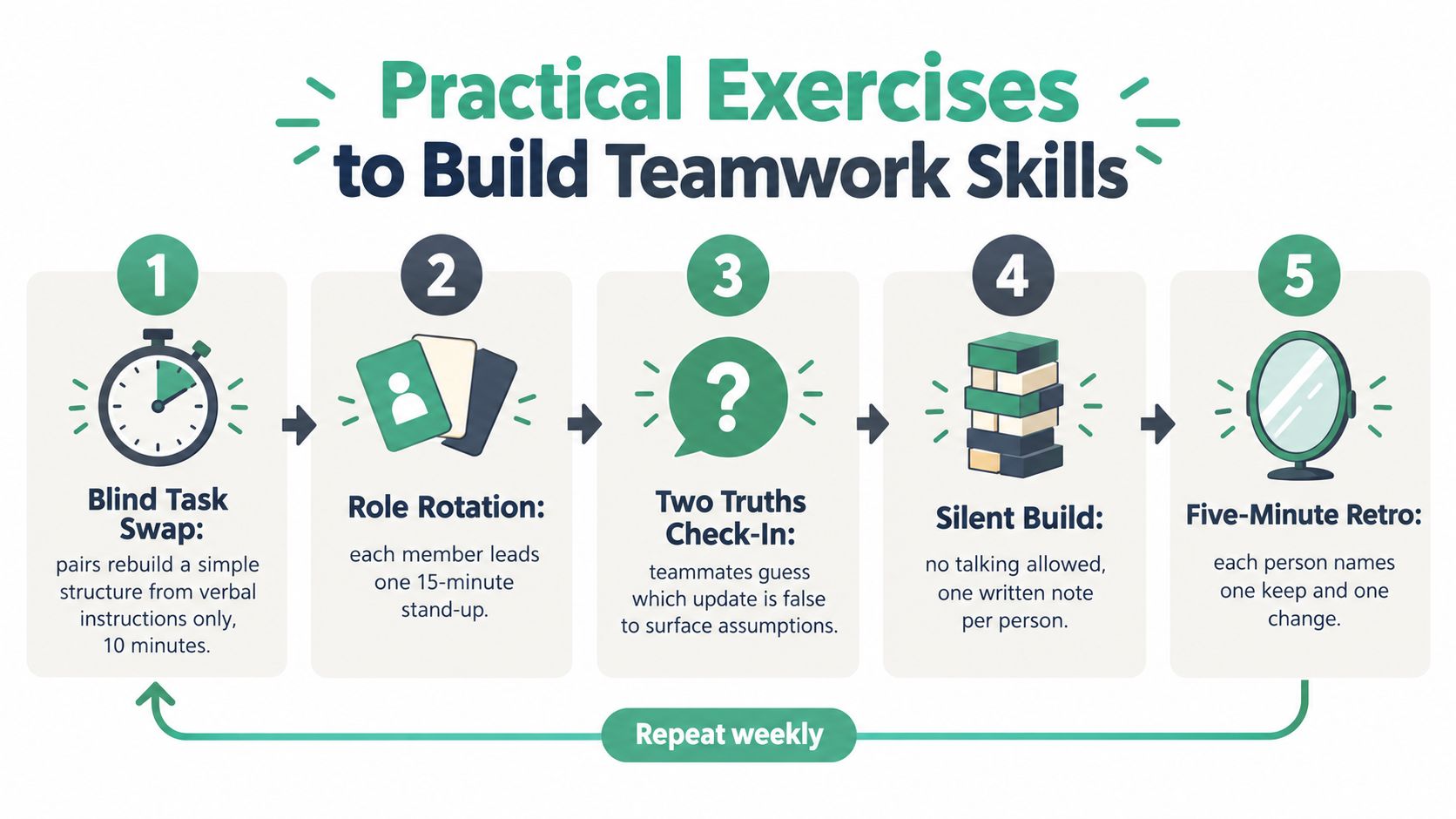
Reading about teamwork helps you recognise good practice. Repeated activities help you use it under pressure. Try these exercises with classmates, colleagues or people in an online learning group.
Rotate responsibility
Choose a small task, such as planning a short presentation. One learner leads the first stand-up, another records decisions and another checks progress against the brief. Change those responsibilities during the next task.
Afterwards, discuss what each role required. Did the meeting leader keep the group focused? Did the note-taker capture decisions clearly? Did the progress checker identify a problem early?
Practise a careful handoff
Give one person a task that another person must continue. The first learner should provide the completed work, the context, the next action and any unresolved question. The second learner repeats back what they believe they've received.
This exercise exposes vague handoffs. It works online through a shared document or message thread, and it works in person with printed notes. Review whether the next person could continue without asking for basic information.
Keep a decision log
When a group makes a choice, record:
-
Decision: What has the group agreed?
-
Reason: Why did it choose this option?
-
Owner: Who will act on it?
-
Review point: When will the group check it?
A decision log prevents the same discussion from returning. It also helps absent members understand what happened without demanding another meeting.
Use mixed-ability group challenges
Give the team a task that requires different contributions. One learner might organise information, while another explains it clearly or spots risks. Don't let the most confident person take every responsibility.
Review the quality of the process, not only the final answer. Ask whether the group used each person's strengths and whether anyone's contribution was overlooked.
Finish with a short retrospective
After each activity, ask:
-
What helped the group make progress?
-
Where did work or information get stuck?
-
What single behaviour should change next time?
Keep the discussion specific and respectful. A retrospective should improve the next task, not assign blame.
For a further visual introduction to collaborative practice, use the embedded resource below.
Repeat the same exercise across several tasks. The point isn't to create artificial team bonding. It's to make coordination behaviours familiar before a high-pressure university assignment demands them.
How to practise teamwork efficiently in busy and hybrid teams
You may be studying around work, caring responsibilities and other commitments. A teamwork method that adds unnecessary meetings will quickly become difficult to maintain. The Open University Business Barometer 2025 reports that 40% of UK employers experiencing skills shortages say the impact is increased workload on other staff. Efficient collaboration helps prevent a busy group from creating extra pressure.
Design the workflow before adding meetings
Begin with the assignment itself. Agree what needs completing, who owns each part and where the next person will receive it. Then choose the simplest communication method that keeps everyone informed.
A shared document can contain the current draft. A task board can show ownership and progress. A decision log can record why the group chose an option. Video calls are best used for questions that need discussion, while written updates can handle information the team may need to check later.
The 2024 UK Employer Skills Survey identifies teamwork, communication, problem-solving and adaptability as transferable skills valued by employers. These behaviours also matter in Access to Higher Education preparation, where you may need to coordinate research, divide an assignment and combine contributions. Hybrid teamwork includes the way you use shared digital spaces, not only how you speak in a room.
Make pressure visible early
Agree when members should reply and how they should flag a difficulty. A shared status such as “on track”, “needs support” or “blocked” gives the group time to redistribute work before a deadline becomes a crisis.
Use ordinary language to support psychological safety. A learner should be able to say, “I don't understand this task,” or “I can't complete this by the agreed date,” without expecting ridicule. The group can then address the practical problem instead of guessing why progress has stopped.
Reassess after repeated tasks
At the end of a project cycle, review the behaviours you recorded at the start. Ask whether updates arrived earlier, roles became clearer and handoffs needed fewer follow-up questions.
Keep the review short and select one target for the next task. Repeated, role-based practice makes coordination familiar, much like rehearsing parts before a group presentation. Efficient teamwork grows through deliberate repetition, not by filling every available space with group activity.
Your next steps to confident collaboration with Stonebridge
You can practise teamwork before university begins. Start with a small shared task, agree the outcome, assign each person a clear role and review the handoff. This routine builds confidence for assignments, seminars and future professional settings.
An online Access to Higher Education Diploma provides a structured route towards university study while you develop academic habits. Stonebridge offers 100% online learning, personalised support from qualified tutors and modular courses in Nursing, Social Work, Business, Psychology, Computing and Education Professions.
Stonebridge Associated Colleges offers flexible subscription-based courses across academic and vocational subjects. Learners can pause or cancel a subscription at any time without a long-term credit agreement, helping them fit study around work and life. Learners and alumni of the learndirect Digital Group can also use the learndirect Community Hub app for discussion groups, topic communities, interactive forums, shared questions and peer connection.
The Department for Work and Pensions plain English guidance recommends simple sentences and bullet points for accessible content. These habits also support group assignments. Clear writing, clear roles and clear decisions make it easier for everyone to contribute and understand what happens next.
Choose an Access to Higher Education Diploma that matches your university goal. Apply the teamwork approach from this guide to your first shared task, then ask a tutor or peer to review your progress.
Explore Stonebridge Associated Colleges to find a flexible online Access to Higher Education Diploma or another course suited to your plans. Build the academic and teamwork skills you need for university through tutor support, modular study and a subscription that fits around your life.