Have you ever considered a career in radiography but felt that not having A-levels was a barrier? You’re not alone. Many aspiring healthcare professionals face this challenge, but there’s a solution specifically designed for you: the Access to HE Diploma in Radiography. Think of it as a direct route to university, equipping you with the exact scientific knowledge and academic skills needed to succeed on a degree course.
But what knowledge is truly essential? While anatomy is an obvious answer, some of the most critical concepts are found at the microscopic level. To truly excel in radiography, you need to understand the invisible world of atoms, bonds, and molecular structures. This foundational science is what separates a technician from a true healthcare professional, and it's a core component of your journey.
Building the Scientific Foundation for a Radiography Career
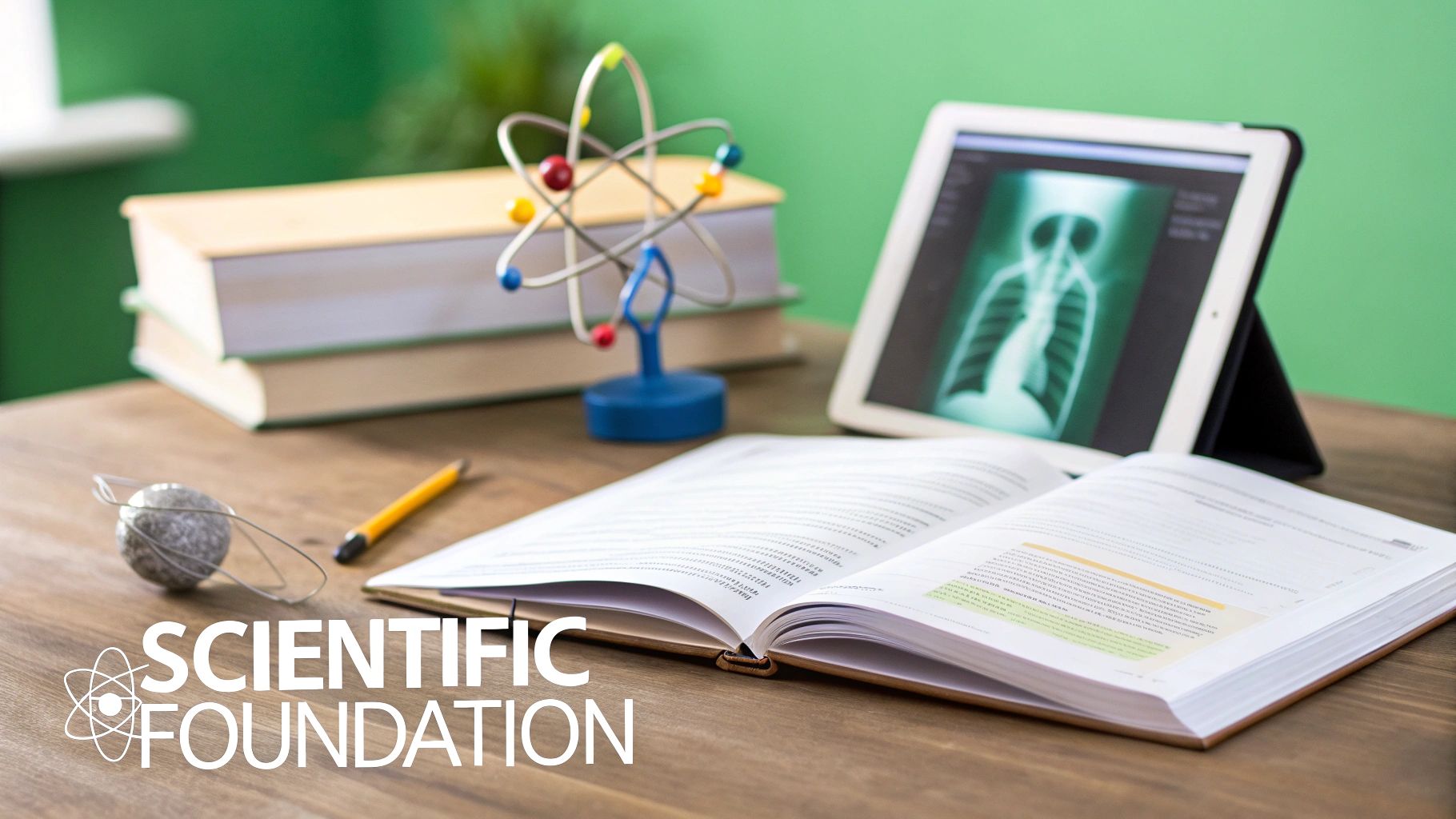
Being a brilliant radiographer requires more than just a steady hand and a calm bedside manner. You need a rock-solid grasp of the science that makes medical imaging possible. It’s about understanding not just what to do, but why you’re doing it. This is where a deep knowledge of chemistry—specifically atoms and how they interact—becomes your superpower.
Why Atoms are the Building Blocks of Medical Imaging
At its most basic, radiography uses controlled energy to see inside the human body. To understand how this works, you must first understand the body's tiniest components. This is why a module focused on atoms is so crucial.
Think about it:
-
An X-ray works because different parts of the body absorb radiation differently.
-
Bone shows up bright white because it's packed with calcium, giving it a dense atomic structure that absorbs more radiation.
-
Soft tissues, with their lighter atomic makeup, let more radiation pass through, appearing in shades of grey.
Understanding this fundamental principle of atomic structure—how protons, neutrons, and electrons interact with energy—is the key to interpreting every diagnostic image you will ever see. It’s the very foundation of your future expertise.
How Bonds and Structure Create Clarity in Scans
The next step is understanding how atoms connect to form molecules. This knowledge of bonding and structure is vital when working with contrast agents—special substances used to make specific organs or blood vessels stand out clearly on a scan.
These agents work because of their unique chemical properties. For example, Barium is used for digestive system scans because its atomic weight and chemical bonds prevent it from being absorbed by the body, allowing it to perfectly outline the organs.
By grasping these principles, you gain a professional appreciation for why certain agents are used for specific scans and how they interact safely with a patient’s body at a molecular level.
This focus on the "why" is what makes the Access to HE Diploma so effective. It prepares you to think critically in complex situations, a skill that is indispensable for a successful career in radiography.
Finally, understanding intermolecular forces—the subtle attractions between molecules—is directly relevant to advanced tech like Magnetic Resonance Imaging (MRI). An MRI scanner uses powerful magnets to align protons within the body’s water molecules. A solid grasp of these molecular interactions is essential for interpreting the complex images produced. Having a strong foundation in essential physics knowledge is also paramount for getting to grips with these principles.
The Stonebridge Solution: Mastering Science Flexibly

The Stonebridge Access to HE Diploma (Radiography) is designed to build this scientific bedrock from the ground up. The 'Atoms, Bonds and Structure' module is a cornerstone of the course, ensuring you develop a deep and practical understanding of these core concepts. Upon completion, you will be able to:
-
Understand atomic structure
-
Understand bonding, structure and properties
-
Analyse intermolecular forces
This module equips you with the essential scientific literacy you need to excel at university and beyond.
A Modern Way to Learn
Mastering these complex topics doesn't have to be daunting. Stonebridge Associated Colleges has over twenty years of experience making education accessible and manageable. We offer our career-focused courses through a simple, flexible subscription model.
With a straightforward monthly fee, you can study completely online at a pace that fits your life. This approach removes the stress of long-term credit agreements and puts you in control. You have the freedom to pause or cancel your subscription at any time. It’s a modern way of learning designed around your work and family commitments, ensuring your journey into radiography is as smooth and cost-effective as possible.
Accredited by the UK Register of Learning Providers and regulated by the Financial Conduct Authority, Stonebridge maintains rigorous academic standards, empowering adult learners like you to achieve recognised credentials and advance their careers.
Your Direct Pathway to a Radiography Degree
The Access to Higher Education Diploma in Radiography is your most direct and proven route to university. It’s a bridge connecting your ambition with the academic entry requirements for a degree.
While A-levels are a broad academic toolkit, the Access to HE Diploma is a specialised training programme. It cuts straight to the chase, focusing entirely on the science and study skills essential for a career in medical imaging. If you want to learn more, check out our guide on whether you can go to university with an Access to HE Diploma.
A Proven Track Record of Success
This pathway works. Recent data shows that over 2,150 students who completed their diplomas received offers from 140 different universities. Even more telling, over 60% of these students went on to study health-related degrees, highlighting just how effective this diploma is for breaking into the healthcare sector. You can find more details in the full QAA statistical release.
Access to HE Diploma in Radiography At a Glance
Here’s a quick summary of what makes this diploma such a great option for aspiring radiographers.
| Feature | Benefit for Aspiring Radiographers |
|---|---|
| University-Focused Curriculum | You learn the exact scientific principles and academic skills that admissions tutors look for, making your application stand out. |
| UCAS Points System | Your grades translate directly into UCAS points, the same system used for A-levels, which simplifies your university application. |
| Designed for Adult Learners | The course content and flexible study options are built around the needs of people juggling work, family, and other commitments. |
| Nationally Recognised | The qualification is regulated by the QAA and widely respected by UK universities as a valid entry route for radiography degrees. |
From Diploma to Degree and Beyond
Finishing your Access to HE Diploma in Radiography is a massive achievement, but it’s just the starting line. Think of this nationally recognised qualification as your golden ticket to a university place. It translates directly into the UCAS points admissions tutors are looking for, proving you have the academic skills and scientific foundation to succeed. You can learn more about how to make your application shine in our guide on studying an Access to Higher Education Diploma online or with a custom personalised diploma cover.
With this diploma, you are prepared for two primary specialisms in the field.
Diagnostic Radiography
As a diagnostic radiographer, you become a medical detective, creating high-quality images using X-rays, CT scans, MRIs, and ultrasound to help doctors diagnose injuries and illnesses.
Therapeutic Radiography
As a therapeutic radiographer, your focus shifts to treatment. You become a vital member of the oncology team, using highly targeted radiation to treat cancer, blending deep scientific understanding with genuine compassion.
To dig deeper into these roles, check out the different career paths for radiography in our detailed guide.
Becoming a Registered Professional
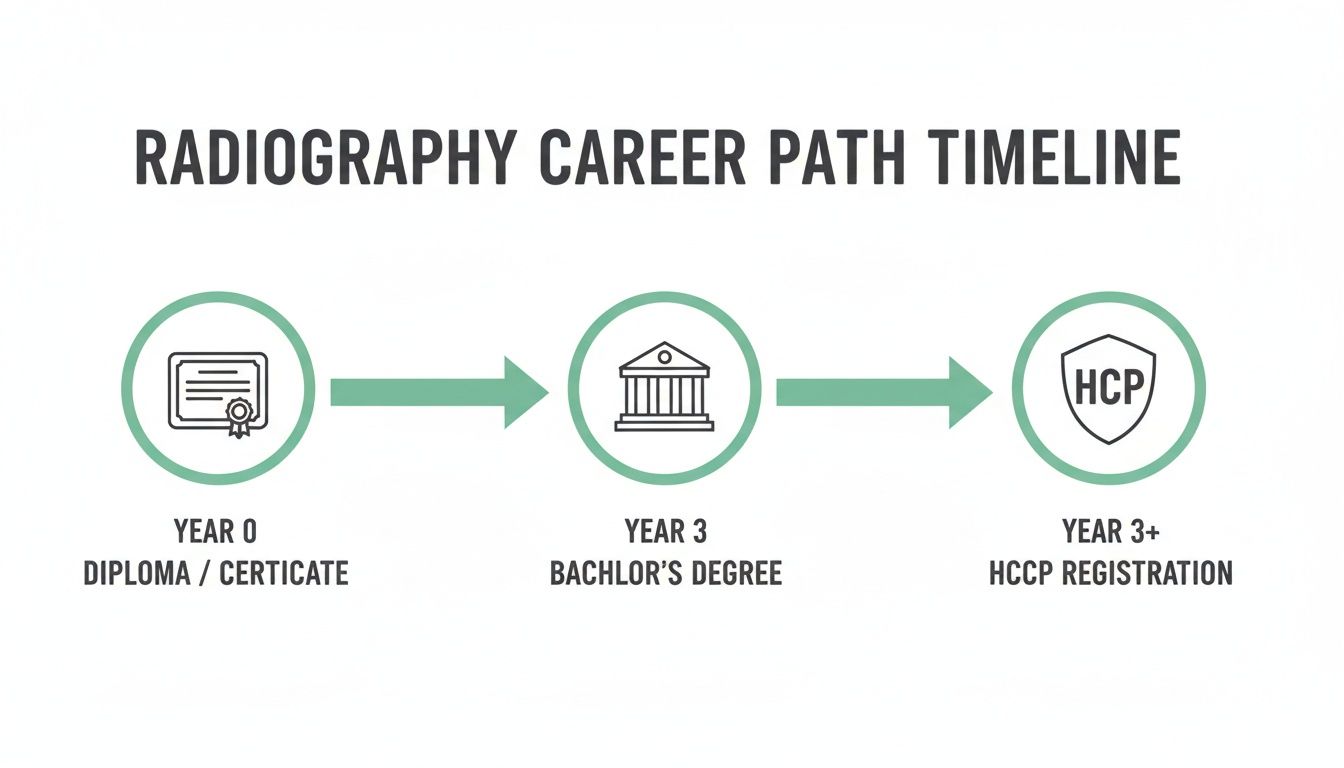
After graduating with your radiography degree, the final step is registering with the Health and Care Professions Council (HCPC). This is a legal requirement in the UK and shows that you meet their high standards for training and professional conduct. It’s the final piece of the puzzle that marks your transition from student to a fully qualified, professional radiographer. You can find more statistics on university entry rates on the Social Mobility Commission website/entry_to_higher_education).
Crafting Your University Application and Personal Statement
Once you’re on your way with the diploma, the next big milestone is applying to university. This whole process can feel a bit daunting, especially if it’s been a while since you’ve filled out any kind of official application, but it’s really just a series of small, manageable steps. The trick is to get organised and give yourself plenty of breathing room to put together an application that genuinely shows off your passion and potential.
Remember, your application is so much more than a list of qualifications; it's your opportunity to tell your story. As an adult learner, your journey is your biggest asset. University admissions tutors aren’t just looking for top grades; they want to see your motivation, your resilience, and a real understanding of what it means to be a radiographer. An Access to HE Diploma in Radiography already speaks volumes about your commitment.
Your Application Checklist
Getting started is often the hardest part, so let’s break it down into a simple checklist. Before you even think about starting your UCAS application, it’s a good idea to gather everything you need in one place.
-
Official Identification: Have your passport or another form of photo ID handy.
-
GCSE Certificates: You’ll need to provide official proof of your Maths and English qualifications, so dig them out.
-
Access to HE Diploma Details: Keep your course information close, including who the provider is and the modules you’re studying.
-
Employment and Experience History: Jot down key dates and responsibilities from your work history, both paid and voluntary roles.
-
A Draft of Your Personal Statement: This is the most crucial part, so start brainstorming and making notes as early as you can.
Taking this proactive approach will make filling out the online forms so much smoother, leaving you free to concentrate on what really matters—your personal statement.
Writing a Personal Statement That Stands Out
This is where you bring your application to life. Your personal statement is a 4,000-character chance to show the real person behind the grades. For adult learners, this is your prime opportunity to connect your life experiences to the core skills that make a great radiographer.
Don’t fall into the trap of thinking your work history isn’t relevant if it’s not in healthcare. Admissions tutors are experts at spotting transferable skills.
Think about times you've shown empathy in a customer service role, demonstrated meticulous attention to detail in an administrative job, or communicated complex information clearly. These are the qualities of a future healthcare professional.
Be sure to highlight these skills and explicitly link them to the demands of radiography. Show that you’ve done your research and understand the role is a careful blend of technical expertise and profound patient care.
Got Questions? We’ve Got Answers
Taking that first step towards a new career always throws up a few questions. It’s completely normal. To help you get all the clarity you need, we’ve put together some straightforward answers to the most common queries we get about the Access to HE Diploma in Radiography.
How Long Does the Radiography Access Course Take to Complete?
If you were studying at a traditional college, you’d be tied to a fixed academic year. But with flexible online learning, you’re the one in the driver's seat.
Most of our students at Stonebridge Associated Colleges complete their diploma in around 9-12 months, easily fitting their studies around work, family, and everything else life throws at them. You can, however, take up to two years if you need that extra breathing room. This flexibility is what makes a university goal feel so much more achievable for so many people.
Is an Access to HE Diploma Really Equivalent to A-Levels?
Yes, it absolutely is. The Access to HE Diploma is a full Level 3 qualification, and it's widely recognised and respected by UK universities as an alternative to A-levels for getting onto degree courses, including radiography.
It's been specifically created for adults who are returning to education. University admissions tutors know it’s fantastic preparation for the rigours of degree-level study because it gives you both the specific subject knowledge and the academic skills you'll need to hit the ground running.
You could say an Access to HE Diploma isn’t just an equivalent; it’s a targeted pathway that proves you’re committed, focused, and ready for a career in healthcare.
Do I Need Hospital Work Experience to Get on a Radiography Degree?
This is a big one, but the answer is encouraging. While getting hands-on hospital experience is a definite plus, it’s not always a deal-breaker. Universities are very aware of how difficult it can be to secure clinical placements before you’ve even started your training.
What they really need to see is that you’ve done your homework and have a realistic grasp of what a radiographer actually does day-to-day. You can show this by:
-
Doing some proper online research into the profession.
-
Watching documentaries or 'day in the life' videos about radiography.
-
Talking to current radiographers if you get the chance.
-
Highlighting any experience you have in a healthcare or caring setting, even if it was voluntary. It all counts!
Ready to start building your future in a rewarding, vital career? With Stonebridge Associated Colleges, you can begin your flexible, university-approved Access to HE Diploma (Radiography) today. Learn from home, at your own pace, and with the full support of expert tutors every step of the way.
Find out more and enrol on the Access to Higher Education Diploma (Radiography)