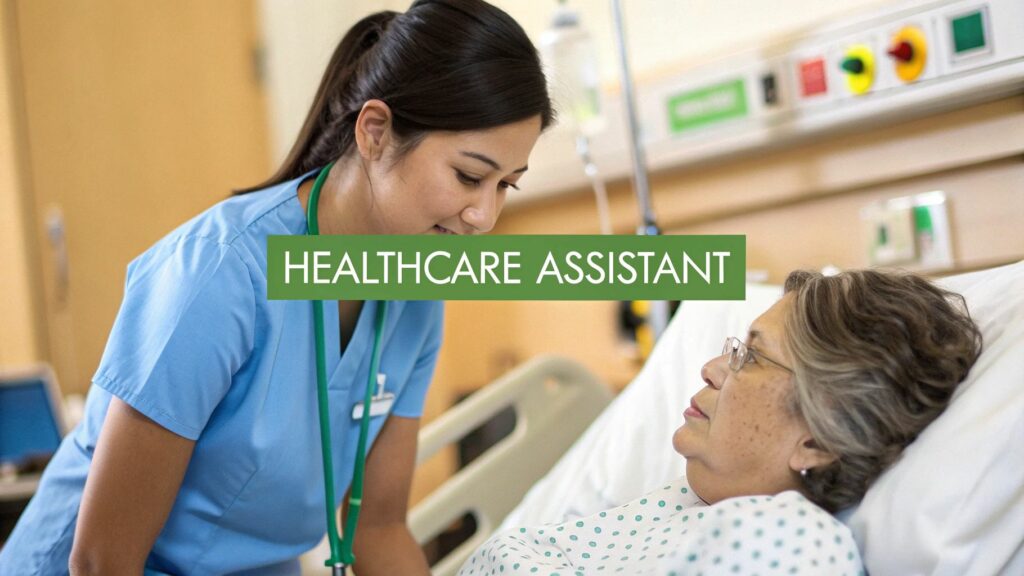
Have you ever wondered what it takes to be the compassionate backbone of patient care? Healthcare Assistants (HCAs) work right alongside nurses and doctors, supporting individuals in hospitals, care homes, and out in the community. Their role is all about the hands-on tasks that make a real difference—from monitoring vital signs to ensuring patients feel safe and comfortable.
If you're looking for a career with purpose, this guide will walk you through exactly what a healthcare assistant does, the skills you'll need, and how you can get started.
The True Role of a Healthcare Assistant
So, what does a Healthcare Assistant actually do day-to-day? Instead of just a job title, think of an HCA as the person who provides the essential human touch in healthcare. As the eyes and ears of the nursing team, you'll spend valuable time with patients, often noticing the small changes that can make a huge difference to a person's care.
This role isn’t just about clinical duties; it's about building trust and offering emotional support to people when they are at their most vulnerable. Whether you’re sharing a reassuring word or simply helping someone with their meals, your contribution is fundamental to a patient's wellbeing and recovery.
Key Responsibilities at a Glance
So, what does a Healthcare Assistant do in practical terms? Your duties can be grouped into several core areas, each vital for smooth and effective patient care. These responsibilities often shift depending on the setting, whether that’s a fast-paced hospital ward or a quiet residential home.
To give you a clearer idea, here's a summary of what your role will typically involve.
| Area of Focus | Description & Examples |
|---|---|
| Personal Care & Support | Assisting patients with daily activities like washing, dressing, and using the toilet, always preserving their dignity and promoting independence. |
| Clinical Duties | Taking and recording vital signs such as temperature, pulse, and blood pressure under the direction of nursing staff. |
| Mobility Assistance | Helping patients move around safely. This could involve using walking aids, wheelchairs, or hoists and ensuring they feel secure. |
| Patient Comfort & Wellbeing | Ensuring patients are comfortable by changing bed linens, helping with meals, and keeping their immediate environment clean and tidy. |
| Communication & Observation | Acting as a key link between the patient and the wider medical team, observing any changes in a patient's condition and reporting back. |
As you can see, the role is a unique blend of practical support and genuine human connection.
A great Healthcare Assistant doesn’t just perform tasks; they connect with people. They understand that compassion, patience, and a listening ear are just as important as any clinical skill they possess.
Ultimately, you are a crucial link between the patient and the wider medical team, ensuring that care is delivered not just effectively, but with kindness and professionalism every single day.
A Day in the Life of an HCA
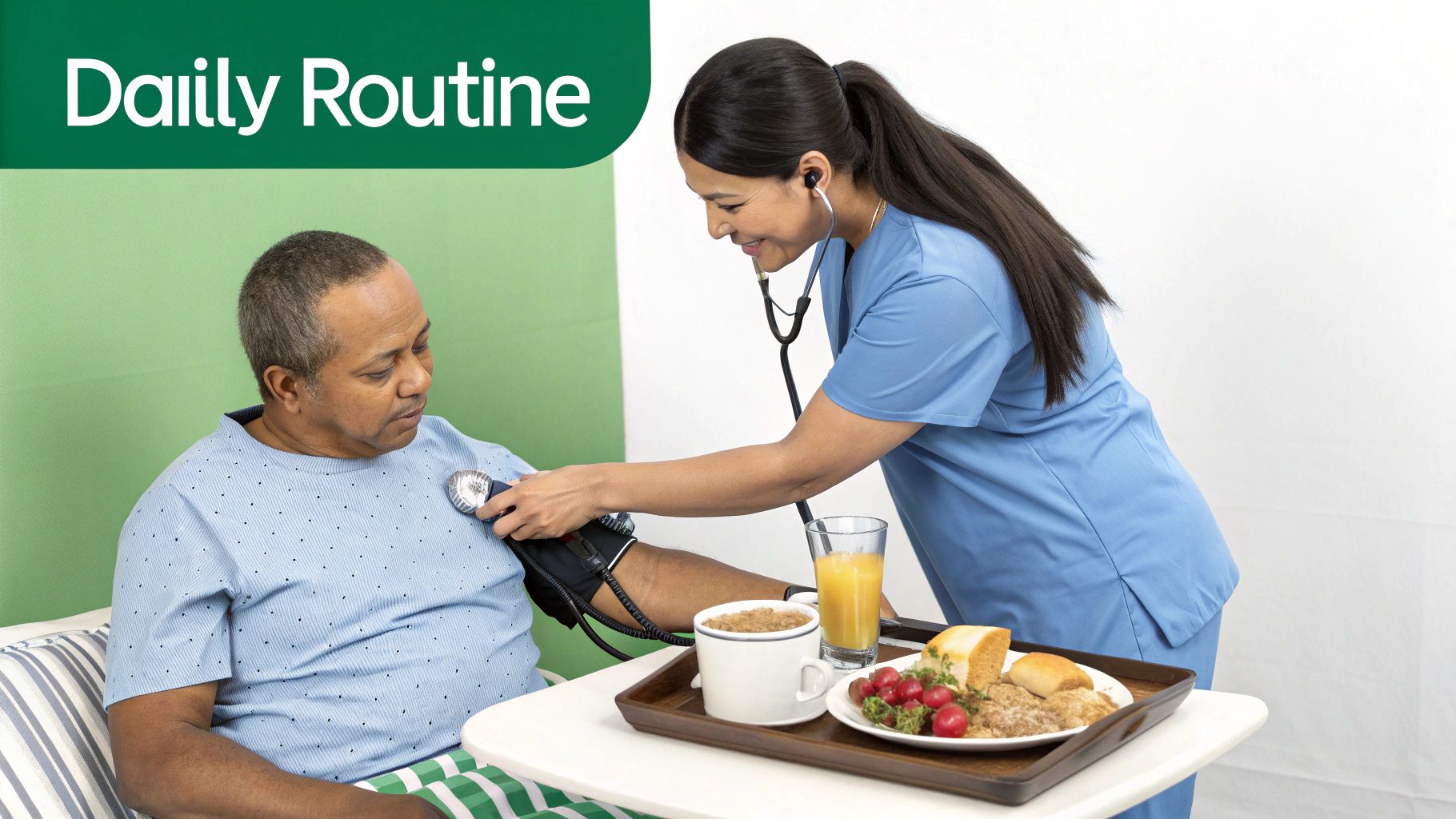
To really get a feel for what a healthcare assistant does, it helps to step into their shoes for a typical shift. Of course, no two days are ever the same. Still, there’s a familiar rhythm of care, compassion, and clinical support that you’ll find everywhere, adapting to whoever needs you at that moment.
Imagine a busy hospital ward as the morning shift kicks off. Your day starts with a handover from the night team, giving you the lowdown on each patient. The first interactions are often the most personal – helping people with their morning routines.
This could mean assisting with washing, dressing, or serving breakfast, all while offering a friendly, reassuring presence. It’s about much more than just ticking off tasks; it’s about protecting their dignity and helping them start the day right.
Monitoring Patient Health
As the morning moves on, your clinical duties take centre stage. You’ll find yourself moving from one patient to the next, taking and recording their vital signs. This is a massive responsibility, as the information you gather gives the nursing team the essential data they need to see how a patient is doing.
An HCA is crucial for monitoring patient health by performing routine checks like taking temperatures, pulse rates, and blood pressure. Understanding what affects these readings is a key part of the role. For anyone keen to learn more, this helpful guide to managing blood pressure offers some great insights into one of the most common measurements you’ll take.
Every observation gets carefully documented, forming a vital piece of the patient's official record. But it goes beyond the numbers. You’re the eyes and ears on the ward. You might be the first to spot that a patient seems unusually tired or isn’t eating much, and you’ll pass these subtle but crucial details on to the registered nurse.
Providing Holistic Support
The day continues to unfold, and your tasks will keep changing, which really shows how varied the HCA role is. An afternoon might have you:
-
Assisting with Mobility: Helping a patient take a short walk down the corridor to build their strength, giving them both physical support and a bit of encouragement.
-
Ensuring Comfort: Changing bed linens, helping someone reposition to prevent pressure sores, and generally making sure their space is clean and safe.
-
Offering Emotional Support: Simply taking five minutes to sit and listen. For a patient feeling anxious or lonely, that small act of kindness can make all the difference.
In a residential care home, the pace might feel a bit different. The focus often shifts to building long-term relationships, helping with daily activities, and providing companionship. Here, you become a consistent, trusted part of a resident's life, not just a temporary carer.
Every single action, from the smallest gesture to the meticulous recording of vital signs, makes a direct contribution to a person's wellbeing. It shows that being a healthcare assistant isn’t just a job – it’s a journey of care and connection, where you genuinely make a difference every day.
Where You Can Work as a Healthcare Assistant
One of the best things about becoming a Healthcare Assistant is the sheer variety of places you can work. This role is a genuine passport to many different healthcare settings, each with its own unique pace, challenges, and rewards. The environment you choose can really shape your day-to-day duties, allowing you to find a career path that truly suits your personality.
The most familiar setting for many is a bustling NHS hospital. Here, you could find yourself part of a team on a fast-paced A&E ward, a surgical unit, or even a maternity ward supporting new mothers. The work is often demanding and requires you to think on your feet, but it offers incredible learning opportunities and the chance to be at the very heart of our healthcare system.
Exploring Different Care Environments
The opportunities don't stop at the hospital walls, though. Many HCAs build fulfilling careers in local GP surgeries, where the atmosphere is typically calmer. Your duties here might include preparing treatment rooms, sterilising equipment, and assisting nurses with minor procedures like changing dressings or carrying out health checks. It's a role that places you right at the centre of community healthcare.
For those who enjoy building lasting connections with the people they care for, a residential care home is an ideal setting. In this environment, you become a familiar, trusted presence, providing consistent and personal support to residents with their daily lives. This is a crucial area of adult care, focusing on long-term wellbeing and dignity. To get a better feel for this specialised field, you can learn more about what is adult care in our detailed guide.
The setting you choose as an HCA defines the kind of impact you make. Whether it’s providing urgent support in a crisis or offering steady companionship over many years, each environment allows you to contribute in a meaningful way.
Community and Specialised Roles
Finally, there's the vital field of community care. Working as a community-based HCA, you’ll visit patients in their own homes. This role provides an absolute lifeline that helps individuals—often the elderly or those with disabilities—to maintain their independence for as long as possible. You might be assisting with personal care, helping with meal preparation, or giving medication reminders, all while offering much-needed companionship.
Each of these settings requires the same core compassion and professionalism, but the daily rhythm and specific tasks can vary hugely. Understanding these differences is the first step in finding the perfect place for you to begin your rewarding journey as a Healthcare Assistant.
The Skills That Define a Great HCA
Being a brilliant Healthcare Assistant is about so much more than just ticking off a list of jobs for the day. At its core, this is a role about human connection. That means your personal qualities are every bit as important as the practical skills you’ll learn on the job.
So, what makes a truly great HCA stand out from the crowd? It’s the way they blend their technical know-how with a natural instinct for care.
At the very heart of the role is compassion. This is the bedrock of the trust you build with people when they are at their most vulnerable. It's about seeing the person, not just the patient, and offering kindness even when the day gets tough. Without compassion, you're just providing a service; with it, you’re offering genuine support.
The Essential Qualities for Success
Your most powerful tool will be strong communication skills. You need to be a fantastic listener to understand a patient's worries, a clear speaker to explain things to an anxious family, and a precise communicator when you’re reporting back to the nursing team. Getting this right prevents mix-ups and makes sure everyone is on the same page.
You can find out more about the essential skills and values needed for a health and social care worker in our dedicated guide.
Another non-negotiable is resilience. Let's be honest, working in healthcare can be emotionally draining. Resilience is that inner strength that helps you handle difficult moments, manage your own stress, and bounce back after a particularly hard shift without losing your empathy. Thriving in this role means developing good strategies for managing work stress and keeping a healthy balance.
An exceptional HCA is observant, organised, and utterly dependable. They notice the small things—a subtle change in a patient's mood or appetite—and know that these details can be incredibly important. They’re the person the whole team knows they can rely on.
Why These Skills Are in High Demand
The need for skilled and compassionate Healthcare Assistants is growing fast right across the UK. With an ageing population and ongoing staffing pressures within the NHS, people who have these core qualities are more sought-after than ever.
In fact, recent job market data shows that healthcare support workers, including HCAs, are one of the most in-demand professions out there. This highlights just how vital these roles are and the real career stability they offer.
How to Start and Grow Your HCA Career
So, are you ready to take the next step towards a fulfilling career in healthcare? Let's break down the practical roadmap for getting started and building a future as a Healthcare Assistant. It’s a role that offers both stability and a genuine sense of purpose, but knowing the right path is key to making it happen.
While you might see some entry-level HCA jobs that don't strictly require formal qualifications, completing a dedicated course is a real game-changer. It’ll boost your confidence, make you a far more attractive candidate to employers, and give you the foundational knowledge to provide excellent care from day one.
Choosing Your Educational Pathway
Flexible online learning has made gaining these qualifications more achievable than ever. Stonebridge Associated Colleges offers courses designed to fit around your existing work and life commitments, meaning you can study for your new career without putting everything else on hold.
The course you pick really depends on your long-term goals. Each qualification is designed to open specific doors within the health and social care sector.
-
For University Aspirants: If your ultimate goal is to become a registered nurse, midwife, or another allied health professional, the Access to Higher Education Diploma (Health and Social Care) is your most direct route to university. It’s specifically designed to give you the UCAS points and academic skills needed for a degree.
-
For Specialising in Adult Care: To excel in roles within residential homes or community support, the Level 3 Diploma in Adult Care (RQF) equips you with the essential, hands-on skills required to provide high-quality, person-centred care.
-
For Leadership Ambitions: If you're an experienced HCA ready to move up the ladder, the TQUK Level 5 Diploma in Leadership and Management for Adult Care (RQF) develops the strategic thinking needed for senior and management positions.
This diagram highlights the core skills you'll develop, which are absolutely fundamental no matter which healthcare setting you end up in.
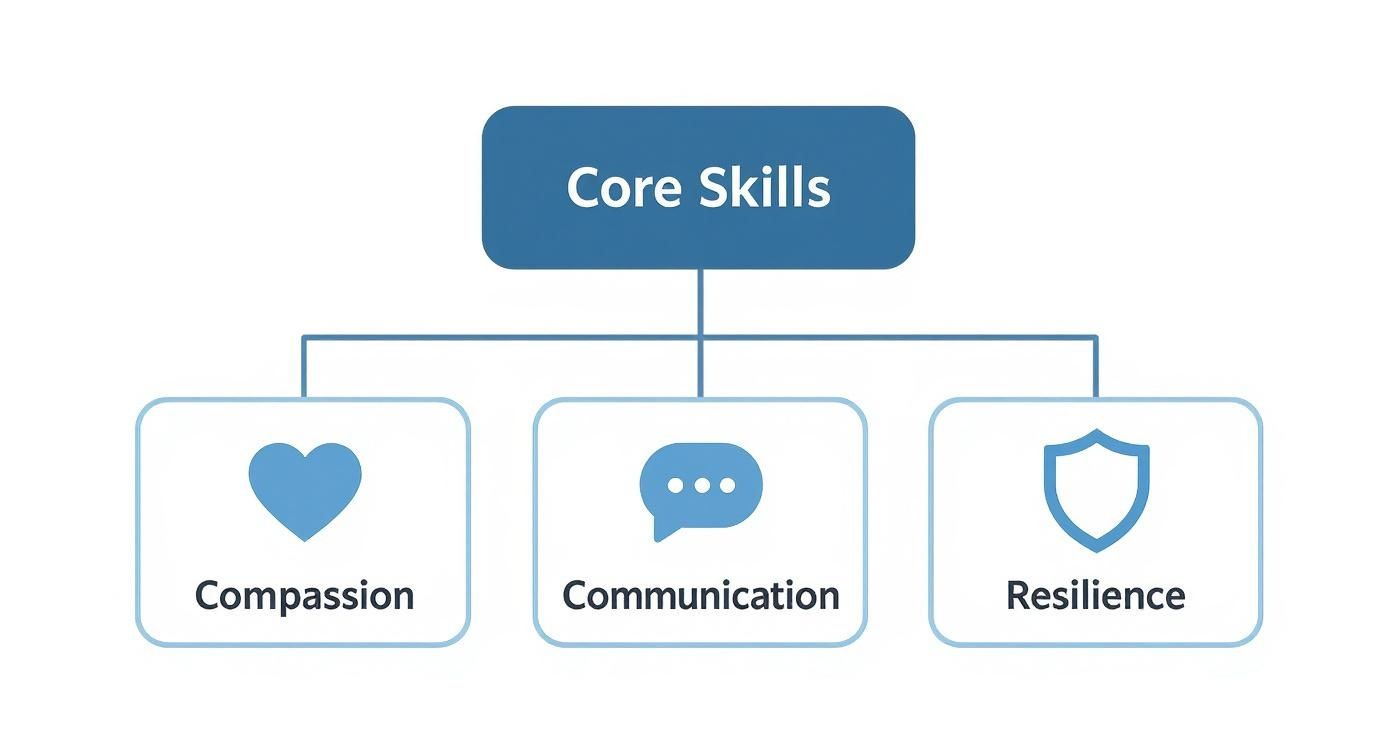
Mastering these three pillars—compassion, communication, and resilience—is what truly separates a good HCA from a great one.
Making Learning Work for You
Finding a study method that fits your life is crucial. Stonebridge’s innovative subscription model makes learning incredibly accessible. You can study 100% online with dedicated tutor support and fit your education around your own schedule.
With this flexible approach, you can learn at your own pace and pause or cancel your subscription at any time, removing the pressure of long-term credit agreements. This model empowers you to tailor your learning journey around work and life commitments, ensuring your education is both convenient and cost-effective.
By choosing the right qualification, you're not just preparing for a job; you're building a sustainable and rewarding career. For more practical advice, check out our guide on how to get into health and social care. This next step could be the start of your journey towards making a real difference.
HCA Salary and Job Outlook in the UK
Choosing to become a Healthcare Assistant is more than just a personally rewarding move; it’s a genuinely smart career decision. Let's get practical and talk about what really matters: how much you can expect to earn and just how stable this role is in the UK’s job market.
First things first, your potential income often depends on where you work. The NHS is the UK’s biggest employer of HCAs, and it uses a structured pay system called ‘Agenda for Change’. Most newcomers start out at Band 2, and your salary will climb as you rack up experience and move up the bands.
Breaking Down the Numbers
In the private sector, places like care homes or private clinics might have more varied pay scales, but the overall picture is encouraging. On average, a Healthcare Assistant in the UK can expect to earn between £20,500 and £24,000 annually as of 2025.
While some entry-level jobs start around the £21,000 mark, those in the NHS often begin on a slightly higher footing thanks to that standardised Band 2 scale. For a deeper dive into the numbers, you can find more insights on how much HCAs get paid on Nurses.co.uk.
Of course, a few things can nudge your pay packet up or down:
-
Location: If you're based in a city with a high cost of living, like London, you’ll often get a "London weighting" allowance, which gives your salary a welcome boost.
-
Experience: This one’s simple – the longer you’re in the role and the more skills you pick up, the more you can earn. Making the jump to a Band 3 or Band 4 HCA position brings a noticeable pay rise.
-
Qualifications: Having more advanced qualifications, like a Level 3 Diploma, can open doors to senior or specialised roles that naturally come with better pay.
Job Security and Career Growth
So, beyond the salary, what does the future hold for an HCA? In a word: stability. The demand for skilled, compassionate care workers is always high right across the UK. This is largely driven by our ageing population and the constant demands on the healthcare system, which all adds up to fantastic job security.
The role of a Healthcare Assistant is more than just a job; it is a foundational career with a clear and achievable path for progression. For those who invest in their skills, the opportunities for growth are substantial.
It’s true that the sector faces its share of challenges, like staff retention, but the core message is clear. If you're committed to the role and ready to invest in your own development, a career as a Healthcare Assistant offers a secure foundation. From here, there are solid opportunities to advance into senior support roles, specialist positions, or even to begin your journey towards becoming a nurse.
Your Questions About Being an HCA Answered
To round things off, let’s tackle some of the most common questions people have before they jump into a healthcare assistant career. Getting some clear, straightforward answers can give you the confidence you need to take that next step.
Do I Need a Degree to Become a Healthcare Assistant?
No, you absolutely don’t need a university degree to get started. Many brilliant HCAs begin their careers with foundational qualifications like GCSEs and learn the ropes through on-the-job training.
That said, completing a vocational course, like a Level 3 Diploma, can really make your application stand out. It shows you're serious and gives you a solid grasp of the role’s demands before you even step on the ward. And if your long-term goal is to become a nurse, an Access to HE Diploma is the perfect stepping-stone to get you to university.
What Is the Difference Between an HCA and a Nurse?
The biggest difference comes down to clinical responsibility. A Registered Nurse is a degree-educated professional who is qualified to create patient care plans, administer a wide range of medications, and carry out complex medical procedures.
As a Healthcare Assistant, you will work closely with the nursing team, but under their direct supervision. Your focus will be on providing that vital hands-on patient comfort, carrying out delegated clinical tasks like taking vital signs, and essentially acting as the eyes and ears for the nurses. You’re a crucial part of the team, ensuring patients are safe and well-cared for.
Is Being a Healthcare Assistant Stressful?
Let’s be honest, it can be. You’ll be supporting people when they are at their most vulnerable, and that can be physically and emotionally demanding. Workforce surveys do point to challenges in recruitment, and as you can read on GOV.UK, some HCAs leave for better-paid roles, which can add to the pressure on the team.
But for every tough day, there’s an incredibly rewarding moment. The sense of purpose you get from making a real difference in someone’s day is immense and creates a level of job satisfaction that’s hard to find anywhere else.
What Are the Typical Working Hours for an HCA?
This really depends on where you work. Hospitals and residential care homes need staff 24/7, so you can expect to work a rota of shifts. This will likely include days, nights, weekends, and bank holidays.
On the other hand, a role in a GP surgery will usually stick to more standard business hours. The great news is that there’s a lot of flexibility in the sector, with most employers offering both full-time and part-time contracts to suit different lifestyles.
Ready to start your journey and make a real difference in people's lives? Stonebridge Associated Colleges offers flexible, 100% online courses to help you achieve your career goals. Explore our Health and Social Care courses today and find the perfect pathway for you.