You might be reading this while juggling work, childcare, or a return to study after years away. If so, you're not alone. Many adults search for how to become a TA UK because they want a role that feels meaningful, practical, and realistic to train for around real life.
The good news is that becoming a teaching assistant is usually more straightforward than people expect. You don't need to have worked in a school already to start moving towards the role. What you do need is a clear plan, the right qualifications, and some practical experience that shows schools you can support children well.
Is a Teaching Assistant Role Right for You
A teaching assistant role suits people who like helping others learn, keeping calm when a room feels busy, and noticing when a child needs extra support. You might already do this in everyday life, with your own children, in care work, youth work, customer service, or community roles.

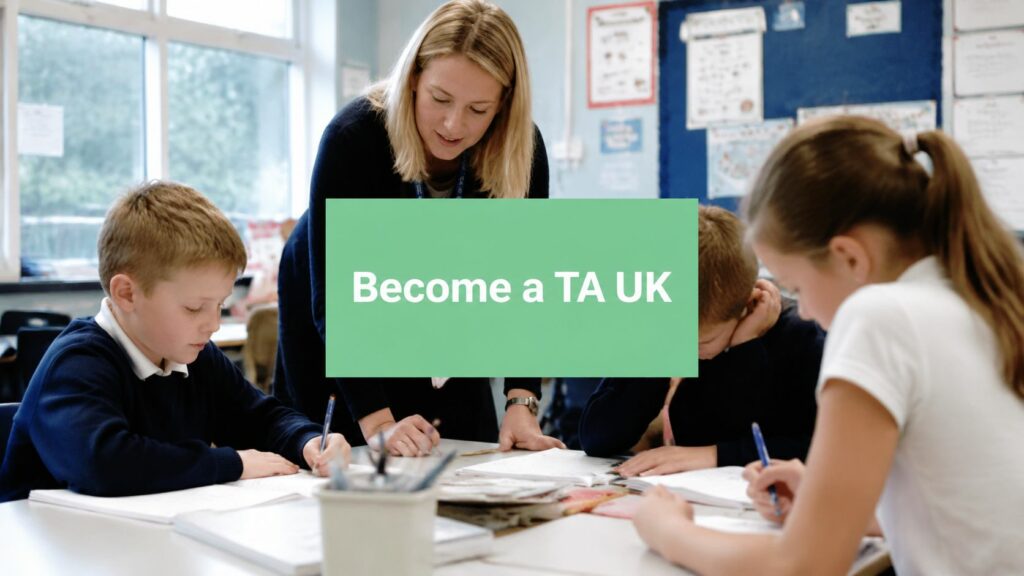
In practice, the job often means supporting pupils one-to-one, helping small groups stay focused, preparing resources, and working closely with the class teacher. Some days are lively and demanding. Many are deeply rewarding.
A good teaching assistant doesn't need to know everything at the start. They need patience, reliability, and a willingness to learn.
If you can picture yourself encouraging a child who's lost confidence, or helping a classroom run more smoothly, this path may suit you very well.
The Essential First Steps and Requirements
Before you apply, it helps to know the basic requirements schools expect.
According to the National Careers Service teaching assistant profile, most UK schools require GCSEs at grades 9 to 4 (A to C) in English and maths as a foundation*. The same source explains that some trainee roles exist without formal qualifications, but the majority of employed TAs hold a Level 2 or Level 3 teaching assistant qualification, and a DBS check is required for all applicants.

What each requirement means
GCSE English and maths matter because schools want to know you can communicate clearly and support basic literacy and numeracy.
A DBS check is a safeguarding check. It helps schools confirm you're suitable to work with children.
A Level 2 or Level 3 TA qualification shows that you understand classroom support, child development, and school practice.
If you're missing something
If you don't yet have English and maths at the right level, don't assume the path is closed. Many adult learners start by gaining those first, then move on to TA training. That route can still lead to classroom work.
Practical rule: Treat the GCSEs or equivalent, the DBS check, and a recognised TA qualification as your starter checklist.
Choosing Your Ideal Training Pathway
For adult learners, the biggest question usually isn't whether to train. It's how to fit training around the rest of life.

Three common routes
| Pathway | Best for | What to expect |
|---|---|---|
| College course | Learners who want fixed timetables | In-person learning and scheduled classes |
| Apprenticeship | People who want to earn while training | Work-based learning with employer support |
| Online study | Adults balancing work or family commitments | Flexible study at your own pace |
Online learning is often the most manageable option if you need flexibility. The advantage isn't just convenience. The Oxford College summary of online education statistics states that e-learning can increase information retention rates by up to 60 percent, compared with 8 to 10 percent for traditional learning.
That matters when you're fitting study into evenings, weekends, or short windows during the day.
A flexible option for adult learners
One route is Stonebridge Associated Colleges, which offers a subscription-based Level 3 Diploma in Supporting Teaching and Learning (RQF) alongside Functional Skills English and Maths Level 2. Study is 100% online, with tutor support, modular learning, and the option to pause or cancel without a long-term credit agreement. Stonebridge also offers many other career-focused programmes across education, health and social care, business, nursing and midwifery, and Access to Higher Education pathways.
For many adults, the best training route is the one they can stick with. A flexible course that fits around work and home life is often more realistic than waiting for perfect conditions.
How to Gain Experience and Impress Schools
A lot of people worry that they can't apply without school experience. In reality, experience can be built step by step.
The Janets guide to becoming a teaching assistant with no experience says that 74% of hired TAs gained entry through volunteer experience, and recommends volunteering for 10+ hours weekly to show adaptability and commitment.

Where to start
Local schools: Ask about classroom help, reading support, or breakfast clubs.
Youth and community settings: Clubs, holiday schemes, and after-school activities can build relevant skills.
Child-focused roles you already have: Care work, nursery work, coaching, and family support all count as useful experience.
What to put in your application
Don't just say you're caring or enthusiastic. Show it with examples.
Communication: Explain how you've supported children or worked with families
Calm under pressure: Mention times you handled behaviour or solved problems
Teamwork: Show that you can follow guidance and work with other adults
Tailor your cover letter to the school. A general application is easy to ignore, but a specific one shows care and professionalism.
Your Salary and Future Career Progression
A teaching assistant role can be a starting point, not just a stopgap.
According to the Stonebridge guide to being a teaching assistant, 2026 starting salaries for UK teaching assistants range from £20,500 to £22,000. With experience and progression to Higher Level Teaching Assistant (HLTA) status, pay can rise to between £25,000 and £31,000+ per year.
Where the role can lead
As you build experience, you may move into:
Level 3 or specialist support roles
HLTA work, which can include covering classes and leading activities
Teacher training or wider education careers
That progression matters if you want a role with room to grow. You can begin by supporting learning in the classroom and later move into more responsibility, specialist support, or further study.
If you've been putting this off because life is busy, start with the smallest useful step. Check your qualifications, look at training options, and begin building experience. That's a common path to success.
If you want a flexible online route into education, Stonebridge Associated Colleges offers subscription-based study for adult learners, including teaching assistant training and English and maths options that can help you move towards your first TA role.
Check out our online teaching assistant course here.