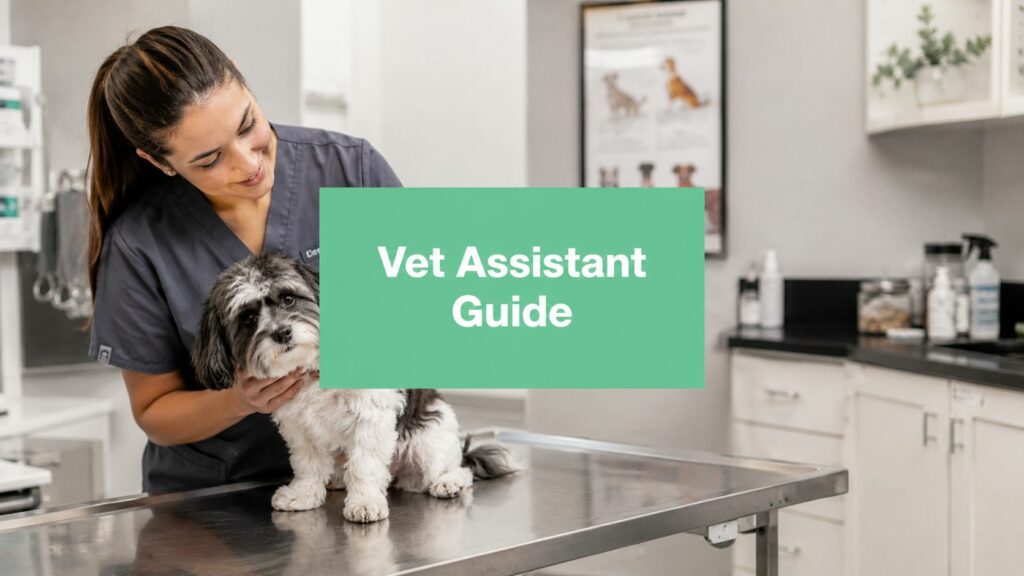
You might be reading this because you love animals but you also want a job that feels stable, practical, and realistic. That's a smart place to start. Passion matters, but if you want one of the available veterinary nursing assistant jobs in the UK, you need a plan that matches what employers require.
You should treat this role as a serious entry point into animal care, not as a casual first job. The right qualification, some hands-on experience, and a focused application will put you in a far stronger position than enthusiasm alone.
Your Journey into Animal Care
Working with animals appeals to people who want a career with purpose. If that sounds like you, a veterinary nursing assistant role is one of the clearest ways in. You support animals, reassure owners, and help the clinical team keep the practice running properly.
The UK job market is broad enough to make this a realistic goal. Over 120,000 people are employed in Veterinary and Animal Care services occupations across the UK, which points to a strong employment base for animal care roles, as noted by Lantra's veterinary assistant careers guidance.

Practical rule: If you want to work with animals for the long term, choose a route that builds employability from day one.
A lot of people search for veterinary nursing assistant jobs because they want meaningful work quickly. That's sensible. But quick entry doesn't mean skipping preparation.
What a Veterinary Nursing Assistant Really Does
This job is much more than cuddling pets. On a normal day, you might move between kennel care, cleaning, admin, and direct support for vets and registered veterinary nurses.
The day-to-day reality
Expect a mix of routine tasks and emotionally demanding moments. You may help prepare rooms, restock supplies, clean equipment, support safe animal handling, and keep records organised. You'll also deal with nervous owners who need calm, clear communication.
Typical duties often include:
-
Clinical support: Preparing treatment areas, getting equipment ready, and assisting qualified staff during appointments
-
Animal care: Feeding, cleaning bedding, monitoring comfort, and reporting concerns to the team
-
Hygiene and safety: Keeping kennels, consulting rooms, and workspaces clean
-
Reception tasks: Updating records, booking appointments, and speaking with clients professionally
The skills employers notice
Kindness matters, but employers also look for reliability. They want someone who can follow instructions, stay calm, and work carefully around animals and people.
You don't need to know everything on your first day, but you do need to show that you can learn quickly and work responsibly.
If you enjoy practical work, routine, teamwork, and animal welfare, this role makes sense. If you only want the emotional side of animal care and not the cleaning, admin, and pressure, be honest with yourself now.
Gaining the Right Qualifications and Experience
Here's the truth many articles gloss over. If you're serious about veterinary nursing assistant jobs, formal training is no longer something to leave until later.

Some guides still imply you can just walk into this field with no credentials. That's outdated advice. In practice, employers compare applicants, and qualifications help them sort serious candidates from hopeful ones.
According to Indeed's UK guide to becoming a veterinary nurse assistant, these roles typically require at least five GCSEs including English, maths, and a science subject, and candidates are often expected to gain an accredited Level 2 or 3 diploma in veterinary support.
What to do first
Start with a Level 2 qualification. It gives you structured knowledge in animal care, administration, health basics, and safe working practice. That matters because clinics need people who understand how a veterinary environment works.
One route is Stonebridge Associated Colleges, which offers a subscription-based online study model. The college provides many career-focused programmes, including veterinary science, health and social care, business, education, nursing, midwifery, Access to Higher Education Diplomas, and English and Maths. They also offer the Level 2 Diploma for Veterinary Nursing Assistants (RQF). Study is online, tutor-supported, and learners can pause or cancel without long-term credit agreements. That kind of flexibility suits adults who need to fit study around work and family life.
Experience still matters
A qualification helps you get noticed. Experience helps you get hired.
Try to build relevant exposure through:
-
Volunteering in animal settings: Rescue centres, kennels, catteries, and charities all help you build confidence
-
Shadowing where possible: Even limited observation gives you useful insight into clinic routines
-
Showing consistency: A regular weekly commitment looks better than a one-off placement
Crafting Your Application and Finding Vacancies
Once you've got training underway or completed, your application needs to look focused. Generic CVs don't work well in animal care.
What to put on your CV
Put your most relevant information near the top. That means your qualification, voluntary work, and any animal handling or customer service experience.
Use a simple checklist:
-
Lead with training: List your Level 2 qualification clearly
-
Show relevant experience: Include shelter work, kennel tasks, cleaning duties, or client-facing roles
-
Use practical language: Mention record keeping, hygiene, teamwork, and animal welfare
-
Write a short cover letter: Explain why you want this specific role and why you understand the practicalities of the work

Where to search
Don't rely on one site. Search job boards, veterinary group careers pages, and local practice websites.
At the moment, Glassdoor lists 138 open veterinary assistant jobs in the United Kingdom, which shows there are active vacancies for people entering the field, according to Glassdoor's UK veterinary assistant listings.
Apply early, and tailor every application. Clinics notice when you've written to them specifically instead of sending the same CV everywhere.
Salary, Interviews, and Your Career Path
You need realistic expectations. This is an entry-level role, so start by looking at it as a stepping stone with genuine progression.
Average annual earnings for a veterinary care assistant in the UK are now around £20,000, based on CAW Careers guidance for veterinary care assistants. That gives you a clear baseline for your first role.

Interview advice that works
Interviewers usually want to know three things. Can you handle the routine work, can you behave professionally, and do you care about animal welfare for the right reasons.
Go in ready to talk about:
-
Your understanding of the role: Mention cleaning, support work, teamwork, and client care
-
Your motivation: Explain why you want animal care as a career, not just a hobby
-
Your next step: Show that you're thinking long term and want to develop
Why this role can lead somewhere better
The path ahead holds significant potential. Veterinary assistant work can open the door to further study and eventually registered veterinary nursing. If you want more responsibility later, that route is there.
A first job in this field isn't the finish line. It's the platform.
If you want a flexible way to get started, take a look at Stonebridge Associated Colleges. Its subscription-based online courses are built for adult learners who need recognised study options around work and home life, and that includes routes into animal care through veterinary-focused qualifications. If you're ready to take a practical first step, explore the Level 2 Diploma for Veterinary Nursing Assistants (RQF) and start building the knowledge employers look for.