You've spent years caring for animals, volunteering at a rescue centre, or working in a completely different sector. Now you're wondering whether university and a career in veterinary science are still possible without traditional A-Levels. Access to higher education animal care can provide a recognised route for adults returning to education, changing careers, or preparing for animal science and veterinary degree-level study.
The route is encouraging, but it isn't effortless. You'll need to understand the diploma structure, check university entry requirements carefully, and prepare for science-focused study. This guide explains how the pathway works and how flexible online learning with Stonebridge can fit around your existing responsibilities.
Starting your journey into animal care and veterinary science
Aisha has always wanted to work with animals. After leaving school, she moved into full-time work and later took on family responsibilities. When she started looking at veterinary degrees, the entry requirements seemed designed for school leavers with recent A-Levels in science. She nearly dismissed the idea before discovering the Access to Higher Education Diploma in Veterinary Science.
A route like this is designed for adult learners, with no upper age limit, including people returning to education or changing careers. The Prospects guide to the Access to HE Diploma explains why this qualification is often considered by adults who need an alternative to the traditional school-to-university route.
An Access diploma won't guarantee a university place. It gives you a structured academic foundation and allows you to work towards the subject knowledge and study skills that a university application demands. For animal care, veterinary science and related life-science degrees, that preparation can be especially useful if your previous qualifications don't include the required sciences.
A realistic starting point: Your interest in animals is important, but universities will also want evidence of academic readiness, scientific understanding and, in some cases, relevant practical experience.
The UK's Access to HE system remains a significant route into higher education for adults. In 2022/23, 12,600 adult learners achieved an Access to Higher Education course, and 65% progressed to a sustained higher education course in 2023/24, according to official further education outcomes statistics.
Understanding the access to higher education animal care diploma
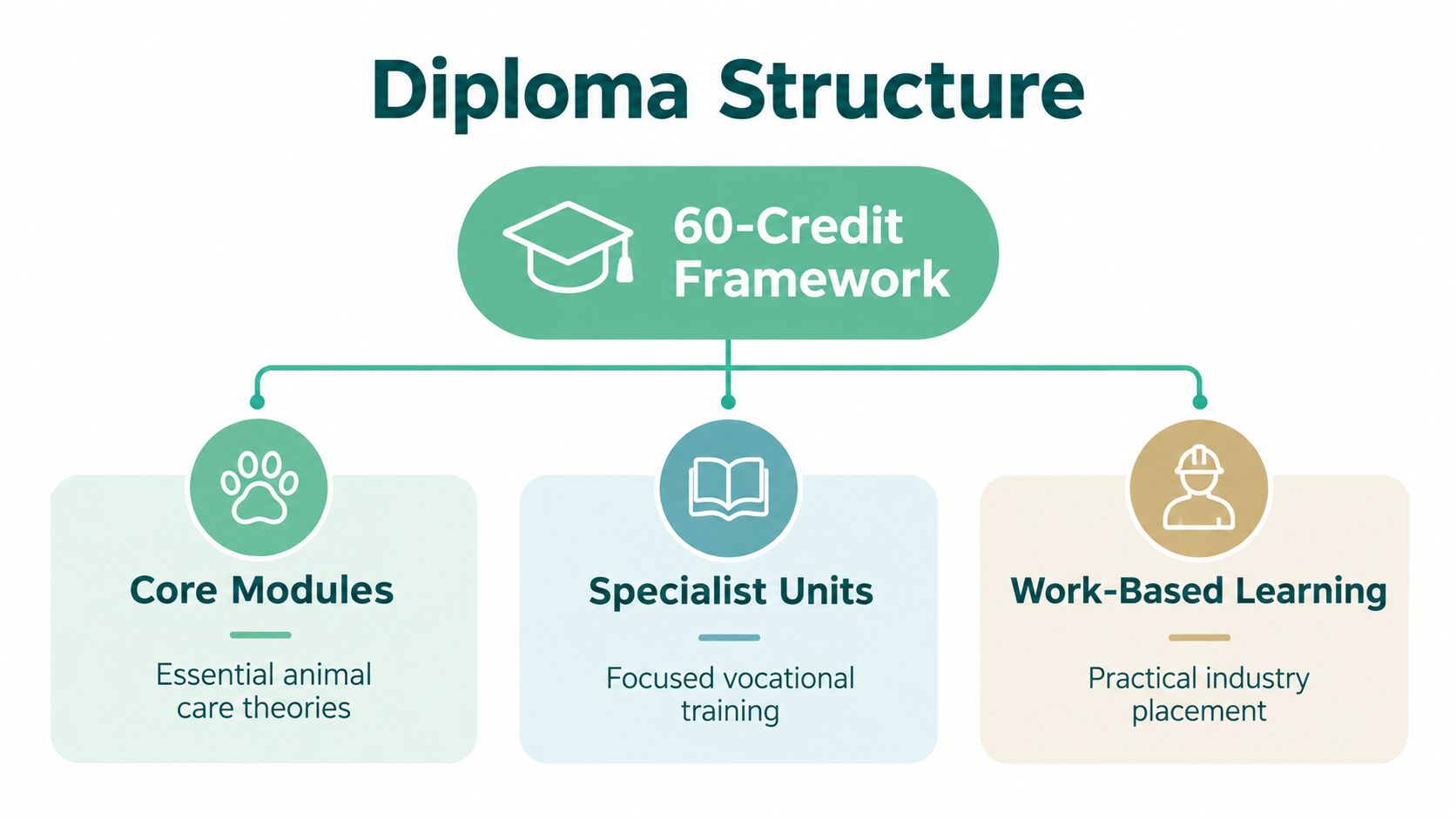
The Access to HE Diploma in Veterinary Science is a Level 3, QAA-recognised qualification for adults preparing for higher education. Its standard structure contains 60 credits, made up of 45 Level 3 credits in graded subject units and 15 ungraded credits in study skills, as set out in the Veterinary Science Diploma specification.
How the credit structure supports progression
The graded units are where you demonstrate your understanding of subjects linked to veterinary science and animal care. Assignments may require research, written explanations, scientific interpretation and the application of knowledge. The ungraded study skills units help you build confidence with academic reading, referencing, planning and independent learning.
Assessment isn't just a final examination. A course may use written assignments, research tasks and other assessed activities to check how well you understand and apply the content. Always check the current Stonebridge course information and the requirements of your intended university, because the exact conditions for progression can vary.
QAA recognition gives the Access to HE Diploma its national framework and academic identity. QAA guidance states that students must be registered on a recognised Access to HE Diploma within 42 days of the course start date, and registered for units worth 60 credits within 12 weeks or before making a formal university application. The QAA Access to HE Diploma specification provides the relevant framework.
The qualification is designed to help turn existing experience and motivation into a university-ready academic profile. It can support applications to veterinary science, animal science, nursing and other life-science degrees, subject to each institution's admissions policy.
Entry requirements and progressing to university degrees
An Access course opens a route, but veterinary degree admissions remain selective. Before enrolling, check the requirements of every university you may apply to. Similar course titles can have very different expectations.
For example, the University of Surrey's Veterinary Medicine and Science entry requirements state that Access applicants normally need 45 Level 3 credits, including 15 credits in Biology and 15 in Chemistry at Distinction. The remaining graded credits must be at Merit or above.
That requirement tells you something important about veterinary progression. Universities aren't only looking for enthusiasm. They're checking whether applicants can manage demanding bioscience content, laboratory-based learning and the academic pace of a professional degree.
You may also need GCSE qualifications. One UK provider requires five GCSEs at grade 4 or above, including English, maths and science, alongside at least four weeks of animal-related work experience. Other institutions may set different conditions, so treat these examples as a prompt to investigate, not as a universal rule.
Build your application around the full picture
Use this checklist before you commit to a progression plan:
Academic subjects: Confirm whether Biology, Chemistry or other science units must be included.
Grade profile: Check the precise Distinction and Merit pattern requested by each veterinary school.
GCSE requirements: Look for English, maths and science conditions, including accepted equivalents.
Experience: Record animal-related employment, volunteering and placements, then check whether the university specifies a minimum duration.
Application timing: Ask the admissions team how your Access diploma must be completed and documented.
Animal-care higher education in England is a smaller route than many other subject areas, but it's clearly established. Department for Education data recorded 250 entrants into Level 4 OfS-recognised higher education in the Agriculture, environmental and animal care technical route in 2019/20, alongside 145 entrants into other higher-level provision. The same data recorded 305 and 220 corresponding enrolments. These figures appear in the Department for Education higher-level learner statistics.
Comparing animal care pathways and qualifications
A veterinary degree isn't the only worthwhile destination in animal care. Your preferred role should guide your qualification choice. A person who wants to support veterinary teams may need a different starting point from someone interested in zoo environments or conservation education.
| Qualification | Level | Primary focus | Progression outcome |
|---|---|---|---|
| Access to Higher Education Diploma (Veterinary Science) | Level 3 | Academic preparation for veterinary science and related higher education | Application to suitable university degrees, subject to entry requirements |
| Zookeeping Level 3 Diploma | Level 3 | Animal husbandry, welfare and zoo-based care | Preparation for zookeeping and related animal-care roles |
| Level 2 Diploma for Veterinary Nursing Assistants | Level 2 | Support tasks in veterinary settings and animal welfare | Preparation for assistant-level work and further vocational study |
The Access to Higher Education Diploma (Veterinary Science) is the most directly aligned option if your goal is university-level veterinary or animal science study. It focuses on academic progression rather than acting as a substitute for a veterinary degree.
A Zookeeping Level 3 Diploma may suit you better if you're drawn to habitat management, enrichment and day-to-day care in zoological settings. The Level 2 Diploma for Veterinary Nursing Assistants is aimed at a more introductory support route.
Stonebridge's veterinary and zoology range includes these pathways, so you can compare the intended outcome before choosing a course.
The benefits of flexible online study with Stonebridge
Adult learners often need to study around employment, caring responsibilities and changing routines. Stonebridge Associated Colleges provides 100% online study, personalised support from qualified tutors and a modular learning format that lets you work through the course around your life.
The subscription model is designed for flexibility. You pay an affordable monthly fee, and you can pause or cancel your subscription at any time without a long-term credit agreement. That arrangement can make an Access to HE animal care course easier to plan when your availability changes.

Study with support around you
Online learning doesn't have to mean studying in isolation. Learners and alumni of Stonebridge Associated Colleges get access to the learndirect: Community Hub app, available to learners and alumni of the learndirect Digital Group. The app includes discussion groups, topic-specific communities and interactive forums where members can ask questions and share ideas.
Stonebridge is accredited by the UK Register of Learning Providers and regulated by the Financial Conduct Authority. These details give learners useful information about the organisation's registration and financial framework while they consider their study options.
Next steps to start your animal care course
Start by reviewing the Access to Higher Education Diploma in Veterinary Science and comparing its requirements with the universities you may target.
Then check your GCSE position, identify any science gaps and gather evidence of animal-related experience. Contact a course adviser if you need help understanding whether the route fits your plans.
Once enrolled, keep your university timetable in mind. QAA rules require registration on the recognised diploma within 42 days, with 60 credits registered within 12 weeks or before a formal university application, as explained earlier.
Stonebridge Associated Colleges offers flexible, subscription-based online courses for adults preparing for higher education, including the Access to Higher Education Diploma in Veterinary Science. Visit Stonebridge Associated Colleges to explore the course, review your options and take the first step towards a future in animal care.