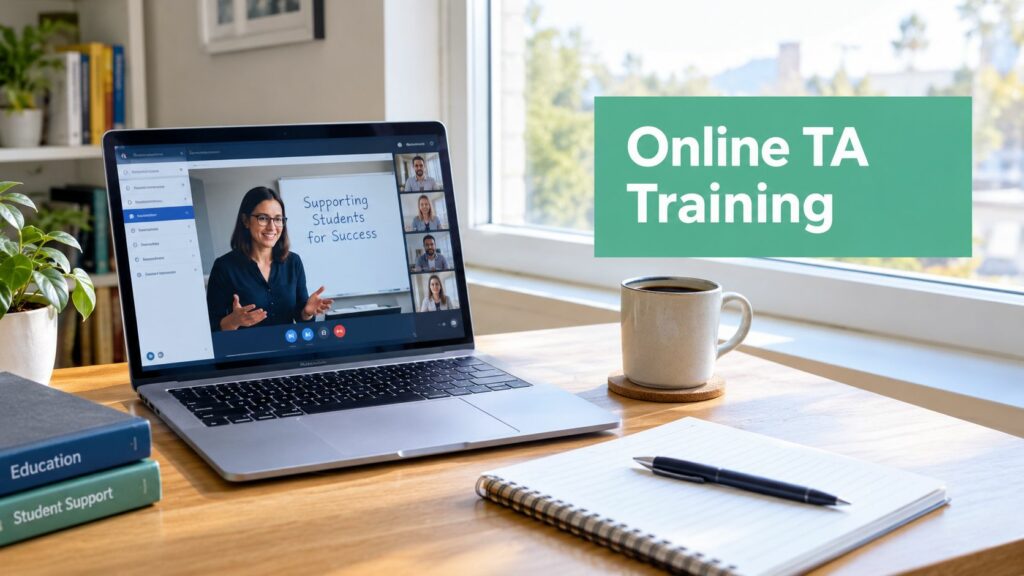
You're balancing work, family and everyday responsibilities, yet you still want a career that feels useful. Becoming a Teaching Assistant can give you a direct route into school-based work, but the training needs to fit around your life and prepare you for real classroom responsibilities. Online teaching assistant training offers that balance when it combines flexible study with tutor support and supervised workplace practice.
This guide explains how to become a Teaching Assistant online, what you'll learn, why specialist SEND knowledge matters and how Stonebridge's subscription model can help you move towards a recognised qualification without putting your life on hold.
Why now is the perfect time to become a Teaching Assistant
Teaching Assistants help pupils access lessons, build confidence and take part in school life. They work alongside teachers, support individuals or small groups, prepare resources and help create a calm, inclusive classroom. It's practical work with a clear human purpose.
Schools also need capable support staff. In a 2025 survey by the Royal Society of Chemistry, 61% of respondents across the UK and Ireland said their school was understaffed in Teaching Assistants. The figure rose to 65% in state-funded secondary schools. You can read the findings in the Royal Society of Chemistry's 2025 survey of Teaching Assistant shortages.

A practical route into school work
The role suits people who enjoy helping others learn, but enthusiasm alone isn't enough. Schools need staff who understand safeguarding, communication, child development and professional boundaries. A structured qualification helps you develop those skills before you take on greater responsibility.
Online study makes the route more accessible for adult learners. The Learning and Work Institute's Adult Participation in Learning Survey 2023 found that 49% of UK adults were currently learning or had learned during the previous three years. Among current or recent learners, 64% had completed at least some main learning online, while 50% had studied fully online.
That pattern reflects how adults now retrain. You can study from home, fit lessons around employment and arrange practical experience in a school setting. With the right course, becoming a Teaching Assistant is an achievable career change rather than a distant ambition.
What you will learn in an online TA course
A worthwhile online TA course should prepare you for the decisions you'll make around children, teachers and families. It shouldn't rely on quizzes alone. You need opportunities to understand professional practice and apply your learning in a real setting.

Core knowledge for classroom support
You'll explore how children develop and learn, including learning theories and the factors that can affect progress. This knowledge helps you recognise when a pupil needs encouragement, a different explanation or additional support.
Safeguarding sits at the centre of the role. Training should help you understand how to protect children, report concerns and maintain appropriate conduct. You'll also build communication skills for working with pupils, teachers and other school staff.
Classroom support can include:
-
Lesson preparation: Helping teachers organise resources and activities.
-
Literacy and numeracy support: Reinforcing learning through guided tasks and clear explanations.
-
Behaviour support: Encouraging positive routines and responding calmly to difficulties.
-
Resource creation: Preparing materials that make activities more accessible.
-
Professional boundaries: Keeping relationships safe, respectful and appropriate.
SEND skills are increasingly important
General classroom knowledge provides a foundation, but many learners want to support pupils with Special Educational Needs and Disabilities. This is a sensible focus. Government data reports that the number of Teaching Assistants rose by 2.1% year-on-year, while pupils with Education, Health and Care plans increased by 11.1%, a five-times faster rate of growth in demand. The figures appear in the Department for Education's further education and skills statistics.
You should look for training that covers inclusive practice, classroom adaptation, communication needs and approaches to supporting different abilities. These topics can help you contribute more effectively when a teacher plans personalised support.
Practical rule: Learn the principle, then ask how it would look during a lesson. Classroom readiness comes from applying knowledge, not simply remembering terminology.
Earning a nationally recognised qualification
A qualification gives your career change structure and evidence. For aspiring Teaching Assistants, the Level 3 Diploma in Supporting Teaching and Learning (RQF) is a relevant route into school-based support work.
RQF means the qualification sits within the Regulated Qualifications Framework. In practical terms, the framework helps describe the level and difficulty of regulated qualifications in England and Northern Ireland. Employers can understand what a qualification represents, while learners can make clearer comparisons when planning their next step.
Why Level 3 is a useful target
A Level 3 Diploma develops knowledge beyond an introductory course. It can cover child development, safeguarding, supporting learning, professional relationships and inclusive practice. The assessment should ask you to show understanding through written work and evidence connected to the responsibilities of a Teaching Assistant.
That evidence-led approach is important. A school needs more than someone who can explain a theory. It needs someone who can communicate appropriately, follow safeguarding procedures, support a pupil without taking over and work within the teacher's plan.
Stonebridge's Level 3 Diploma in Supporting Teaching and Learning (RQF) is delivered online for learners preparing for school-based support roles. Check the course requirements before enrolling, especially any expectations around employment, voluntary placement or workplace evidence.
Check the qualification before you enrol
Before choosing a course, confirm:
-
The qualification title: Make sure it matches the role you want.
-
The regulatory status: Understand whether the award is regulated and what RQF indicates.
-
Assessment requirements: Find out how assignments, observations and evidence are completed.
-
Practical expectations: Check whether you need access to a school or placement setting.
-
Tutor support: Confirm who will guide you through feedback and assessment.
A recognised diploma won't guarantee a job. It can, however, give you a credible foundation and help you show employers that you've prepared seriously for classroom work.
How online training with Stonebridge works for you
Stonebridge's model is built for learners who can't attend a traditional college every day. Courses use 100% online study, so you can access learning materials around your existing commitments. Modular content also lets you focus on one part of the qualification before moving to the next.

You'll receive personalised support from qualified tutors. That support matters when an assignment needs more than a quick answer. A tutor can help you understand feedback, improve your written work and connect course ideas with the expectations of a school environment.
A subscription that fits real life
The subscription option gives you a different way to manage study. Stonebridge Associated Colleges offers an affordable monthly fee, and learners can pause or cancel their subscription at any time without a long-term credit agreement. That suits adults whose working hours, caring responsibilities or finances can change.
You decide when to study, but the qualification still requires commitment. Set regular study sessions, keep a record of questions for your tutor and plan practical experience early. Flexible learning works best when you create a routine that you can maintain.
Online delivery should remove unnecessary barriers, not remove the practical side of preparation.
Effective online TA training blends theory with practice. Arrange your placement or employment setting as soon as your course requirements allow. Use it to observe experienced staff, practise professional communication and collect the evidence your qualification requires.
Your career path after you qualify
After completing your qualification, apply for Teaching Assistant roles in primary or secondary schools that match your experience and local vacancies. Some positions support an entire class, while others focus on one pupil or a small group. Your first role gives you practical evidence and helps you identify the setting where you can contribute most.
Use that experience to choose your next direction. You could work towards becoming a SEN Teaching Assistant, strengthen your behaviour-support skills or take responsibility for literacy, numeracy or classroom resources. Further training can prepare you for more specialised education roles, but each employer sets its own recruitment requirements.

Keep learning after you qualify. Online study is already a familiar part of adult professional development, so you can build new skills without putting your work or other responsibilities on hold. Stonebridge's subscription-based model gives you a flexible route to continue training at a pace that fits your plans.
Support beyond your final assessment
Learners and alumni of Stonebridge Associated Colleges can access the learndirect: Community Hub app, available to learners and alumni of the learndirect Digital Group only. It provides discussion groups, topic-specific communities and interactive forums where members can ask questions and exchange ideas.
Use the community to stay connected while studying remotely. You can speak with people who understand the demands of learning around work, compare experiences and keep planning your professional development after the course ends. A qualification starts your Teaching Assistant career. Regular reflection, practical experience and targeted training help you build it with purpose.
Frequently asked questions about training
Do I need specific GCSEs to enrol?
Entry requirements depend on the course. Check the current requirements for the Level 3 Diploma before applying. If you need to strengthen your English or Maths, Stonebridge also offers Functional Skills English and Maths Level 2 courses, including exams.
How are assignments assessed online?
You'll complete coursework through the online learning system and submit assignments for tutor assessment. Your tutor will provide feedback and explain what you need to improve. Qualifications with workplace evidence may also require placement records, observations or sign-off from an appropriate person.
How quickly can I complete the course?
There isn't one correct pace. Your completion time depends on the course requirements, your available study time and how quickly you can arrange practical evidence. A steady weekly routine is more reliable than rushing through materials.
Can I study while working?
Yes. The online format and subscription model are designed for adult learners managing work and personal commitments. You'll still need to plan your study and practical experience carefully.
Stonebridge Associated Colleges offers flexible, subscription-based online courses for learners preparing for Teaching Assistant careers and other vocational pathways. Visit Stonebridge Associated Colleges to explore the Level 3 Diploma in Supporting Teaching and Learning (RQF), review the course requirements and choose a study plan that fits your life.