You're sitting at the kitchen table after a long day, wondering whether a career in a school could fit around work and family life. Perhaps you've already volunteered with children, supported a young person with reading, or know you'd enjoy helping pupils feel more confident. Training as a Teaching Assistant can turn that interest into a structured route towards classroom work, but choosing the right path takes care.
This guide explains what Teaching Assistants do, what schools and training providers may expect, how apprenticeships compare with online study and direct entry, and how placement experience affects employability. It also shows what a Level 3 qualification involves, so you can make a realistic decision before enrolling.
Is training as a Teaching Assistant right for you?
A pupil is struggling to read a sentence aloud. The Teacher is supporting the wider class, so the Teaching Assistant kneels beside the pupil, listens carefully, breaks the sentence into manageable parts and offers encouragement without giving the answer away. Later, the same Teaching Assistant may prepare resources, help pupils settle after break, support a small group with phonics or record observations for the Teacher.
That's the heart of the role. Teaching Assistants support pupils and Teachers, helping children take part in learning and manage the practical routines of school life. They don't replace the Teacher. Instead, they provide focused support that helps pupils access lessons, practise skills and build independence.

The questions adult learners usually ask
Before committing to a course, you may be asking:
Can I study while working? Flexible online learning can help you organise study around existing commitments, but a school placement still needs reliable time.
Do I need classroom experience? Some routes include workplace learning, while providers and schools may expect you to arrange or demonstrate practical experience.
Will a qualification guarantee a job? No course can promise employment. A recognised qualification, placement evidence and strong references can help you present a more convincing application.
Which route suits me? An apprenticeship offers paid, work-based learning. A college course may provide a more traditional timetable. Online study can suit adults who need greater control over when they learn.
The role also suits people who communicate clearly, stay calm and enjoy noticing small changes in a pupil's confidence. You'll need to follow safeguarding procedures, respect confidentiality and work closely with Teachers and other school staff.
A useful test: if you enjoy helping someone understand a difficult idea, then adjusting your approach when the first explanation doesn't work, classroom support could suit you.
The UK school workforce includes many Teaching Assistants. England had 295,200 full-time equivalent Teaching Assistants in 2025/26, an increase of 33% since 2011, according to the Department for Education's school workforce statistics. That doesn't remove the need to choose carefully. It makes preparation, placement access and evidence of practical ability especially important.
What you need before you start training
A school place can look straightforward from the outside, but the entry checks often shape what you can do next. If you are fitting study around work, family, or other commitments, sort these basics first so you know which route is realistic.
Check your English and maths first
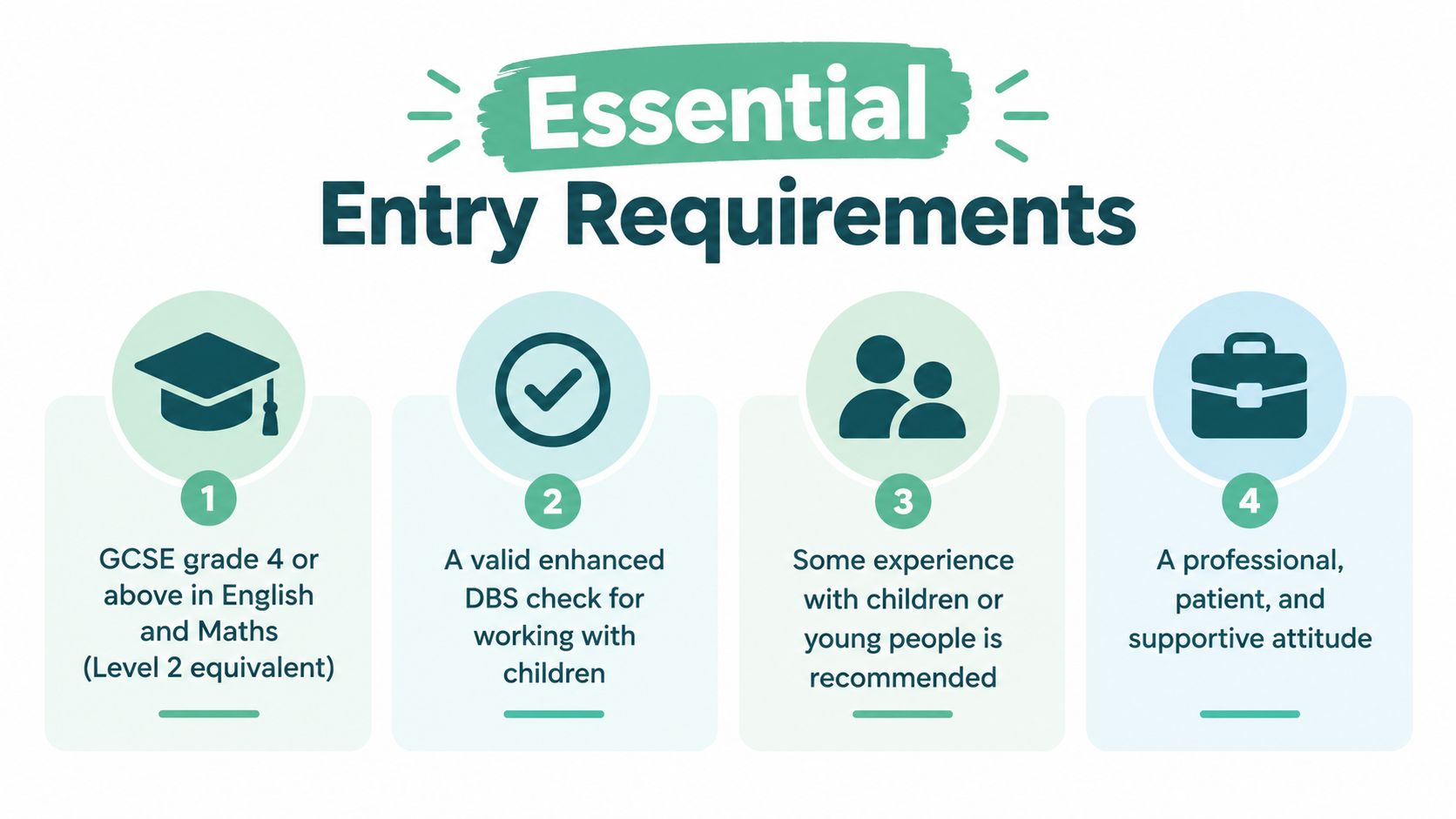
Many school roles and training routes ask for English and maths at Level 2, or GCSE grade C/4 or above. Employers do not always ask for the same thing, but the National Careers Service says requirements vary and schools often look for these qualifications when recruiting Teaching Assistants.
These subjects matter for everyday classroom support. English helps you write clear notes, speak with pupils and follow school policies without confusion. Maths comes up in number work, simple checks and explaining ideas step by step. If you still need one of these qualifications, it is sensible to complete a suitable Level 2 course before training, or alongside it if your provider allows that.
Prepare for school-based checks
A school will commonly ask for a DBS check before you work with children. That is part of the usual safeguarding process, and your course provider or school can explain which check applies to your situation.
Experience in a real classroom also changes what you learn. College guidance shows that one Level 3 route expects around 6 months of workplace practice, while another asks for at least 1 full day each week in a school. The same guidance also refers to the English and maths level above, which is why the entry stage can feel more like planning a route than choosing a course. For example, an apprenticeship may suit someone who already has a school employer and a mentor, while an online diploma may suit someone who needs study to fit around other work, provided they can still secure placement time. Direct entry can be a useful first step too, but it usually works best when you already have some school experience to point to.
Assess your readiness honestly
Use this checklist before applying:
Availability: Can you protect regular study time and attend placement hours?
Communication: Can you explain an idea in different ways and listen without rushing?
Patience: Can you stay supportive when a pupil needs repeated practice?
Teamwork: Are you comfortable following a Teacher's plan and sharing relevant observations?
Professional judgement: Can you keep information private and follow safeguarding guidance?
Some experience with children or young people helps, although it is not the same as formal training. Volunteering, mentoring or supporting activities can still give you useful examples for applications. Be clear about what you did, what you learned and how you kept children safe.
Choosing your training route and how long it takes
The right route depends on how your week is organised. A busy adult learner needs to compare paid work, study time, travel, placement access and the support available from a workplace mentor. Course titles can look similar, but the day-to-day commitment may be very different.
A Level 3 Advanced Apprenticeship usually takes up to 2 years. You work in a school while completing provider-led learning, so your training is tied to a real role rather than studied separately from employment. The National Careers Service Teaching Assistant profile outlines this apprenticeship route alongside other ways into the role.
An apprenticeship suits someone who can secure a school vacancy and is ready to learn at work. Ask how often your mentor will observe you, when progress reviews will happen and who will help you collect evidence. A named mentor with protected time gives you clearer guidance than informal shadowing. Without that support, completing the required work can become difficult, even when the course itself looks suitable.
College-based study gives you scheduled teaching, tutor access and, in some cases, use of specialist facilities. It can suit learners who prefer a fixed routine and can travel to sessions. Check how many days you must attend, how placement hours fit around the timetable and what happens if work or caring responsibilities change.
An online diploma offers more control over when you study. Stonebridge Associated Colleges offers an online Level 3 course focused on Specialist Support for Teaching and Learning in Schools, with a work placement included. You may be able to study around other commitments, but you normally need to take responsibility for arranging suitable placement time and confirming that the school can provide the required practical opportunities. Online learning changes the location of your study, not the need to show classroom competence.
Direct application or volunteering can help you test the work before committing to a full qualification. It may build useful school experience, but it does not always provide structured teaching, formal assessment evidence or a recognised qualification. Ask each school what it expects and whether there is a route from the initial role into training.
| Route | Time and working pattern | Placement, mentor and completion reality |
|---|---|---|
| Advanced Apprenticeship | Up to 2 years, with employment and provider-led learning | The employer provides the school setting. Confirm mentor observation frequency, review dates and time for evidence. |
| College-based course | Follows the provider's timetable and placement arrangements | Check attendance days, travel, placement hours and how missed sessions affect completion. |
| Online Level 3 diploma | Flexible online study with planned workplace experience | Check who sources the placement, how tutor support works and how practical evidence will be assessed. |
| Direct application or volunteering | Flexible, depending on school opportunities | Useful for experience, but structured training and a recognised qualification are not guaranteed. |
Choose the route you can sustain. A timetable that fits your life gives you a better chance of completing the training and arriving in school prepared.
Inside the Level 3 Diploma and how you will be assessed
A Level 3 Supporting Teaching and Learning qualification brings together the knowledge and practical evidence schools expect from a Teaching Assistant. The Stonebridge course structure includes 53 credits across 16 mandatory units, with 310 guided learning hours.
Guided learning means time supported by a tutor or provider. Total qualification time also includes reading, research, preparation, independent study and gathering evidence. Plan for both, especially if you are balancing study with work or family commitments.
What you're likely to study
The units connect classroom principles with everyday responsibilities. They may cover:
Safeguarding and professional practice, including your responsibilities for children's welfare.
Communication and inclusion, helping you support pupils with different needs and backgrounds.
Learning support, including literacy and numeracy activities.
Behaviour and routines, so pupils can take part safely and positively.
Assessment for learning, using observations and feedback to help Teachers understand progress.
Working with school staff, because good support depends on shared information and planning.
The pattern is straightforward. You learn a principle, apply it in a school and collect evidence of what you did. The qualification therefore tests both your understanding and your ability to support pupils appropriately.
How assessment works in practice
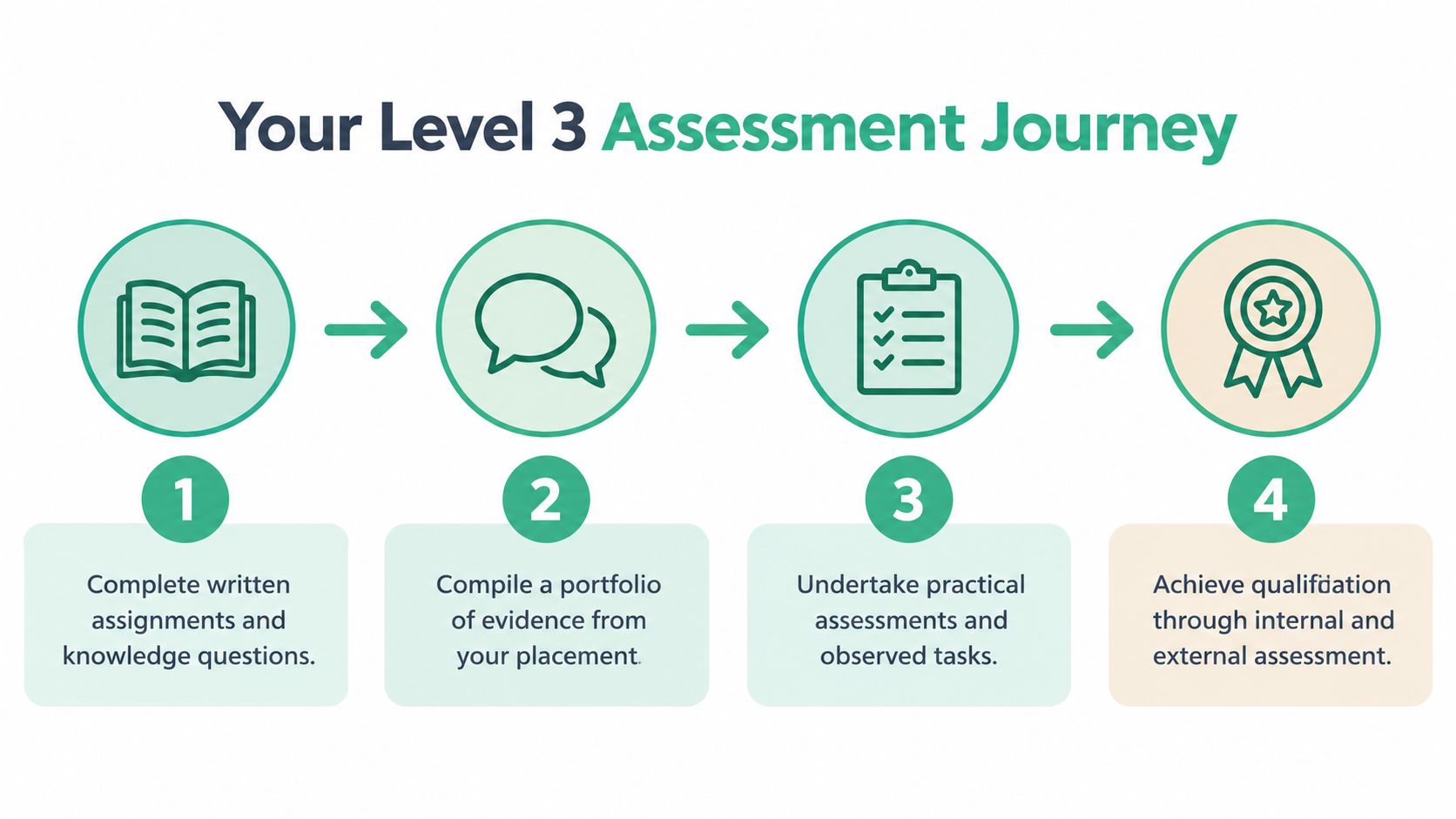
Assessment can include written assignments, knowledge questions, workplace observations, professional discussions and a portfolio. The exact combination depends on the unit and the qualification arrangements.
Your portfolio might contain anonymised planning notes, observation records and reflections on a learning activity you supported. Remove unnecessary names, photographs and identifying details. Pupil confidentiality applies to coursework as well as daily school work.
Online learners typically submit written evidence and reflective logs, then complete workplace observations arranged with a school mentor. Keep records anonymised and follow the evidence requirements in the unit handbook. Stonebridge Associated Colleges supports learners through its online course, while placement activities provide opportunities to demonstrate practical competence.
Keep evidence organised from the beginning. Write a brief reflection soon after an activity, while you can still recall the instructions, pupil response and feedback. Reconstructing those details weeks later is harder and often less precise.
The official achievement rate for the Level 3 Teaching Assistant apprenticeship is 75% nationally for about 3,900 leavers, according to the Teaching Assistant apprenticeship standard data. Regular mentor observations, early help with English and maths, and clear links between assignments and classroom practice can help prevent avoidable delays or gaps in evidence.
How to apply and thrive in the classroom
A qualification helps you build knowledge. Schools also want to see how you'll use it with real pupils, under the direction of Teachers.
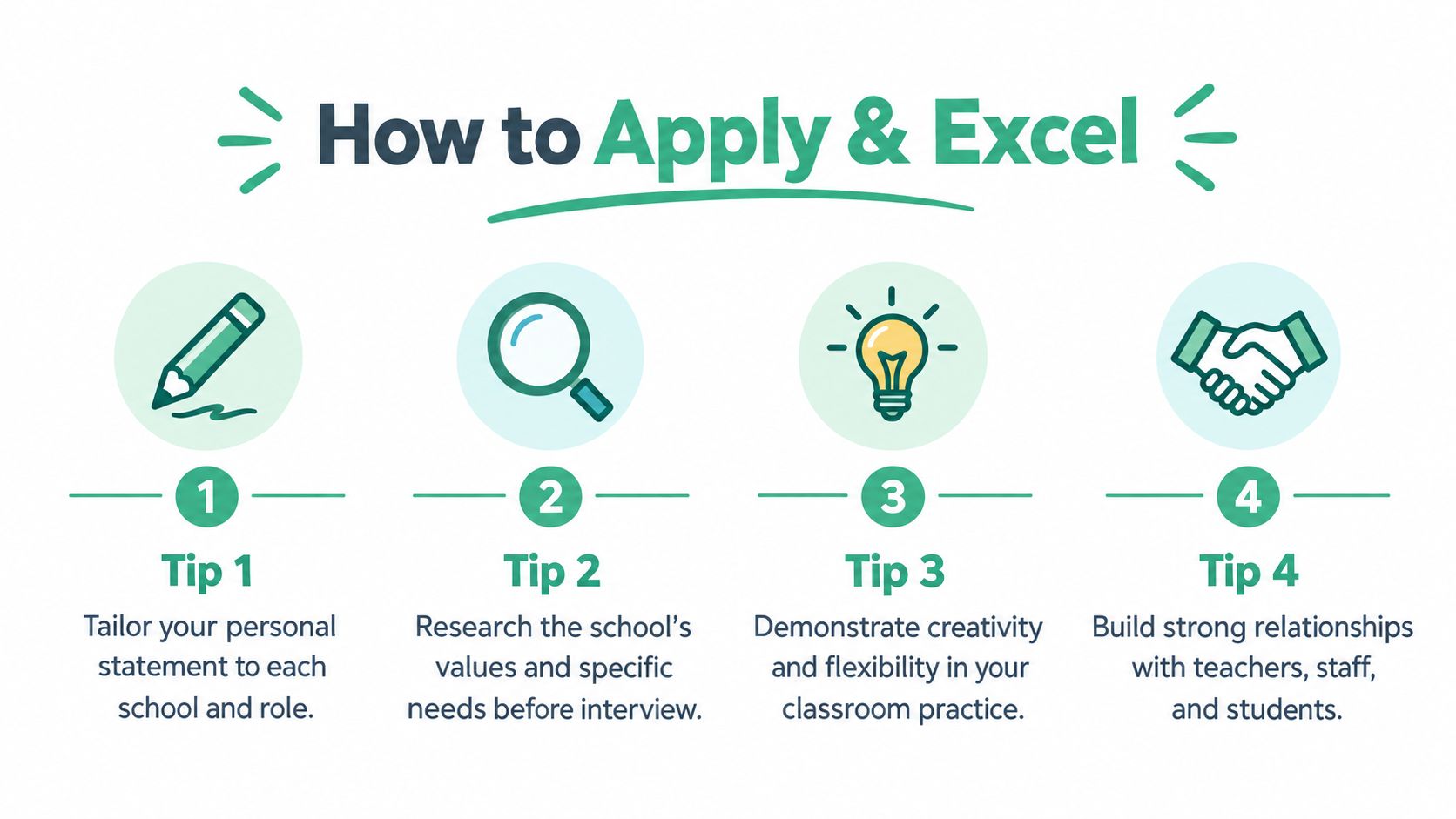
Start with the application. Read the person specification and match your statement to the actual role. If the school mentions reading support, inclusion or small-group work, give a specific example from employment, volunteering or placement experience. Explain what you did and what you learned, rather than listing personal qualities without evidence.
When a provider expects learners to arrange a placement, contact schools early. Ask about availability, age groups, placement hours, DBS arrangements and whether a member of staff can act as a mentor. A school may need time to approve the placement before you can begin collecting evidence.
Build your skills in the right order
Trying to lead an intervention before you understand the school's routines can create unnecessary risk. A sensible sequence is:
Learn routines and safeguarding first. Find out how pupils move around the school, how staff report concerns and what behaviour procedures apply.
Support literacy and numeracy next. Use the Teacher's instructions, model language clearly and check whether the pupil understands rather than assuming silence means agreement.
Develop guided small-group practice later. Once you understand the learning objective and classroom expectations, you can support focused activities with greater confidence.
Work closely with the Teacher. Ask what success should look like, how much prompting to give and what information should be recorded. Share observations factually, without diagnosing a need or promising an outcome.
Parents and carers also value calm, professional communication. Follow the school's procedures and refer questions about progress, behaviour or support plans to the appropriate member of staff.
For an accessible overview of early language support delivered by a trained Teaching Assistant, the Department for Education's account of early language intervention offers useful classroom context. It shows how targeted activities can sit within ordinary school routines, while reminding learners that interventions need preparation and consistent delivery.
Key takeaway: schools need Teaching Assistants who are dependable, observant and ready to learn from feedback. Practical evidence turns those qualities into something an employer can assess.
Your next step towards a rewarding classroom career
Teaching Assistant work can lead in several directions. With experience, you may take on more specialist responsibilities, support particular inclusion needs or progress towards a Higher Level Teaching Assistant role. Some learners later explore wider education, early years, pastoral or support roles.
A recognised Level 3 qualification gives your preparation a clear shape. It helps you understand safeguarding, communication, learning activities and professional boundaries before you're expected to use those skills independently. Placement experience then gives you the chance to practise under supervision and build references.
Online learning can be a practical choice for adults who can't attend a fixed timetable. Stonebridge offers 100% online study, personalised support from qualified tutors and a subscription model that lets learners pause or cancel without a long-term credit agreement. The modular format and monthly payment option allow you to organise study around work and home responsibilities.
Learners and alumni of Stonebridge Associated Colleges also have access to the learndirect: Community Hub app, for learners and alumni of the learndirect Digital Group. The app includes discussion groups, topic communities and interactive forums, giving learners a place to share questions and perspectives during their studies.
Readability matters when you're studying around a busy life. GOV.UK writing guidance recommends short sentences and paragraphs of no more than five sentences. Those same habits help Teaching Assistants communicate clearly with pupils, colleagues and families.
Begin by checking your English and maths position, contacting a potential placement school and reviewing the course requirements. Then choose a study route that you can maintain consistently. The classroom needs people who are prepared to keep learning, and your first careful step can lead to work that makes a genuine difference to pupils' daily experience.
Stonebridge Associated Colleges offers flexible, subscription-based online courses, including the Teaching Assistant Specialist Support for Teaching and Learning in Schools Level 3 course, with tutor support and workplace learning. Visit Stonebridge Associated Colleges to explore the course and start planning your route into classroom support.