Ever wondered what separates a good teaching assistant from a truly great one? It's not just about knowing the curriculum. It’s a unique blend of skills that can transform a student's entire learning experience. Whether you're supporting learners in a bustling primary school or guiding adults through an online diploma, the core qualities of excellence are universal.
If you’re asking, "what makes a good teaching assistant?", you’re already on the right track. In this guide, we'll explore the 10 essential skills that define a top-tier TA. You won't just learn what these skills are, but how you can develop them and apply them in real classroom scenarios. Let’s dive in and explore the qualities that will empower you to make a lasting difference.
1. Crystal-Clear Communication: The Art of Simple Explanations
What makes a good teaching assistant truly indispensable? It often starts with the ability to communicate with absolute clarity. Great TAs act as a crucial bridge between the teacher’s lesson and a student’s understanding, translating complex concepts into simple, digestible language. This skill is fundamental for supporting learners who struggle to grasp new ideas the first time.
Effective communication ensures no student is left behind. It’s not just about repeating the teacher’s words; it’s about reframing them to connect with different learning styles. Think of yourself as the expert translator in the classroom.
How to Improve Your Communication Skills
Practise the ‘Beginner’s Mindset’: Before explaining a task, ask yourself, "How would I explain this to someone who has never heard of it before?" This forces you to strip away jargon and focus on the core message.
Use Analogies and Real-World Examples: Connect abstract concepts to things students already know. For example, when explaining fractions, you could use a pizza or a chocolate bar to make the idea tangible and relatable.
Check for Understanding: After explaining, ask open-ended questions like, “Can you show me how to do the first step?” or “What do you think we should do next?” This is far more effective than a simple “Do you understand?”
Actionable Tip: Create a ‘jargon jar’ for yourself. Whenever you catch yourself using a complex term, think of two simpler ways to explain it. This builds a habit of clear, accessible language—a key trait of a successful teaching assistant.
2. Patience and Empathy with Diverse Learners
A cornerstone of what makes a good teaching assistant is genuine patience and empathy. Your students are not a uniform group; they bring a wide variety of personal circumstances that look different at every developmental stage. You might support a seven-year-old struggling with the frustration of fine motor skills, a pre-teen navigating the social complexities of the playground, or a student with additional needs who finds a noisy classroom overwhelming.
When supporting adult learners, this could be anything from juggling jobs and family life to managing financial pressures alongside their studies. This emotional intelligence is vital for creating a supportive environment where every learner feels seen, safe, and understood.

Your role extends beyond academics; you are a key source of encouragement. By acknowledging individual challenges, you help build the resilience students need to succeed. This understanding is what transforms a good TA into a great one.
How to Show More Patience and Empathy
Practise Active Listening: When a student shares their struggles, listen without immediately jumping to solutions. Ask clarifying questions like, "It sounds like you have a lot on your plate. What would help most right now?" This shows you are genuinely trying to understand their situation.
Acknowledge and Validate Feelings: Instead of dismissing a student's frustration, validate it. Phrases like, “I can see why that would be challenging,” help learners feel heard and supported.
Focus on Progress, Not Perfection: Celebrate small wins. If a student with dyslexia completes a challenging reading, praise their specific effort and perseverance. This tailored encouragement is far more impactful than generic praise.
Actionable Tip: At the start of a conversation with a struggling student, consciously put yourself in their shoes. Ask open questions about their circumstances and listen to understand, not just to respond. This simple shift in perspective builds trust and fosters a truly supportive learning relationship.
3. Subject Matter Knowledge and Expertise
A key trait of a brilliant teaching assistant is having a solid grasp of the subject they support. Whatever subject it may be, your expertise allows you to do more than just supervise; you can actively deepen a student’s understanding. This knowledge makes you a true asset, enabling you to answer questions accurately and connect classroom theory to real-world practice.
Especially in career-focused courses when supporting older learners, current subject knowledge ensures learners receive guidance that aligns with today's industry standards. A TA with a recent nursing background, for instance, can offer invaluable, practical context when explaining clinical procedures, making the learning far more relevant for aspiring healthcare professionals.
How to Use Your Subject Matter Expertise
Connect Theory to Practice: Use your professional experience to bring lessons to life. A former zookeeper supporting a Level 3 Zookeeping Diploma can share firsthand insights into animal welfare that go beyond the textbook.
Anticipate Sticking Points: Your expertise helps you predict where students might struggle. If you know a particular concept is often misinterpreted, you can prepare simplified explanations or examples in advance.
Stay Current in Your Field: Professional standards evolve. Regularly engage in continuing professional development (CPD) and read industry publications to keep your knowledge up to date.
Actionable Tip: Create a ‘practice-to-theory’ cheat sheet for each module you support. List key theoretical concepts and jot down two or three real-world examples from your professional experience that illustrate them. This becomes a powerful resource for answering student questions with confidence.
4. Organisational and Time Management Skills
What makes a good teaching assistant the organisational backbone of the classroom? It's the ability to manage multiple tasks, track student progress, and meet deadlines without missing a beat. These skills are crucial for providing consistent and timely support, especially in flexible learning environments.
Excellent organisation prevents you from becoming overwhelmed and ensures every student receives the attention they deserve. It involves creating efficient workflows for everything from marking assignments to responding to queries, forming a reliable support system that your students and teacher can depend on.
How to Sharpen Your Organisational Skills
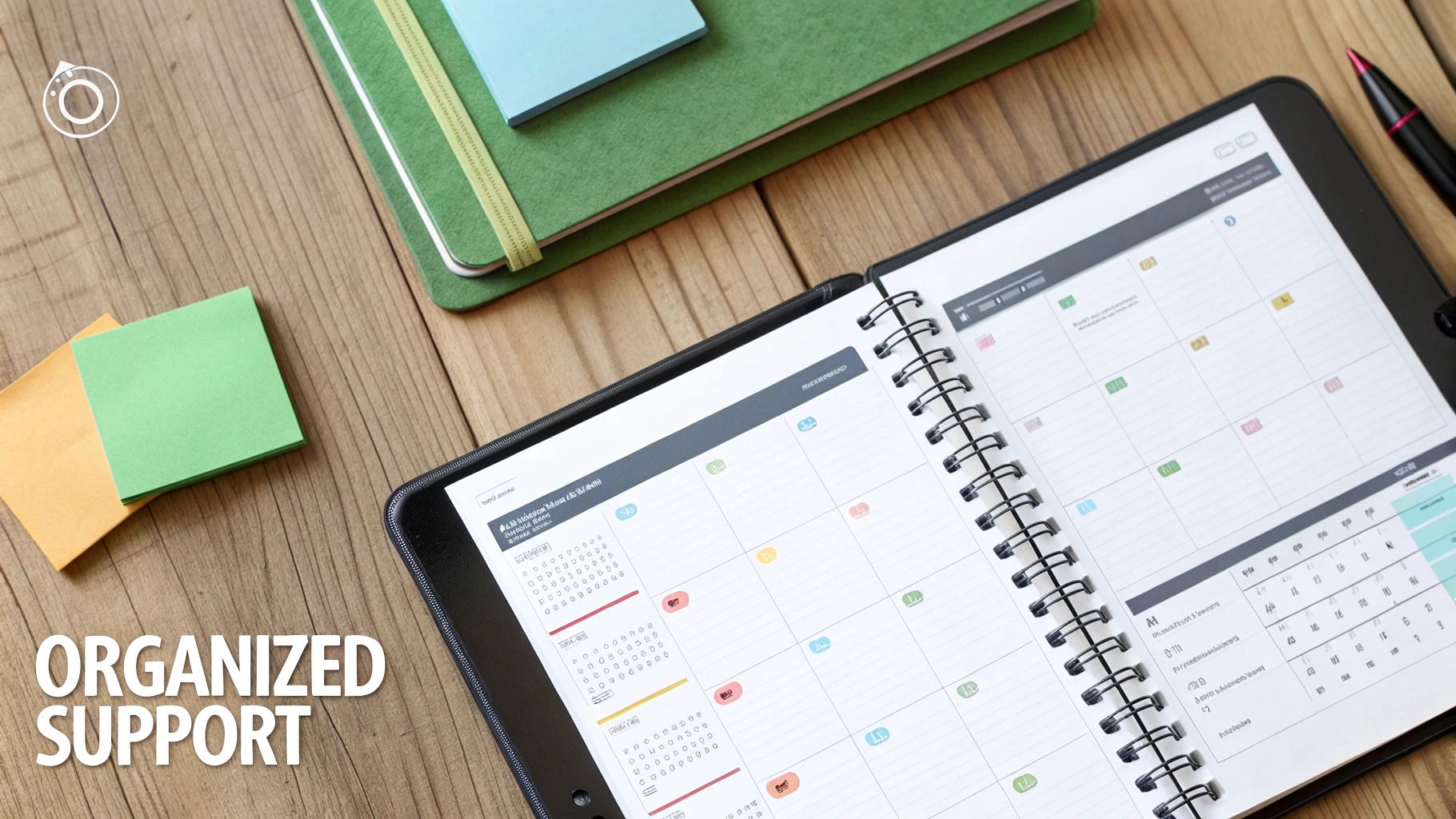
Master Your Digital Tools: Use features within your learning management system (LMS) to track submissions and progress. Create a colour-coded calendar to manage feedback deadlines for dozens of learners across various courses.
Develop Templates: For common questions or feedback points, create pre-written templates. This saves significant time while ensuring your responses remain high-quality and consistent.
Batch Similar Tasks: Group related activities together. For instance, dedicate a specific block of time to mark all of one particular assignment or respond to a batch of emails. This minimises context-switching and improves your focus.
Actionable Tip: At the start of each week, block out your calendar with dedicated time for specific duties: marking, student communication, and administrative tasks. Communicating your general response times to students also helps manage their expectations and reduces pressure on you.
5. Digital Literacy and Technical Proficiency
In today’s digital learning landscape, what makes a good teaching assistant is often their comfort with technology. A great TA is digitally literate, capable of navigating online platforms, troubleshooting technical issues, and using digital tools to engage learners. This is especially vital in online learning environments where technology is the main medium for instruction.
Your technical proficiency allows you to support learners who may be less digitally confident, ensuring that technology enhances their learning rather than becoming a barrier. You become the go-to support for both practical and pedagogical digital needs, modelling confidence and competence for every student.
How to Boost Your Digital Literacy
Become the Platform Expert: Proactively learn the ins and outs of your primary Learning Management System (LMS) and other digital tools. Your expertise allows you to guide students confidently, for instance, by showing them how to submit assignments or access course materials.
Create Digital Support Resources: Develop simple, step-by-step guides with screenshots or short instructional videos for common technical tasks. This empowers students to solve minor problems independently and builds their own digital confidence.
Troubleshoot with Patience: When a student faces a technical issue, like a connectivity problem, approach it with a calm and methodical mindset. Guide them through troubleshooting steps patiently, transforming a moment of frustration into a valuable learning opportunity.
Actionable Tip: Before a course begins, create a ‘Digital Toolkit’ for your students. This could be a single document containing links to all necessary platforms, step-by-step login instructions, and a troubleshooting FAQ. This proactive step helps prevent common issues and shows you are organised and supportive.
6. Responsiveness and Reliability: The Dependable Anchor
What makes a good teaching assistant a trusted pillar in the classroom? It’s the unwavering consistency of being responsive and reliable. Great TAs understand that their dependability builds the foundation of trust necessary for effective learning, especially for students who need extra reassurance.
Being reliable means being a predictable and safe point of contact for students and teachers alike. In a busy educational environment, knowing you are consistently available and will follow through on commitments prevents students from feeling isolated or overlooked. You are the dependable presence that helps develop confidence.
How to Be More Responsive and Reliable
Set Clear Expectations: From the outset, communicate your availability and typical response times for emails or queries. For example, let students know you will reply within 24 hours during the school week. This manages expectations and demonstrates professionalism.
Maintain Consistent Routines: Stick to agreed schedules, such as being present for specific lessons or holding regular support sessions. If you promise to provide feedback by a certain day, ensure you meet that deadline consistently.
Plan for Absences: Everyone needs time off. Inform the teacher and, if appropriate, the students of any planned absences well in advance. Organise cover or prepare resources to ensure there is no gap in support.
Actionable Tip: Use an auto-responder on your email for outside of working hours. A simple message acknowledging receipt and stating you will respond on your next working day provides immediate reassurance and reinforces your reliability, even when you are not actively working.
7. Adaptability and Flexible Problem-Solving
A classroom is a dynamic environment where no two days are the same. This is why adaptability is a core trait of what makes a good teaching assistant. Great TAs are flexible problem-solvers, capable of shifting their approach based on the immediate needs of a learner, unexpected challenges, or evolving classroom circumstances.
This skill is about recognising that a one-size-fits-all method simply doesn't work. Each student has unique barriers, from difficulties with technology to personal anxieties. A TA’s ability to pivot and offer customised support ensures that every student, regardless of their challenges, has an equal opportunity to succeed.
How to Become More Adaptable
Offer Alternative Formats: If a student struggles with written tasks, suggest they provide their answers verbally or create a recorded response. For a neurodivergent student, this could mean providing access to a quiet study space.
Maintain a Toolkit of Strategies: Build a collection of different teaching and support methods. Experiment with new approaches regularly to see what works best for various learning styles and needs.
Collaborate with the Student: Actively involve students in finding solutions. Ask them directly, “What kind of support would help you most with this task?” This empowers them and often leads to the most effective strategies.
Actionable Tip: Keep a simple log to document what works for individual students. Note down which strategies led to a breakthrough and build on those successes. This creates a personalised support plan that evolves with the student and is a hallmark of an outstanding teaching assistant.
8. Professionalism and Ethical Conduct
Beyond academic support, what makes a good teaching assistant a true asset is their unwavering professionalism. As a TA, you are a role model in the classroom, and your conduct sets a standard for your students. This means upholding high ethical standards, maintaining appropriate boundaries, and ensuring every action is guided by professional integrity.
This is especially critical in fields like healthcare or social work, where students are expected to embody these values in their future careers. Your professional conduct directly influences the learning environment, fostering a culture of trust, respect, and safety. It demonstrates your commitment to the wellbeing and confidentiality of every student.
How to Demonstrate Professionalism
Maintain Clear Boundaries: Establish and uphold professional relationships with students. This means avoiding personal friendships on social media and keeping all communication within professional channels. This protects both you and the students.
Prioritise Confidentiality: Never share sensitive student information, such as grades or personal circumstances, with anyone who isn't authorised to know. Adhering to data protection regulations is not just a rule, but a core ethical duty.
Model Professional Behaviour: Demonstrate the standards expected in your field. This includes punctuality, appropriate dress, using professional language, and engaging in respectful dialogue, even when faced with challenging situations.
Actionable Tip: Create a personal checklist at the start of each academic year based on your institution's policies. Include key dates for mandatory training (e.g., safeguarding, data protection), a reminder to review the staff code of conduct, and a note to confirm who your designated safeguarding lead is. This proactive step keeps compliance at the forefront of your practice.
9. Motivational and Encouragement Abilities
What makes a good teaching assistant a true mentor is their ability to inspire and encourage learners. For many students, especially those juggling studies with work and family, staying motivated can be a significant challenge. Great TAs recognise when a student's commitment is wavering and step in with tailored support to reignite their passion.
This skill is vital for those on demanding career paths or for students returning to education after a long break. You are not just a teaching assistant; you are a supporter, a guide, and a key figure in helping students believe in their own potential to succeed.
How to Be More Motivational
Be Proactive with Check-ins: Don't wait for a student to fall behind. If you notice someone hasn't submitted work or engaged with materials for a while, reach out personally to explore any barriers they might be facing.
Connect Learning to Long-Term Goals: Help students see the bigger picture. Discuss how their current course is a direct bridge to their dream university degree or how their qualification will lead to a fulfilling career.
Share Success Stories: Use examples of former students who have successfully completed their courses and are now thriving in their chosen fields. This makes abstract goals feel tangible and achievable.
Actionable Tip: When giving feedback, focus your praise on effort and specific progress, not just on getting the right answer. Instead of saying “Good job,” try “I was really impressed with how you structured your argument here; your research has clearly improved since the last assignment.” This evidence-based praise builds lasting confidence.
10. Feedback and Assessment Skills
What makes a good teaching assistant so impactful? The answer often lies in their ability to provide high-quality feedback. Great TAs understand that assessment is not just about marking work; it’s a powerful tool to accelerate learning, build confidence, and guide a student’s next steps.
Effective feedback is specific, constructive, and actionable. It moves beyond a simple “good work” to explain exactly what was done well and how to improve. This skill is vital for maintaining momentum and ensuring students feel seen and supported—a key part of what makes a good teaching assistant indispensable.
How to Give Better Feedback
Be Specific and Evidence-Based: Instead of a general comment, reference the student's work directly. For example, instead of saying “Improve your structure,” write, “Your introduction clearly states your argument. To improve, try using a topic sentence for each paragraph to link back to this main point.”
Balance Strengths with Areas for Growth: Always start by highlighting at least one specific positive aspect of the work. This builds confidence and makes the student more receptive to constructive criticism.
Use Assessment Rubrics Consistently: A rubric provides clear, objective criteria for marking. Using it ensures your feedback is fair and transparent, helping students understand exactly what is expected of them and why they received a particular grade.
Actionable Tip: Practise “feedforward” by phrasing your suggestions to focus on the future. Instead of “You didn’t explain this point,” try, “For your next assignment, remember to provide a supporting example for each key point you make.” This empowers students to apply your advice directly to their next piece of work.
Top 10 Teaching Assistant Qualities Comparison
| Item | 🔄 Implementation Complexity | ⚡ Resource Requirements & Efficiency | 📊 Expected Outcomes | 💡 Ideal Use Cases | ⭐ Key Advantages |
|---|---|---|---|---|---|
| Clear Communication and Explanation Skills | Medium — requires tailored wording and multimodal examples | Moderate time investment; benefits from templates and peer review | 📊 Higher comprehension, fewer clarification requests | 💡 Asynchronous guidance, FAQs, vocational step-by-step guides | ⭐ Reduces confusion; scalable with templates |
| Patience and Empathy with Diverse Learners | Medium — requires emotional skill and boundary management | Time‑intensive; risk of emotional labour and need for supervision | 📊 Improved retention and learner trust | 💡 Supporting vulnerable learners, flexible deadlines, pastoral care | ⭐ Builds psychological safety and loyalty |
| Subject Matter Knowledge and Expertise | High — ongoing CPD to stay current | Continuous professional development; moderate cost/time | 📊 Accurate answers; higher credibility and relevance | 💡 Professional qualifications (nursing, vet, engineering) | ⭐ Ensures industry-aligned, reliable guidance |
| Organisational and Time Management Skills | Medium — process design and consistent practice | Tools (LMS, calendars), initial setup time; improves throughput | 📊 Faster responses; fewer admin errors; higher caseload capacity | 💡 Managing multiple cohorts, modular subscription models | ⭐ Reliable delivery and audit-ready records |
| Digital Literacy and Technical Proficiency | Medium — training on platforms and troubleshooting | Training time; requires tool access; enables automation | 📊 Fewer tech blockers; better engagement with digital resources | 💡 LMS support, digital content creation, remote assessments | ⭐ Reduces support bottlenecks; enables engaging resources |
| Responsiveness and Reliability | Low–Medium — discipline and coverage planning | Predictable schedules; may need backup staffing | 📊 Reduced learner anxiety; earlier issue resolution | 💡 Office hours, timely email/feedback windows | ⭐ Builds trust and continuity |
| Adaptability and Flexible Problem-Solving | High — iterative approaches and case-by-case solutions | Time-consuming per learner; benefits from a toolkit of strategies | 📊 Higher completion for struggling learners; personalised outcomes | 💡 Neurodiversity support, bespoke learning pathways | ⭐ Addresses diverse needs; prevents escalation |
| Professionalism and Ethical Conduct | Medium — training and compliance systems required | Ongoing training, record-keeping; administrative burden | 📊 Protects reputation and legal compliance | 💡 Healthcare/social care programs; safeguarding contexts | ⭐ Ensures trust, legal safety, and role modelling |
| Motivational and Encouragement Abilities | Medium — requires ongoing proactive engagement | Time and emotional investment; effective with structured check-ins | 📊 Increased retention and learner self-efficacy | 💡 At-risk learners, long programmes, Access to HE pathways | ⭐ Reignites engagement and improves completion |
| Feedback and Assessment Skills | High — needs subject knowledge + rubric use | Significant time per submission; efficiency improved with rubrics | 📊 Accelerated learning and clearer progression evidence | 💡 Written assignments, competency-based assessments | ⭐ Actionable, specific feedback that drives improvement |
Your Next Step: Become an Outstanding Teaching Assistant
Now that you understand what makes a good teaching assistant, it's time to put these qualities into action. Every skill we've explored—from crystal-clear communication and empathy to strong organisational skills—is a vital tool you'll use to create a positive and effective learning environment, no matter if it's for younger or older learners. These aren't just abstract ideas; they are the practical, everyday attributes that separate a competent TA from an inspirational one.
From Understanding to Action
If this guide has ignited your passion for supporting students, your next logical move is to formalise that ambition. A recognised qualification gives you the theoretical knowledge and practical strategies to bring these essential qualities to life. It provides the confidence to handle complex situations and the skills to make a genuine, measurable impact on your students' lives.
Embracing these principles is about more than just finding a job. It’s about committing to a role that has a profound effect on the next generation. By developing these ten core competencies, you are preparing yourself to become the kind of teaching assistant who not only helps students achieve their academic potential but also fosters their confidence, resilience, and love for learning.
Ready to transform your passion into a profession? Stonebridge Associated Colleges offers a direct path to formalising your skills with flexible, online courses like the Level 3 Diploma in Supporting Teaching and Learning. Gain the recognised qualification you need to become the outstanding teaching assistant every classroom needs by enrolling today at Stonebridge Associated Colleges.