
Dreaming of a career where you can make a real difference in the lives of animals? Veterinary nursing assistant courses are the perfect starting point, typically leading to a Level 2 qualification. These programmes are designed to give you the essential skills you'll need for a vital support role in a veterinary practice, covering everything from animal handling and welfare to communicating with clients and assisting with basic medical tasks.
If you've ever wondered how to turn your passion for animals into a profession, you're in the right place. Let's explore what the role involves and how the right course can set you on the path to success.
What a Veterinary Nursing Assistant Really Does
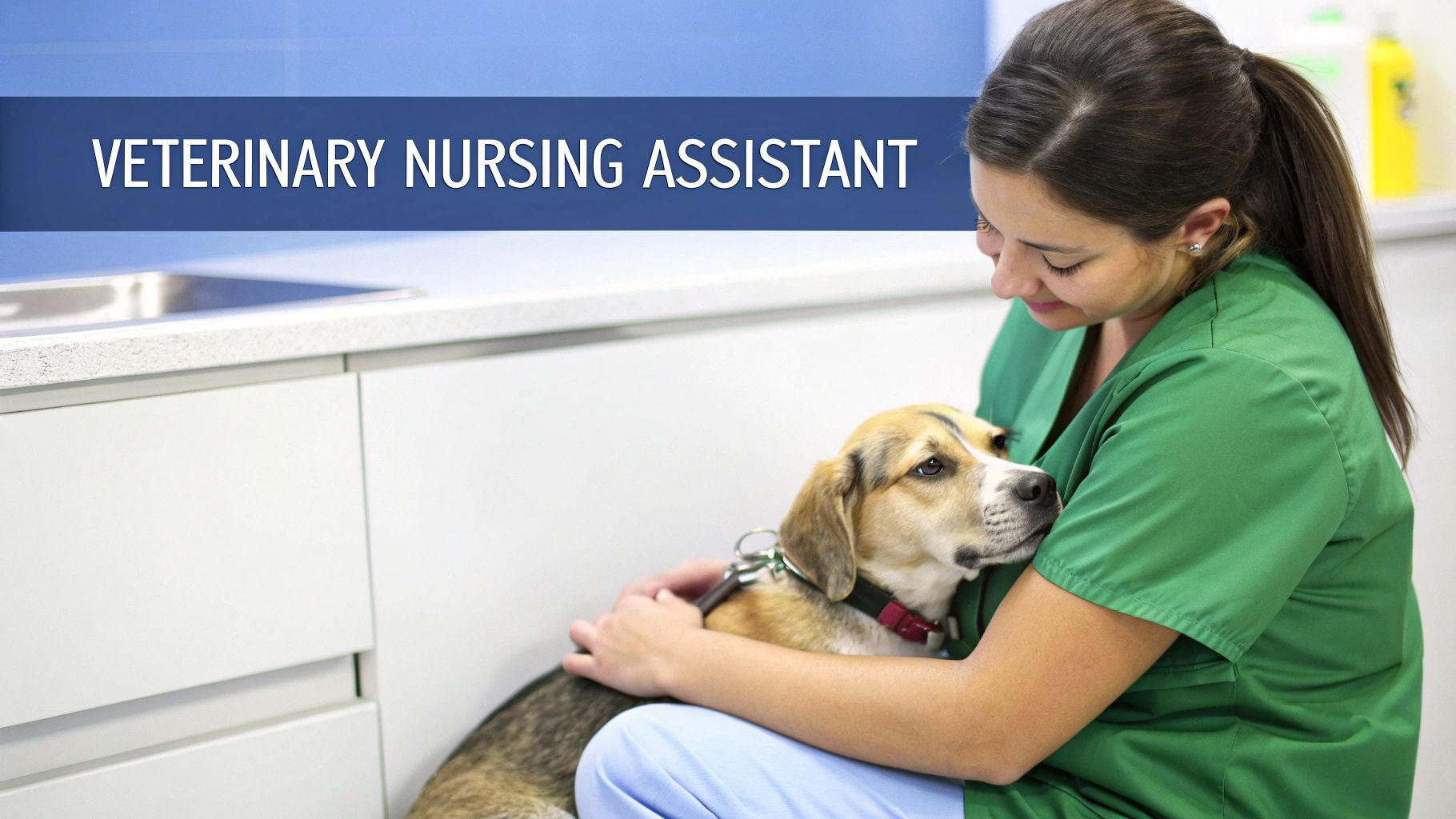
Have you ever pictured yourself as the calm, capable presence in a busy vet clinic? That’s exactly what a Veterinary Nursing Assistant (VNA) is. They're the essential support system that keeps the practice running smoothly for the animals, their owners, and the whole veterinary team.
A VNA is a truly multi-skilled professional. You’re often the first friendly face a worried pet owner sees and the gentle hands that comfort a nervous animal. Your role is a perfect blend of compassion and practicality, making you an absolutely indispensable part of the clinical team.
The Standard for Starting Your Career
To step into this desirable role, it's wise to get qualified so you can stand out against the competition. A great way to do this is through a role-specific Level 2 Diploma. This qualification is specifically designed to arm you with the core knowledge and practical skills that employers are looking for when they hire for an entry-level position. It’s your proof that you understand the fundamentals of animal welfare and how a clinic really operates.
In the UK, structured veterinary nursing assistant courses at this level have become a vital gateway for aspiring professionals. Some programmes, for instance, focus on equipping students with the foundational skills needed for roles like Animal Nursing Assistant. The entry requirements are often quite accessible, usually just a handful of GCSEs, and they create a clear progression path if you later decide to become a fully qualified veterinary nurse. You can get a better feel for typical course structures by exploring the details for veterinary care support on bicton.ac.uk.
Core Skills You Will Develop
A good Level 2 course provides a robust foundation, teaching you everything you need to be effective from day one. You’ll learn how to confidently handle and restrain animals, maintain impeccable hygiene standards throughout the clinic, and support the veterinary surgeon during examinations.
To give you an idea of what you’ll be learning, here’s a quick summary of the key skills you'll pick up during a typical VNA course.
| Key Skills You Will Gain from a VNA Course |
| :— | :— |
| Skill Category | Examples of What You'll Learn |
| Animal Handling and Care | Safe and compassionate techniques for managing animals of different sizes, species, and temperaments. |
| Basic Nursing Procedures | Assisting with tasks like taking temperatures, administering medication as directed, and preparing animals for minor procedures. |
| Client Communication | Developing the confidence to speak with pet owners clearly and empathetically, whether scheduling appointments or offering comfort. |
| Infection Control & Safety | Understanding hygiene protocols and health and safety regulations to keep the clinic safe for animals, staff, and visitors. |
These skills are the building blocks of a successful career, preparing you perfectly for the dynamic and deeply rewarding challenges of working in a veterinary practice.
Why Administrative Skills Are Your Secret Weapon

While the heart of the Veterinary Nursing Assistant role is all about hands-on animal care, it’s the skills you use away from the treatment table that can make you truly indispensable. The best VNAs are the backbone of the entire practice, and that means mastering administration.
Think of a busy vet clinic like a well-oiled machine. Vets and nurses focus on complex procedures, but it’s the administrative team that keeps every part moving smoothly. Without them, the whole operation would grind to a halt.
This is where you come in. You're often the first point of contact for a worried pet owner and the central hub of communication for the entire team. Your ability to manage appointments, handle records, and answer queries doesn't just keep things organised – it directly impacts the quality of care every single animal receives. A calm, efficient front desk leads to less stress for everyone involved, which is why the best veterinary nursing assistant courses place so much emphasis on these skills.
A Closer Look at the Administration Module
Stonebridge understands that clinical know-how is only half the story. That’s why we’ve built a dedicated module, Unit 1: Administration in Veterinary Practice, into our Level 2 Diploma for Veterinary Nursing Assistants (RQF). We know that employers are on the lookout for people who can confidently step into this dual role from day one.
This unit is your complete toolkit for running the non-clinical side of a busy clinic. We’ve designed it to build your confidence step-by-step.
After completing this unit, you will:
-
Know the administrative tasks carried out in a practice, from scheduling and record-keeping to managing stock and payments.
-
Understand the structure and services of a practice, so you can answer client questions with confidence.
-
Understand how to deal with clients effectively, mastering everything from tricky conversations to providing first-class customer service.
-
Understand health, safety, and professionalism, creating a safe and welcoming environment for pets and people alike.
-
Know how to promote services, like wellness plans or dental clinics, to help the business thrive.
This module ensures you’re prepared not just for the treatment room, but for every corner of the clinic's operations. By choosing a course that values these essential skills, you’re setting yourself up for a successful career.
Gaining Essential Hands-On Experience
Learning the theory behind animal care is one thing, but getting your hands dirty is where you truly start to feel like a competent Veterinary Nursing Assistant. Textbooks and online modules are fantastic for teaching you the vital ‘what’ and ‘why’ of the job, but it’s the hands-on experience that teaches you the crucial ‘how’.
This is where your classroom knowledge really comes to life.
That’s why any reputable veterinary nursing assistant course will have a practical placement built in. It’s a non-negotiable part of your training because it’s the only way to bridge the gap between theory and the real, often frantic, world of a veterinary clinic. Think of it as your chance to apply everything you've learned in a supervised, supportive environment.
From Coursework to Clinic Floor
A placement throws you right into the daily rhythm of a genuine veterinary practice. You’ll see first-hand how a professional team communicates, how they handle unexpected emergencies, and how they manage the emotional rollercoaster that comes with caring for animals. It’s an education you simply can’t get from a book.
You’ll quickly move beyond just reading about procedures. You'll be actively involved in the day-to-day tasks that keep a clinic running smoothly, such as:
-
Helping out with routine health checks and examinations.
-
Learning how to properly prepare consultation rooms and surgical areas.
-
Observing and supporting qualified staff during minor procedures.
-
Practising safe animal handling with a whole range of species and temperaments.
-
Comforting nervous animals and putting their worried owners at ease.
This is where it all clicks. This practical application builds the muscle memory and the confidence you need to become a valuable team member from your very first day on the job.
Why Employers Value Practical Skills
Let’s be honest, employers in the vet sector are looking for people who can hit the ground running. They need assistants who not only know the terminology but can also confidently and safely handle an animal, prepare equipment, and chat with clients. A completed placement on your CV is a massive green flag—it signals that you have proven, real-world capability.
The demand for qualified support staff in the UK is huge, and courses are designed to meet this need by insisting on significant practical training. With Stonebridge, we require a minimum of two weeks of work experience in a veterinary setting, which must also be supervised by a qualified Registered Veterinary Nurse. This is because assistants perform a huge chunk of routine tasks like health checks and first aid, and this hands-on time is essential for turning theory into job-ready skills.
Practical experience is where your confidence is forged. It’s that moment you switch from being a student who knows the steps to becoming a professional who can perform them calmly and competently under pressure.
Ultimately, this experience is what makes you employable. It proves your commitment, your ability to work in a team, and your readiness to make a real contribution to a practice. It turns your qualification from a piece of paper into a testament to your practical skills, making you a competent and desirable candidate in the eyes of any clinic manager.
You can find out more about the placement requirements for the Stonebridge Vet Nurse Assistant course on our website.
Finding a Study Method That Fits Your Life
So, you have a passion for working with animals, but you’ve also got a job, a family, and a life full of commitments. How on earth do you make it work? For many people dreaming of becoming a Veterinary Nursing Assistant, this is the biggest question. The good news is, you don’t have to put your life on hold to follow your dream.
Online veterinary nursing assistant courses offer a level of freedom that physical colleges just can't compete with. You can study from anywhere, at any time, whether this is after the kids are in bed, on your lunch break, or over a quiet weekend. This flexibility means you can pursue your career goals without sacrificing your income or precious family time.
The Stonebridge Advantage: Learning Built for You
We’ve been helping adult learners achieve their goals for over twenty years, so we understand the challenges you face. That's why we've designed our courses around your needs, not the other way around. Our Level 2 Diploma for Veterinary Nursing Assistants (RQF) is offered on a unique, subscription-based model that puts you in complete control.
This isn't just about putting textbooks online; it's a whole new way of looking at education. You’re in the driver's seat.
How Our Subscription Model Works
So, what does subscription-based learning actually mean for you? It’s simple: you pay an affordable monthly fee for 100% online access to your course materials and personalised support from qualified tutors.
Here’s why this model is a game-changer for so many of our students:
-
No Long-Term Credit Agreements: You have the freedom to cancel your subscription at any time.
-
Pause When You Need To: Life happens. If things get hectic at work or home, you can simply pause your subscription and pick it back up when you’re ready. No stress, no penalties.
-
Affordable and Predictable: A low monthly fee makes it easy to budget for your education, removing the worry of high upfront costs.
-
Complete Flexibility: Our modular courses are entirely online, so you can perfectly balance your studies with your job and family commitments.
This model is a lifeline for busy adults. Stonebridge empowers you to achieve recognised credentials and advance your career by tailoring your learning journey around your life.
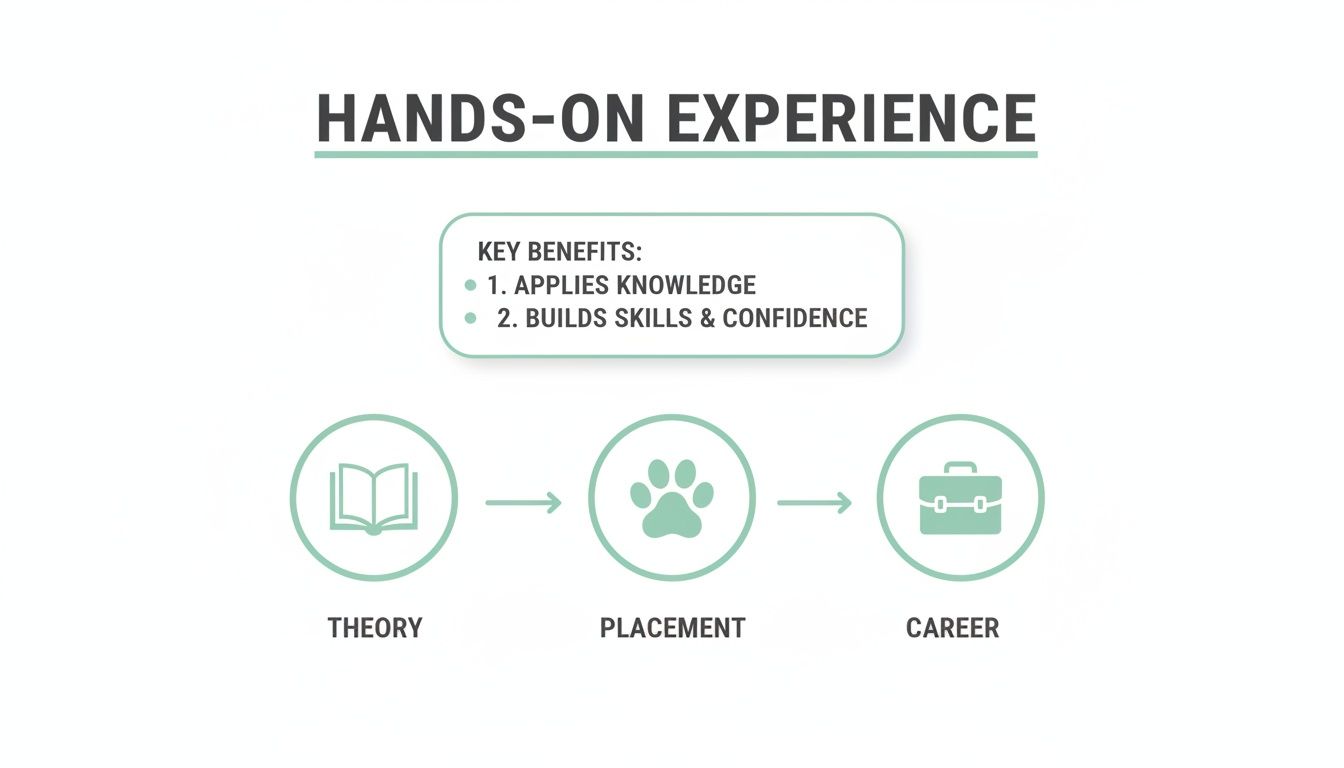
By combining flexible online theory with an essential practical placement, you get the well-rounded training that employers are looking for.
Your Career Path After Graduation

Finishing veterinary nursing assistant courses is a huge milestone, but it’s really just the beginning. Think of your Level 2 Diploma as a launchpad, it’s the qualification that swings open the doors to a dynamic and incredibly rewarding career with animals.
Once you’re qualified, a whole host of opportunities will be waiting for you. The most common next step is becoming an Animal Nursing Assistant or Veterinary Care Assistant in a busy practice. This is where you’ll be the supportive backbone of the clinic, putting all those practical skills you’ve just learned into action.
But your skills aren't just limited to vet clinics. A Level 2 qualification can also lead to fantastic work with animal welfare charities, rescue centres, or even in roles within specialist kennels or catteries where top-notch animal care is a must.
From Assistant to Registered Nurse
While being a Veterinary Nursing Assistant is a vital role, for many, it's the first step on a much longer journey. Your Level 2 qualification provides the perfect foundation to climb the career ladder, putting you on a clear path to becoming a Registered Veterinary Nurse (RVN).
To make that leap, you'll need to either complete a Level 3 Diploma in Veterinary Nursing or go down the Access to HE Diploma and university degree route. Both are more advanced courses that dive deeper into complex topics like anatomy, surgical nursing, and diagnostics. The great thing is, your experience from the Level 2 course will give you a massive head start, making the jump to Level 3 feel much more natural.
Your Level 2 Diploma isn't just a certificate; it's your entry ticket to a lifelong career. It’s the first essential building block that allows you to progress, specialise, and grow within the veterinary profession.
Becoming an RVN is a huge career achievement. It’s a legally protected title, just like a Registered Nurse in human healthcare, and it comes with a much greater level of responsibility. As an RVN, you can perform minor surgical procedures, administer certain types of anaesthesia, and play a more direct role in patient care under the direction of a vet.
Ultimately, completing a Level 2 veterinary nursing assistant course does more than just get you a job. It sets you on a structured and fulfilling career ladder with clear opportunities to advance.
Start Your Veterinary Career with Stonebridge Today
If you have a genuine passion for animals, turning that into a career is one of the most rewarding things you’ll ever do. The path to becoming a Veterinary Nursing Assistant is a direct route to making a real difference, every single day, and it's far more achievable than you might imagine.
This guide has shown that the role is a fantastic mix of compassion, hands-on skill, and organisational know-how. Now is the perfect moment to take that first, exciting step.
Your Ideal Partner in Learning
Choosing the right place to study is a big deal, and that's where Stonebridge Associated Colleges comes in. We know that as an adult learner, you need a course that fits around your life, not the other way around. That’s exactly why our Level 2 Diploma for Veterinary Nursing Assistants (RQF) is built for total flexibility.
Our unique subscription-based model puts you firmly in the driver's seat. You can learn entirely online, move at your own speed, and you’ll never feel pressured by tight deadlines or locked into long-term financial contracts. This freedom means you can build a new career without having to put your current life on hold.
At Stonebridge, we believe education should empower you, not hold you back. Our flexible, supportive, and affordable online courses are designed to help you reach your career goals on your own terms.
Our course makes sure you don’t just learn the essential animal care knowledge, but also the vital admin skills that make a VNA completely indispensable to any practice.
Take the Next Step with Confidence
Ready to get started? Beginning your journey with Stonebridge is simple and stress-free. Our whole approach is designed to give you everything you need to feel confident and motivated from day one.
Here’s how you can get going:
-
Explore the Course: Learn more about the Level 2 Diploma for Veterinary Nursing Assistants (RQF), including the crucial 'Administration in Veterinary Practice' unit.
-
Get in Touch: Got questions? Our friendly admissions team can explain how the subscription model works.
-
Enrol and Begin: With our easy online enrolment, you can start studying almost straight away.
Don’t put your passion on the back burner any longer. Learn more about our veterinary nursing assistant courses and enrol with Stonebridge today to start building a rewarding future in animal care.
Ready to take that first exciting step towards a career you'll love? Stonebridge Associated Colleges offers a flexible, supportive, and affordable way to get qualified from home.
Learn more about the Level 2 Diploma for Veterinary Nursing Assistants and enrol today!