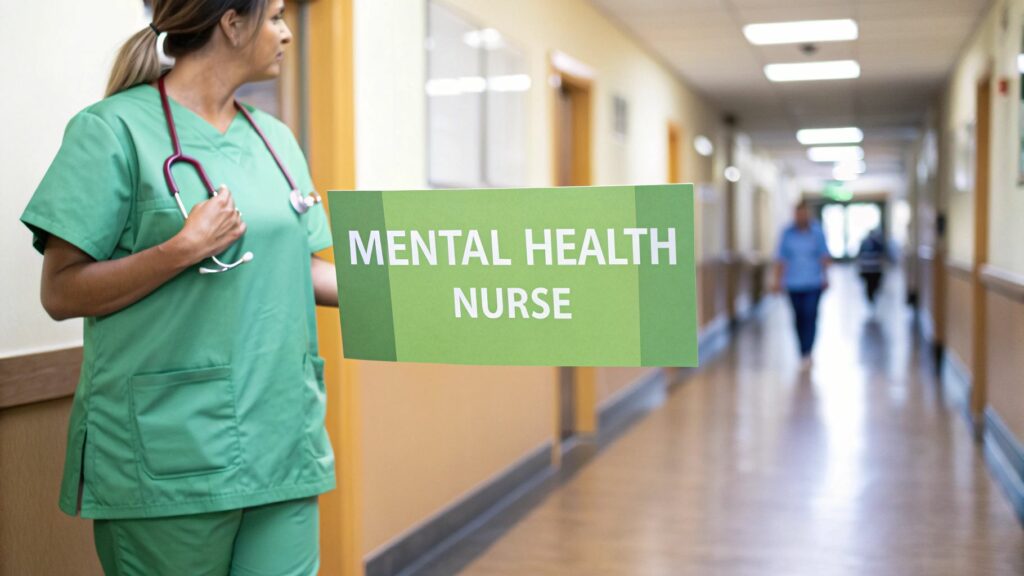
Have you ever wondered what it truly means to be a mental health nurse? It’s a role built on human connection, blending compassion with clinical expertise to guide people through their most vulnerable moments. If you’re a natural listener with a deep sense of empathy, you might have just found your calling.
This guide will walk you through a day in the life of a mental health nurse, explore the qualities needed to excel, and show you exactly how the Stonebridge Access to HE Diploma (Nursing) can launch your journey towards a university degree.
What a Day as a Mental Health Nurse Looks Like
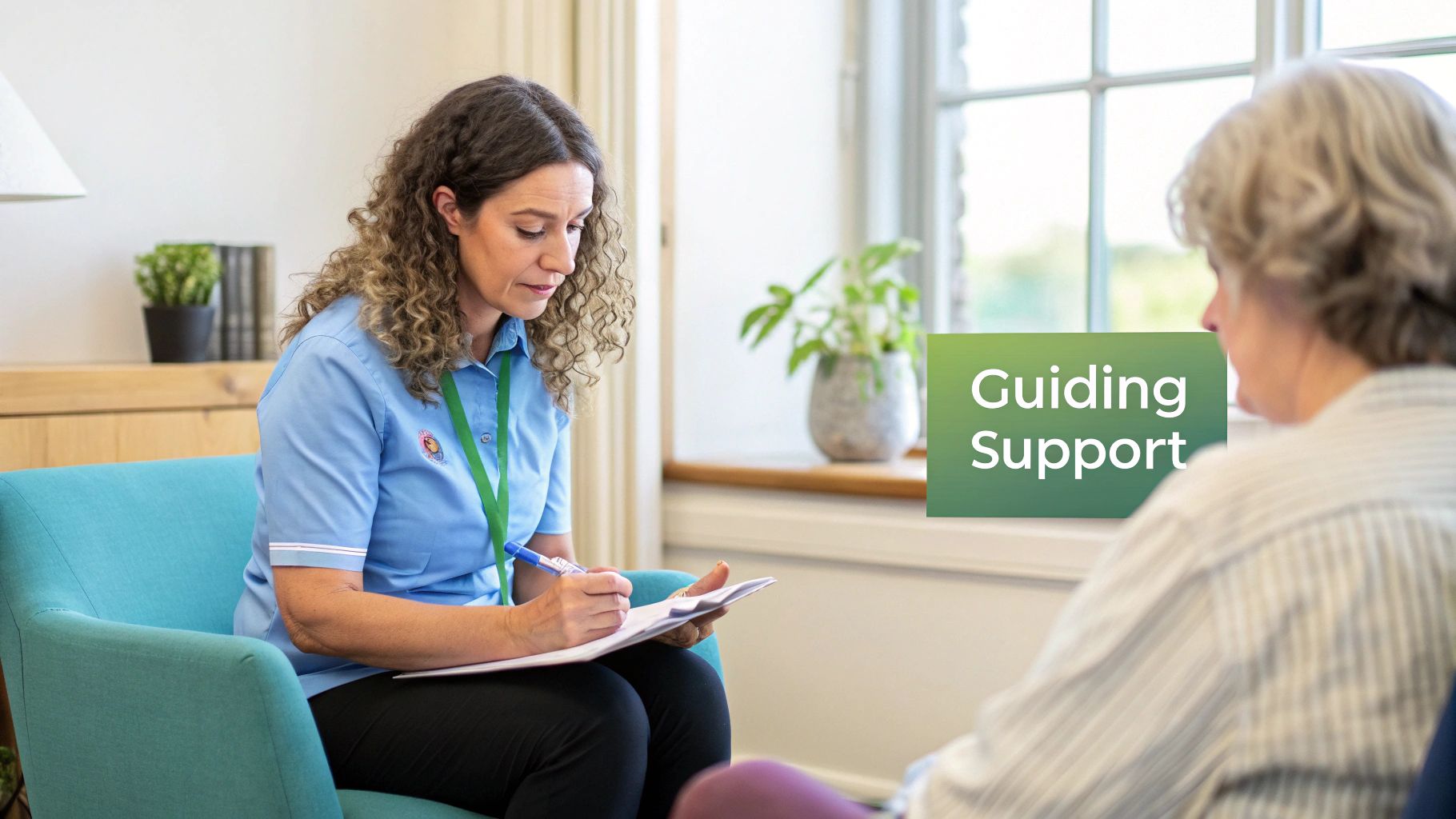
Forget a predictable 9-to-5. As a mental health nurse, no two days are ever the same. Your role is dynamic and deeply human. One morning, you could be on a bustling hospital ward, collaborating with doctors on a patient’s care plan. By the afternoon, you might be in a quiet community clinic, having a one-on-one conversation that helps someone find a new way to cope.
Think of yourself as a skilled navigator. Your role is to build immediate trust, guide people through the turbulent waters of their mental health journey, and act as their anchor in the storm. You provide steady support, administer essential care, and fiercely advocate for their needs, helping them find their way back to calmer seas.
Key Responsibilities of a Mental Health Nurse
While every day is different, your work is grounded in several core responsibilities.
| Responsibility Area | Description of Tasks |
|---|---|
| Assessment & Care Planning | Conducting initial assessments to understand a patient’s mental state, history, and needs. This insight is used to develop personalised care plans with the wider healthcare team. |
| Therapeutic Interventions | A large part of your day is dedicated to one-on-one or group therapy sessions. You’ll use your communication skills to build rapport, de-escalate crises, and teach practical coping skills. |
| Medication Management | This involves administering prescribed medications, carefully monitoring their effects, and educating patients about their treatment. It demands sharp attention to detail. |
| Advocacy & Support | You’ll often be the primary advocate for your patients, ensuring their voice is heard in meetings and that they can access resources like housing support or social services. |
These responsibilities ensure that the care you provide is not just compassionate, but also safe, effective, and perfectly tailored to each person you support.
The Growing Need for Mental Health Nurses
Right now, the demand for skilled mental health professionals is higher than ever. In the UK, mental health nurses are the cornerstone of the mental health workforce, making up over a third of all professionals in this vital sector in England.
Recent NHS data revealed a sharp increase in people seeking help, with a 21% jump in individuals contacting mental health services between 2016 and 2019 alone. This trend has only continued to grow. You can explore the full NHS evidence brief on the mental health workforce to see the full picture. This means that as a qualified mental health nurse, you’ll step into a field with strong job security and plenty of opportunities to make a tangible difference every single day.
Are You the Right Person for This Role?
Clinical knowledge is vital, but in mental health nursing, your personal qualities make the real difference. The role requires a unique blend of strength and softness, of technical skill and genuine compassion. It’s about who you are and how you connect with others.
So, what does it take to thrive as a mental health nurse?
The Core of Compassionate Care
Three qualities form the foundation of excellent mental health nursing. These aren’t just buzzwords for a CV; they are the principles you’ll live by every day.
-
Genuine Empathy: This isn’t feeling sorry for someone. It’s the ability to step into their world and understand their perspective without judgement, listening to the feelings left unspoken.
-
Unwavering Patience: Recovery is rarely a straight line. There will be good days and difficult days. True patience means offering consistent, calm support, even when progress feels slow.
-
Robust Resilience: This isn’t about being unaffected by tough situations. It’s about processing them, looking after yourself, and continuing to provide compassionate care without becoming overwhelmed.
These qualities help you build trust—the starting point for all healing. You become a safe space where people feel seen, heard, and valued.
Do These Traits Sound Like You?
As you read this, ask yourself if these characteristics resonate with you. Do you often find that you are:
-
An intuitive listener who hears the real story behind the words?
-
Able to remain calm under pressure and think clearly in intense situations?
-
Non-judgmental, with an ability to accept people as they are?
-
A clear communicator who can explain complex things with simplicity and kindness?
-
Observant, noticing the small shifts in behaviour that others might miss?
If you recognise these traits in yourself, you already have the raw materials to become an outstanding mental health nurse. These are strengths that can be nurtured and refined with the right training.
Your natural ability to connect with people is the most valuable tool you can bring to this career. When combined with expert education, it becomes a powerful force for change.
Your Pathway to a Mental Health Nursing Degree
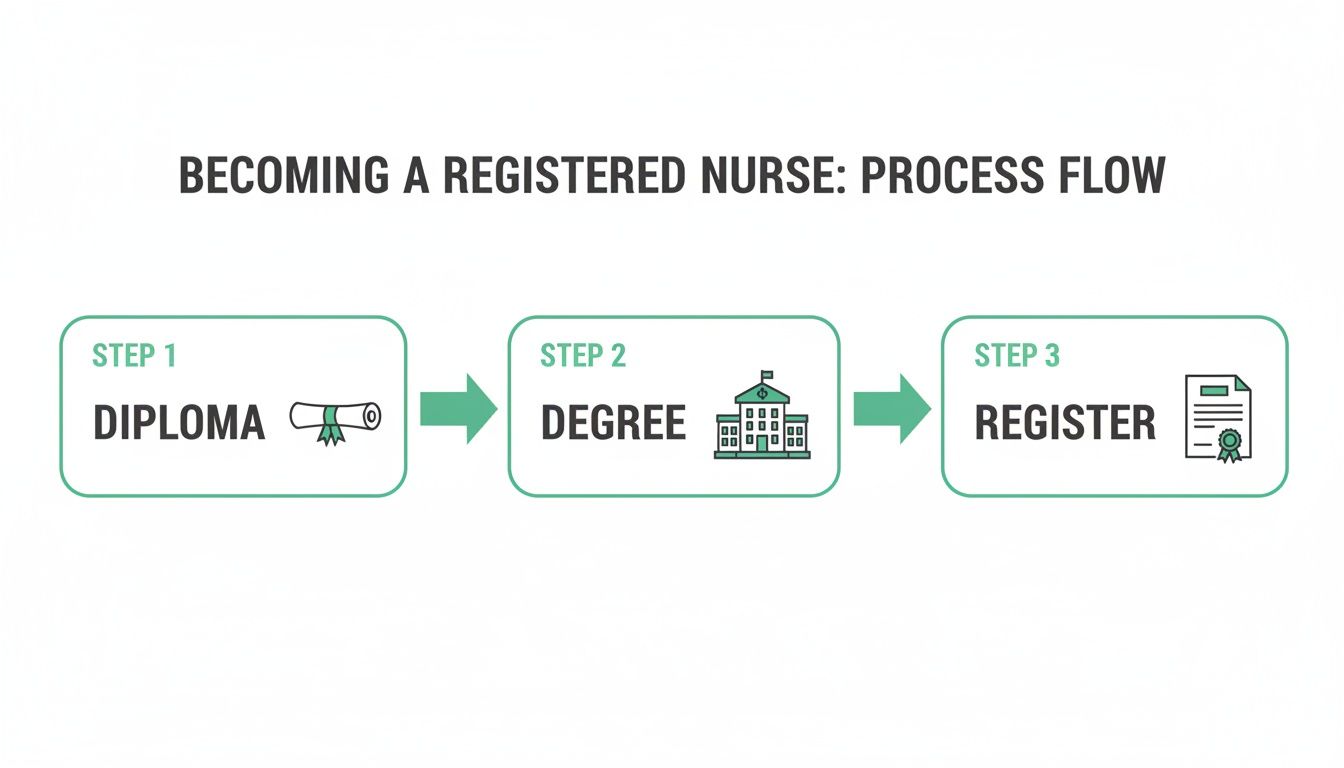
If this career feels like the right fit, your next question is likely, “How do I get there?” The path to becoming a qualified mental health nurse in the UK requires a university degree. This ensures every nurse has the deep clinical knowledge and hands-on skills the role demands.
But what if you don’t have A-levels? That’s not a roadblock. A dedicated and effective pathway for adult learners is the Access to Higher Education Diploma (Nursing).
The Access to HE Diploma: Your Starting Point
Think of the Access to HE Diploma as your purpose-built launchpad into a nursing degree. It’s a nationally recognised qualification designed to give you the academic foundation needed to thrive at university. The curriculum gives you a real head start by covering essential topics like:
-
Human Anatomy and Physiology
-
Psychology and Sociology
-
Professional Practice in Healthcare
-
Academic and Research Skills
This focused approach means that when you start your degree, you’re not just prepared, you’re ahead of the curve, armed with relevant knowledge and confidence.
Why an Online Course Is Your Best First Step

Juggling work, family, and other commitments can make returning to a traditional college seem impossible. This is where online learning becomes the bridge to a new, fulfilling career. An online course like the Stonebridge Access to HE Diploma (Nursing) offers the flexibility to learn around your existing life.
You can study 100% online, setting your own pace without the stress of rigid timetables. Whether you’re an early bird or a night owl, the course materials are always available. You are in control of your learning journey.
Learn Without the Financial Strain
The cost of education can be a major hurdle. Stonebridge was created to tear down these barriers with an empowering subscription-based model. Instead of facing huge upfront fees or long-term credit agreements, you pay a manageable monthly fee. This gives you complete financial freedom.
-
No Large Upfront Costs: Start your journey without a huge initial investment.
-
No Long-Term Credit Agreements: You aren’t locked into a daunting loan.
-
Total Flexibility: You can pause or cancel your subscription at any time if your circumstances change.
With over 20 years of experience, Stonebridge Associated Colleges delivers more than 100 career-focused programmes. We are accredited by the UK Register of Learning Providers and regulated by the Financial Conduct Authority, ensuring we maintain rigorous academic standards and financial transparency.
This commitment to affordability means your ambition isn’t limited by your bank balance.
You Are Never Studying Alone
A common worry about online learning is feeling isolated, but at Stonebridge, you are never alone. You’re backed by a dedicated support system from the moment you enrol. Every student is assigned a personal tutor, an expert in the nursing field, who is there to answer questions, provide feedback, and offer encouragement. This blend of independent study and personalised support gives you the best of both worlds.
Ready to Start Your Nursing Journey?
You’ve seen what it takes to be a mental health nurse and the incredible difference you could make. A rewarding career with excellent prospects is within your reach, and now is the perfect time to take that first step.
Your journey to university begins with the right qualification, and that’s exactly what our Access to Higher Education Diploma (Nursing) provides. It gives you the solid academic foundation universities look for, setting you up for success in your degree and beyond. Don’t let this moment of inspiration pass you by.
A fulfilling career as a mental health nurse is closer than you think. By enrolling with Stonebridge, you’re not just starting a course; you’re investing in a future where you can change lives for the better, every single day.
Visit the Access to HE Diploma (Nursing) course page to see how our flexible, online learning can fit around your life. Register your interest to learn more, chat with an advisor, or enrol today to start your journey.
Your Questions Answered: Becoming a Mental Health Nurse
Thinking about a new career always raises questions. Here are answers to some of the most common queries we receive.
How long does it take to become a mental health nurse?
A mental health nursing degree typically takes three years of full-time study. If you don’t have A-levels, our Access to Higher Education Diploma (Nursing) will get you university-ready in about a year, making the total time from start to finish around four years.
Can I become a mental health nurse without A-levels?
Yes, absolutely! The Access to HE Diploma was created for this exact reason. It is a nationally recognised qualification designed for adult learners, and universities know and respect this pathway to higher education. It’s the perfect bridge to your nursing degree.
What is the most challenging part of the job?
One of the biggest challenges is managing the emotional weight of the role. You will support people through incredibly difficult times, and learning to do so while protecting your own wellbeing is crucial. Developing emotional resilience is key. Your training will equip you with the tools for self-care and professional support, a skill you will build throughout your career.
What is the difference between a mental health nurse and a psychologist?
Both roles are vital, but they have different training and approaches.
A mental health nurse provides holistic, day-to-day care, including building therapeutic relationships, managing medication, and ensuring a safe environment. A psychologist focuses more on assessment, diagnosis, and delivering “talking therapies” like CBT.
Here’s a quick breakdown:
-
Training: Nurses hold a nursing degree and provide broad, hands-on support. Psychologists have a psychology degree (often a doctorate) and specialise in specific therapeutic models.
-
Medical Role: Nurses administer medication and monitor physical health. Psychologists do not prescribe medication.
-
Interaction: Nurses offer continuous support in clinical settings, while psychologists typically see clients for scheduled therapy sessions.
They work together as part of a wider team to provide the best possible care for patients.
Ready to take the first step towards a career that truly makes a difference? At Stonebridge Associated Colleges, we provide a flexible, supportive pathway to get you started.
Find out how our Access to HE Diploma (Nursing) can open the door to university and get your journey underway today.