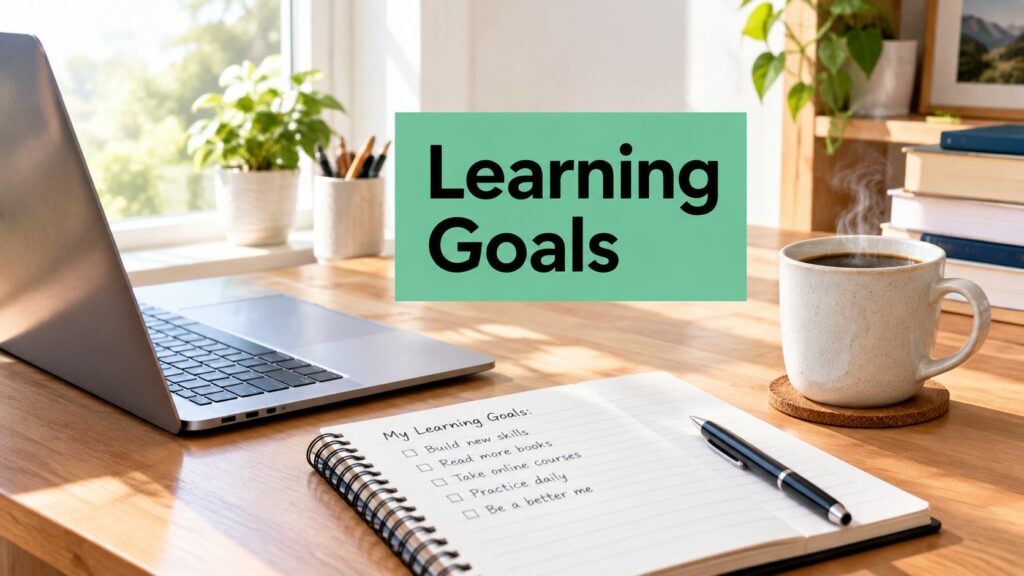
Learning goals are specific, measurable outcomes describing what a learner should know, understand or be able to do by the end of a course. For a busy adult learner, the useful question is how to turn that definition into a goal that still fits around work, family life and changing priorities.
You may have enrolled on an online course with plenty of enthusiasm, only to find that a late shift, a school run or a tiring week has pushed studying down the list. That experience is common. Losing momentum doesn't mean you lack commitment. Often, the problem is that “finish my course” feels too distant to guide what you should do today.
Clear learning goals give your study a practical direction. They help you break a qualification into manageable progress, understand what success looks like and adapt your plan when life becomes unpredictable.
Why so many adult learners lose momentum
A learner might begin an online course on a quiet weekend. The modules look interesting, the career plan feels exciting and the first study session goes well. Then work changes the rota, family responsibilities increase and several days pass without opening the course.
By the time the learner returns, the original enthusiasm has faded. The course now feels like one large task rather than a series of achievable steps. Without a clear learning goal, it's easy to mistake a difficult week for personal failure.
A useful shift: don't ask only, “When will I finish?” Ask, “What will I be able to do by the end of this study period?”
A learning goal turns a broad ambition into something you can act on. It might focus on completing a unit, demonstrating a skill or reaching a qualification level. It can also include a minimum amount of study that remains realistic when your schedule is full.
This approach is especially helpful in distance learning. You have flexibility, but flexibility works best when you give your week some shape. A clear target can guide your next session, help you use tutor feedback and show progress even when the final qualification still feels a long way off.
What are learning goals really
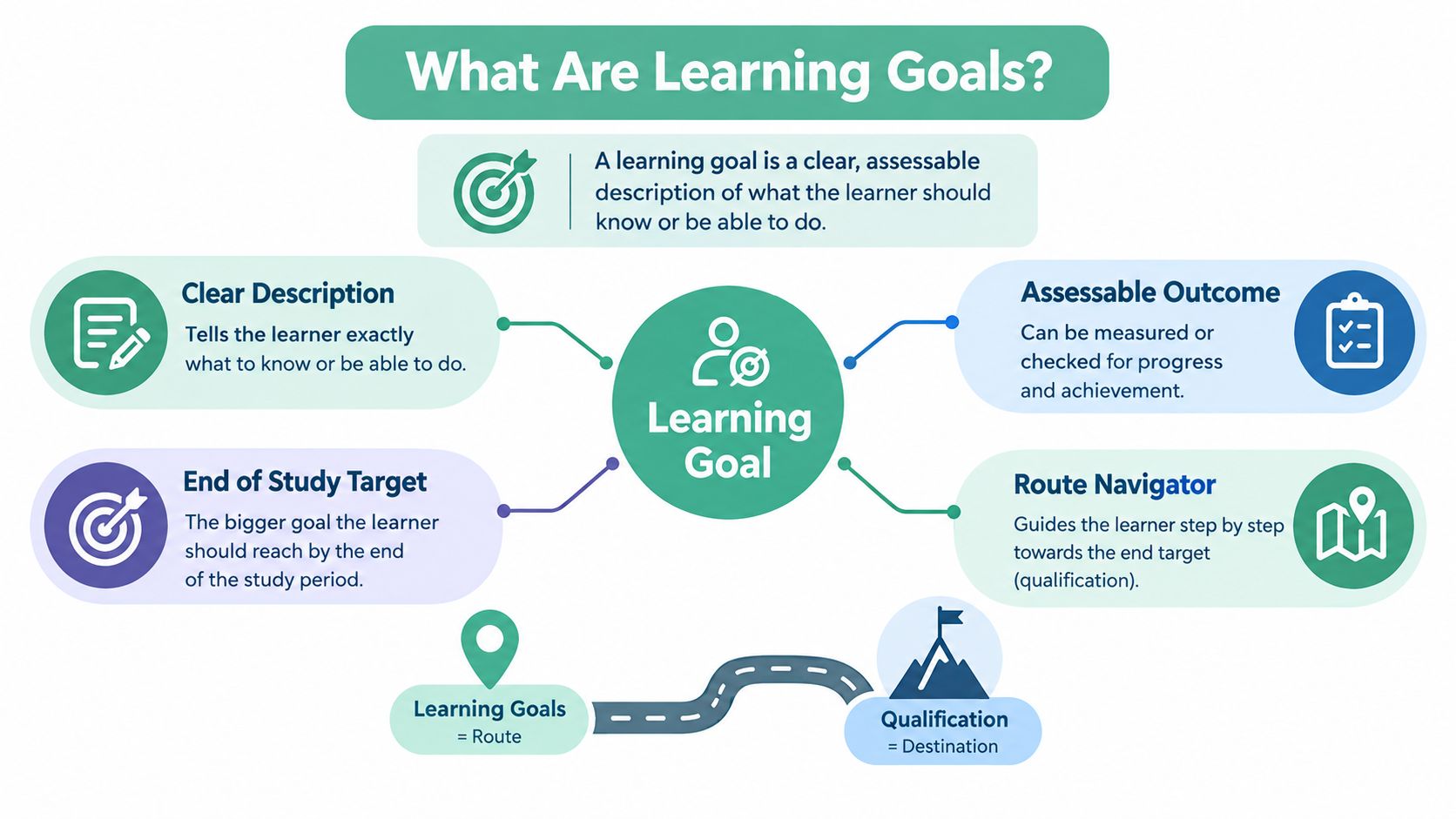
A learning goal is a clear, assessable description of what you should know, understand or be able to do by the end of a period of study. It's different from an intention. “I want to study health and social care” describes an interest, while “I want to achieve a Level 3 Diploma in Adult Care” identifies a defined outcome.
Think of a sat nav. Your qualification or skill target is the destination, while individual learning goals show the route. Without a destination, driving can feel busy without taking you somewhere specific. The same applies to studying.
Strong goals describe achievement
Effective goals describe what you'll achieve, not just what you'll do. Verbs such as analyse, calculate, demonstrate, evaluate and produce make the expected performance easier to understand and assess.
A goal could ask you to analyse a safeguarding scenario, justify an appropriate response and produce an evidence-based action plan. Your tutor can then look for specific evidence rather than just checking whether you've read the relevant material.
UK qualification design guidance explains that learners must achieve all specified learning outcomes to the required standard for a unit. It also states that clearly expressed outcomes can support equivalent assessment across online, classroom, simulated and workplace routes through the CASLO approach.
The benefits for adult distance learners
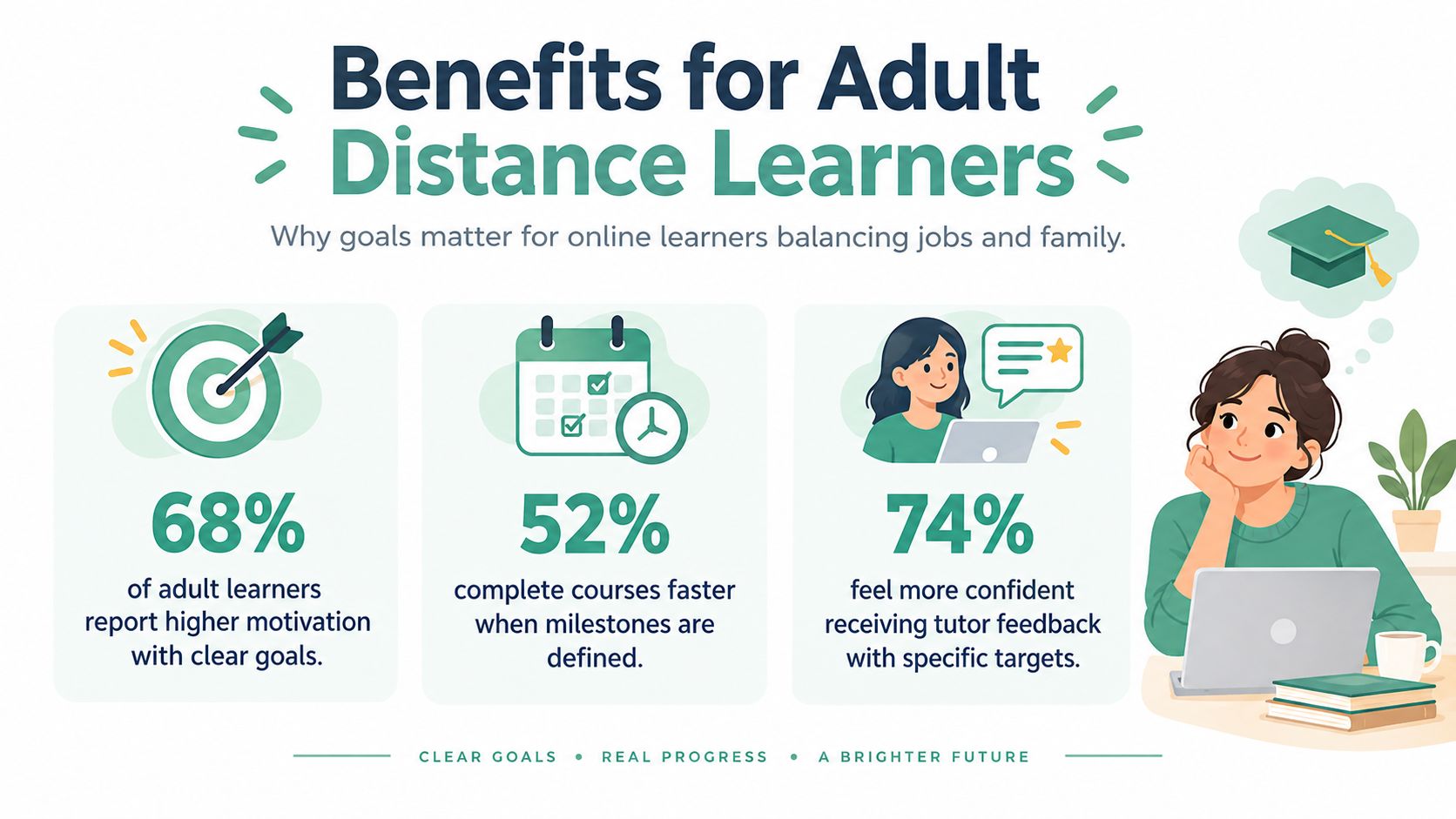
Online learning gives you control over when and where you study. A goal gives that freedom a clear purpose. Instead of seeing a qualification as one large commitment, you can work towards a unit outcome, an assessment task or a skill that supports your next career step.
Goals also make feedback more useful. If your target is to calculate workplace figures accurately, tutor comments can focus on your method, accuracy and evidence. If your target is vague, feedback may feel harder to apply because you haven't defined the standard you're working towards.
England's adult education data reflects the range of outcomes learners pursue. In the 2024/25 academic year, 1,174,940 adults participated in education and training, with figures reported across Entry Level, Level 1, Level 2 and Level 3 study in the Further education and skills statistics. Level 2 was the largest category, with 419,240 learners, while Entry Level accounted for 268,830, Level 1 for 224,610 and Level 3 for 146,730. Level 3 participation increased by 3.0% year on year, according to the same source.
For you, that might mean working towards Functional Skills, a recognised vocational qualification or progression to higher education. A learning goal helps you see the next milestone, not just the whole journey.
How to write SMART learning goals
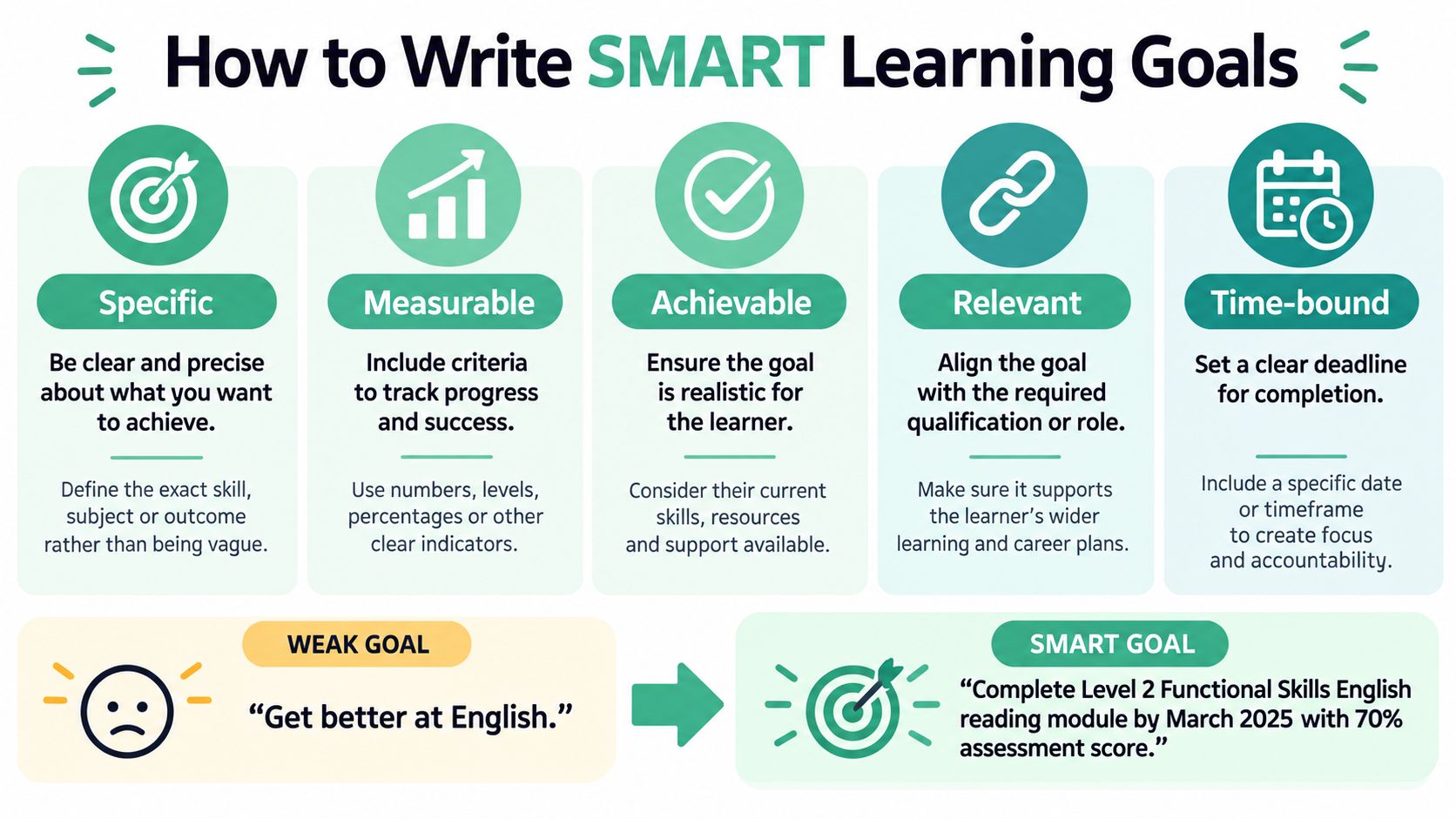
The SMART framework can help you turn a general intention into a useful study target.
-
Specific: Name the skill, qualification, unit or assessment outcome.
-
Measurable: State what evidence will show that you've achieved it.
-
Achievable: Match the goal to your available time, current level and support.
-
Relevant: Connect it to your employment plans, further study or personal development.
-
Time-bound: Set a review point or deadline that gives the goal urgency.
“Get better at maths” is too broad to guide your week. A stronger version might be: “Achieve Functional Skills Maths Level 2, including the exam, within twelve months by studying for four hours each week.” The goal identifies the level, the outcome, the timescale and the planned commitment.
You can make it more practical by adding an immediate milestone: complete the first numeracy unit and submit its assessment by the end of the month. If four hours isn't realistic every week, reduce the commitment rather than creating a plan you'll quickly abandon.
A clear goal also defines the competence domain, performance level, conditions and success threshold. For example, the NOCN assessment guidance gives the principle of calculating medication dosages accurately using a stated formula and demonstrating safe checking procedures in assessed scenarios.
Learning goal examples for online courses
A useful pattern combines the outcome, your weekly commitment and a short-term milestone. Here's how that could look across different Stonebridge study routes.
-
Functional Skills English and Maths Level 2: “Achieve both Level 2 qualifications by completing the required exams, studying during two planned sessions each week and finishing the first English reading assessment this month.”
-
Level 3 Diploma in Adult Care: “Demonstrate safe, person-centred care in written assessments and complete one unit every study period, beginning with a safeguarding scenario and a justified response.”
-
Level 3 Diploma in Supporting Teaching and Learning: “Produce evidence showing how classroom support meets learner needs, with a weekly study session and an initial plan for supporting an individual learner.”
-
Access to Higher Education Diploma in Nursing: “Build the academic knowledge and study skills needed for progression towards nursing, maintaining regular weekly study and completing the opening written assignment as the first milestone.”
You don't need to copy these word for word. Adapt the qualification, skill, pace and evidence to your circumstances. A goal for someone working full time may need a different weekly commitment from a goal for someone with more study time.

Learners and alumni of Stonebridge Associated Colleges can also access the learndirect: Community Hub app, available to learners and alumni of the learndirect Digital Group. The app includes discussion groups, topic communities and interactive forums where people can ask questions and share perspectives during their learning journey.
Tips for sticking to your goals and next steps
Set a minimum weekly commitment that you can maintain during an ordinary busy week. Then create a fallback plan for disrupted periods, such as completing one shorter task or contacting your tutor for guidance.
Review your progress monthly. Check what you've completed, what evidence you've produced and whether your timetable still reflects your life. Celebrate completed units and submitted assessments, rather than judging yourself only by the final qualification.
UK adults often face practical barriers to learning. The Learning and Work Institute's 2024 Adult Participation in Learning Survey found that 69% of UK adults who had not recently learned identified at least one barrier, including cost, feeling too old, and work or time pressures. A smaller sustainable goal is more valuable than an ambitious plan that collapses.
Stonebridge offers flexible, subscription-based online courses with personalised tutor support, modular study and the option to pause or cancel your subscription at any time without a long-term credit agreement.
Explore the flexible, subscription-based online courses available from Stonebridge Associated Colleges, including Functional Skills, health and social care, teaching and Access to Higher Education routes. Choose a learning goal that fits your life, study entirely online and take the next manageable step towards your qualification.